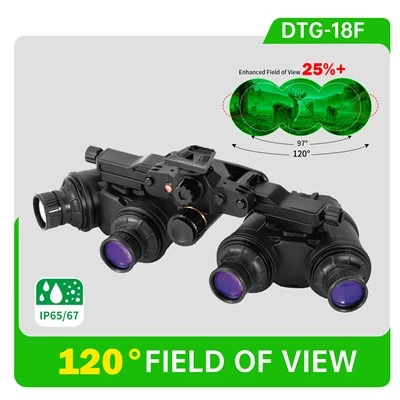
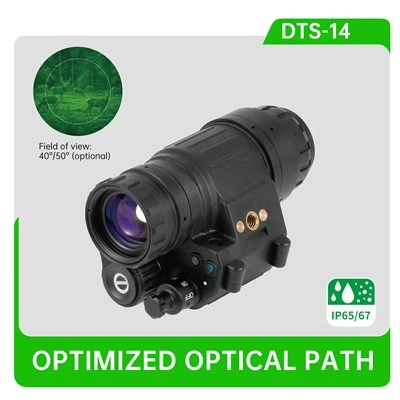
If you’ve ever held a night vision monocular in your hands and wondered, “Can I use this during the day?” you’re not alone. As a supplier of night vision monoculars, I field this question at least a dozen times a week—from outdoor hikers worried about missing a sunrise view to new tactical users who accidentally leave their device on when the sun comes up. The short answer is: sometimes, but with big catches that make most daytime use more trouble than it’s worth. Let’s break down the science, the risks, and when (if ever) daytime night vision monocular use makes sense.
First, let’s get clear on how night vision monoculars work, because that’s where the answer starts. Most consumer and tactical night vision devices (NVDs) on the market today fall into two main categories: image intensifier tubes (IITs) and digital night vision. The classic, high-performance units you’ll see used for hunting, surveillance, or search and rescue rely on image intensification. These tubes amplify tiny amounts of ambient light—starlight, moonlight, even faint infrared radiation—to create a visible green or monochrome image. That amplification is the problem during the day.
Image intensifier tubes are built to handle extremely low light levels. Their core components—photocathodes, microchannel plates, phosphor screens—are delicate. When exposed to bright light, especially direct sunlight, the amplification process can spin out of control. The result? A blinding glare, permanent damage to the tube, or even a complete burnout. Think of it like holding a flashlight under a magnifying glass: the light is concentrated, and sensitive materials can’t handle it. For example, a standard Gen 3 image intensifier (one of the most common for high-performance use) can be damaged if exposed to light levels above 10 lux for more than a few seconds. Direct midday sunlight is roughly 100,000 lux—so that’s a huge mismatch.
Digital night vision devices work differently: they use a sensor (like a small camera) to capture light, then process and display it. These are generally more resistant to bright light, but they still have limits. Most digital NVDs have built-in light sensors that cut power or disable the display when exposed to too much light, to protect the sensor from overheating or distortion. Even so, cranking the digital sensor to compensate for low night light during the day will wash out the image, create pixelation, and use up battery life in minutes.
But wait—there is a small group of night vision monoculars designed to handle daytime use, and that’s where the confusion comes in. Some specialized units have automatic light protection circuits that cap their input at levels bright enough for daytime viewing without damaging the tube. These are rare, though, and they’re not marketed as all-day devices. For example, the High Gain Night Vision Monoculars we supply have built-in overexposure protection that lets them be used in dim twilight or overcast daytime conditions without immediate damage. But even those can’t handle direct sunlight for more than a minute or two.
I learned this lesson early in my time as a supplier. A few years back, a tactical customer bought our Helmet Mounted Night Vision Monoculars for a 72-hour training exercise. On the second day, he told me he’d used the monocular to “get a better look” at a distant target at midday, and when he looked through it, all he saw was a bright white blur. He’d exposed the Gen 2+ tube to direct sunlight for almost 10 seconds, and it was permanently dimmed. We had to replace the tube under warranty, but that’s a cost neither of us needed—especially since he’d saved a few minutes of adjusting his gear instead of waiting until dusk.
That story isn’t unique. Every month, we get at least one request to fix an NVD that was left on during the day. The damage isn’t always obvious right away, either. Sometimes a daytime overexposure will reduce the tube’s light sensitivity over time, so at night, it can’t pick up faint light like it used to. Gen 1 tubes, which are the most affordable, are especially vulnerable—they don’t have the same level of light filtration as higher-gen units, so even a quick glance at the sun through a Gen 1 monocular can ruin it.
So why do people even try to use night vision monoculars during the day? There are a few common scenarios. Some outdoor photographers or bird watchers test their NVDs to see how well they can zoom in on distant objects in daylight, for fun. Others might work in low-visibility daytime environments—like heavy fog, overcast stormy conditions, or areas with artificial light that’s dim during the day, such as underground construction sites or remote mining operations. In those cases, a night vision monocular might actually work, as long as you’re not in direct bright light.
Another scenario: some compact tactical users want a single device that can work day and night for rapid deployment. That’s why we developed our line of Lightweight Night Vision Monoculars with adjustable light filters and digital output modes that can switch between day and night settings. These aren’t meant for full daytime use—their digital sensors handle light up to 1,000 lux, but direct sunlight is still too bright. But for overcast days, dawn, or dusk, they work well without risking tube damage.
If you’re considering daytime use, the key is to check your monocular’s specifications. Look for two things: a light intensity rating for safe daytime use, and a built-in automatic shut-off that activates when light levels get too high. If your device doesn’t have either, you’re playing a high-stakes game with a very delicate piece of technology. Even if you’re being careful, a sudden break in clouds that lets direct sunlight hit the lens can cause damage before you can even flip a cap on the front.
Let’s also talk about the practical downsides, beyond equipment damage. Night vision monoculars are designed to amplify low light, so their resolution and color accuracy during the day are nowhere near what a basic daytime binocular offers. You’ll get a grainy, green-tinted image that’s worse than what your naked eye can see in most cases. Why would you use a bulky, power-hungry monocular for daytime viewing when a $50 pair of binoculars will give you a clear, bright, color image? That’s a question I always ask customers who ask about daytime use—and most of the time, they admit they just didn’t realize how poor the daytime performance actually is.
Of course, there are exceptions for specialized use cases. Military and law enforcement units often use dual-tube systems: a daytime optical sight paired with a night vision monocular for low-light operations. Or, for short-range, low-light daytime tasks, like clearing a dark room during a daytime training exercise, a night vision monocular can work safely as long as the lights are off and no direct bright light is in the area. That’s a standard training protocol we work with tactical teams on, so it’s a valid use case—not just a random mistake.
If you’re in the market for a monocular that can handle occasional dim daytime use, our range has options to fit. For example, the Compact Night Vision Monoculars for Tactical line features Gen 3 tubes with advanced light shielding that lets them be used in shaded areas or overcast days without risk. We also offer Metal Housing Night Vision Monocualrs built for rugged use, with reinforced light filters that add an extra layer of protection against accidental bright light exposure in daytime conditions.
At the end of the day, the takeaway is this: night vision monoculars are not made for full daytime use. They’re precision tools designed to thrive in the dark, and pushing them to work in bright light will lead to damage, poor performance, or both. That doesn’t mean they’re useless during the day, though. With the right model, and careful use in low-light daytime environments, they can add a unique layer of visibility that standard optics can’t match.
If you’re looking for a night vision monocular that fits your needs—whether for tactical use, outdoor adventures, or search and rescue—and you want to learn more about which models can handle occasional daytime use, feel free to reach out to our team to discuss your requirements and explore our product line.


References
- National Institute of Justice. (2019). Night Vision Technology for Law Enforcement: Performance Standards and Limitations. U.S. Department of Justice.
- Image Intensifier Tube Manufacturers Association. (2021). Safe Operating Guidelines for Night Vision Devices. Technical Report.
- Outdoor Industry Association. (2022). Best Practices for Night Vision Device Use in Outdoor Recreation. Recreation Safety Report.
- Digital Imaging and Remote Sensing Laboratory. (2020). Light Sensitivity of Consumer Digital Night Vision Devices. Rochester Institute of Technology.