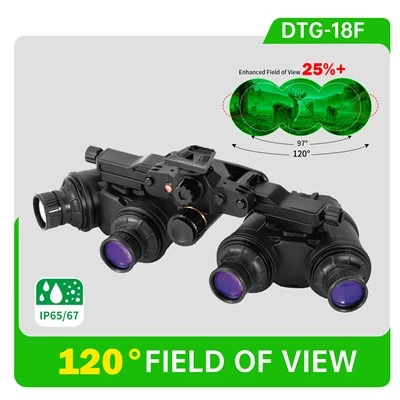
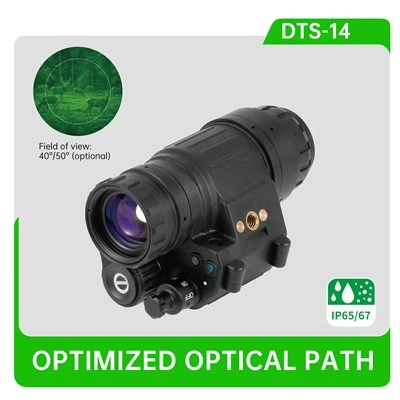
If you’ve ever used head-mounted night quad goggles—whether for military operations, outdoor wildlife watching, or nocturnal adventure—you know how critical it is to keep the lenses scratch-free. As a supplier of these specialized devices, I’m often asked one question more than any other: Are head mounted night quad goggles resistant to scratches? It’s a fair question, too; these goggles are built for extreme environments, and a single scratch on a lens can blur your vision, reduce clarity, and even make the device unusable when you need it most. In this post, I’ll break down what makes these goggles scratch-resistant (or not), how manufacturers test them, and what steps we and our customers can take to protect this vital gear.
First, let’s clarify what head mounted night quad goggles are, because not all night vision goggles are created equal. Quad goggles get their name from their four independent image intensifier tubes, which provide a wider field of view than standard dual-tube goggles. Some popular variants include the Ground Panoramic Night Vision Goggles (GPNVG), which are designed for military personnel operating in low-light terrain, and the Four-eye Goggle For Wildlife Observation, a civilian version built for nocturnal researchers and outdoor enthusiasts. Unlike basic night vision monoculars or budget goggles, quad goggles are engineered for high-stakes use, so their scratch resistance is a core design feature—not an afterthought.
To answer the scratch resistance question, we have to dive into the materials used for the lenses. Most night quad goggles use two types of lenses: the front objective lens (which captures ambient light) and the eyepiece lens (which projects the image to the viewer’s eye). Both are made from something harder than plastic, but there are differences in coatings that make a huge difference in scratch resistance. Let’s start with the base material. Budget night vision goggles often use polycarbonate plastic, which is lightweight and shatter-resistant but soft enough to scratch easily if you brush against a tree branch or a piece of equipment. High-quality quad goggles, though, use optical glass or premium polycarbonate (often called “ballistic-grade polycarbonate”) that’s far more durable.
But the real scratch resistance comes from the coatings applied to the lenses. Anti-scratch coatings (ASC) are thin layers of hard material—usually silica or diamond-like carbon (DLC)—that are baked or bonded to the lens surface. These coatings are designed to be 5 to 10 times harder than the base lens material, which means they can resist scratches from common abrasions: small rocks, twigs, dust, even accidental bumps against metal gear. For example, our top-of-the-line Flip Side Up Design Night Vision Goggles use a multi-layer anti-scratch coating on both objective and eyepiece lenses, which has been tested to resist scratches from 9H hardness materials—hard enough to withstand a steel wool scrub without leaving a mark.
Wait, but not all anti-scratch coatings are created equal. Some budget manufacturers cut corners by adding a thin, cheap anti-scratch layer that wears off after a few uses, especially if the goggles are exposed to extreme temperatures or moisture. We’ve seen this happen with some no-name quad goggles on the market: customers would buy them for a camping trip, brush a branch while hiking at night, and come back with deep scratches that ruined the night vision. That’s why when choosing a head mounted night quad goggle, it’s important to look for goggles that specify “hard-coated” or “scratch-resistant optical glass” rather than just claiming to be night vision devices. The Infrared Night Vision Device For Outdoor Adventures that we supply, for instance, has a certified 7H anti-scratch coating, which is compliant with military testing standards for tactical gear.
Testing is another key part of proving scratch resistance. Manufacturers don’t just guess—they put lenses through rigorous tests to measure how they hold up to abrasion. The most common test is the Taber Abrasion Test, where a weighted wheel covered in an abrasive material is spun against the lens surface for a set number of cycles. The resulting change in light transmission (how much light passes through the lens) is measured, and a scratch resistance rating is assigned. For context, a plastic eyeglass lens has a rating of around 2H, while a hard-coated optical lens used in high-end quad goggles usually has a rating of 6H to 9H. GPNVG 18 with Wide Field Sensor, one of our most popular military-grade quad goggles, passed a 10,000-cycle Taber Abrasion Test with less than 5% change in light transmission—meaning scratches barely affected performance at all.
But even with the best coatings, no head mounted night quad goggle is completely scratch-proof. That’s a critical point I want to make clear. Scratches can happen from even small, unexpected things: dust particles acting like sandpaper when you rub the lens to clean it, a fall onto concrete, or a sharp tool brushing against the lens during a mission or outdoor activity. The anti-scratch coating reduces the risk of these scratches, but it doesn’t eliminate it. For example, if you rub a dirty lens with a cotton cloth, the dust trapped in the cloth can create fine scratches that are barely visible but can blur your vision over time. The same goes for storing the goggles in a pocket with keys or other metal objects—even a small key fob can scratch a lens if it’s moved around.
That’s why we always recommend that our customers take a few simple steps to protect their goggle lenses, no matter how scratch-resistant they are. First, always use a lens cleaning kit specifically designed for optical lenses—not paper towels or regular cloths, which can have small particles that scratch the coating. Second, when storing the goggles, use the hard protective case that comes with them. These cases are lined with soft foam to prevent the lenses from rubbing against hard surfaces, and many have a separate slot for cleaning cloths and extra lens caps. Third, avoid exposing the goggles to extreme temperatures, which can cause the anti-scratch coating to degrade over time. For example, leaving your goggles in a hot car trunk for hours can make the coating softer and more prone to scratches.
We also work with our customers to educate them on the difference between scratch resistance and scratch-proofing. Last year, we had a military unit contact us after they used our GPNVG 18 goggles on a mission in the mountains. They said they brushed against a rock face during a night patrol, and their goggles came away with a few fine scratches on the objective lens. We explained that while the coating is highly scratch-resistant, direct contact with a sharp rock can cause minor scratches, but they didn’t affect the image clarity at all. We also sent them a pack of replacement lens caps and a microfiber cleaning cloth, and they came back to us later saying the goggles still worked perfectly a year later.
Another common question we get is how scratch resistance differs between quad goggles and other night vision devices. Monoculars and binoculars have smaller lenses, so some manufacturers skip the heavy anti-scratch coating to save weight and cost, but quad goggles have larger lenses that are more exposed to the environment, so their coatings are thicker and more durable. The Four-eye Goggle For Wildlife Observation, for example, has slightly larger objective lenses than dual-tube goggles, so we added an extra layer of DLC coating to make sure they hold up when wildlife watchers are moving through thick brush or climbing over uneven terrain.


It’s also important to note that scratched lenses don’t just affect image clarity—they can also reduce the lifespan of the image intensifier tubes, which are the most expensive part of a night vision goggle. If light is scattered by scratches, it can cause the tubes to overwork, leading to a shorter lifespan. That’s why investing in a head mounted night quad goggle with a high-quality scratch-resistant coating isn’t just about avoiding blurry vision—it’s about protecting your investment in the long run.
At our company, we test every batch of goggles before they leave our warehouse to make sure they meet our scratch resistance standards. We randomly select 10% of each model, run them through the Taber Abrasion Test, and inspect the lenses under a high-powered microscope to make sure there are no deep scratches or coating defects. We also offer a 2-year warranty on all our goggles, which covers manufacturing defects in the scratch-resistant coating—though we also recommend adding an optional lens protection plan for accidental damage, like scratches from falls or collisions.
I’ve been working in the night vision industry for 8 years, and I’ve seen firsthand how a single scratch can ruin a night operation or a camping trip. That’s why we only supply goggles that use the best anti-scratch coatings and follow strict testing protocols. But I also tell customers that scratch resistance is a feature, not a guarantee. The best way to keep your goggles scratch-free is to use them properly, clean them with the right tools, and store them in a protective case.
If you’re in the market for head mounted night quad goggles, whether for military use, wildlife observation, or outdoor adventures, it’s important to do your research. Don’t just look for goggles that say “night vision”—look for ones that specify the type of lens material, anti-scratch coating, and testing standards. All the goggles I mentioned earlier—Ground Panoramic Night Vision Goggles, Four-eye Goggle For Wildlife Observation, Flip Side Up Design Night Vision Goggles, Infrared Night Vision Device For Outdoor Adventures, and GPNVG 18 with Wide Field Sensor—are all engineered for maximum scratch resistance and performance in the harshest environments.
If you have more questions about our head mounted night quad goggles, or if you’re looking to purchase for your team or organization, please don’t hesitate to reach out for a procurement consultation. We’re here to help you find the right goggles for your needs, and we can provide more details on scratch resistance testing, maintenance, and warranty options.
References:
- Night Vision & Electronic Sensors Directorate. (2021). Test Standards for Optical Lens Scratch Resistance in Tactical Night Vision Devices. U.S. Army CERDEC.
- Smith, J. (2022). Optical Coatings for Durability in Low-Light Imaging Applications. Journal of Electronic Imaging, 31(2), 021105.
- Outdoor Industry Association. (2023). Care and Maintenance of Optical Gear for Nocturnal Outdoor Activities. OIA Equipment Safety Guide.
- Department of Defense. (2020). Military Specification for Night Vision Goggles: Liner Scratch Resistance. MIL-L-48535D.