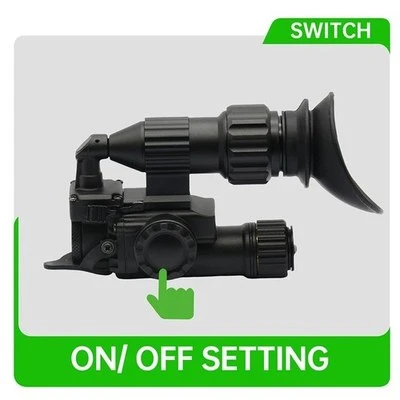
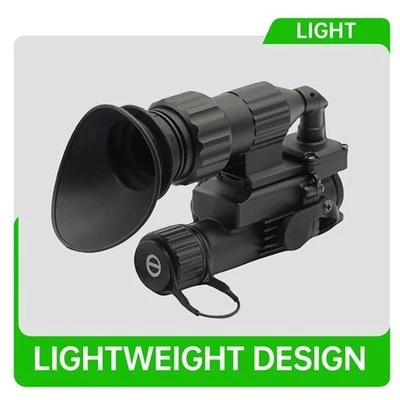
A guide standing with visitors at a dark trail junction should be able to lift a thermal viewer, find the display and hand it back without losing track of the group. For a new purchase, run those ordinary actions with the actual gloves, carry case and cold-weather layers. The strongest display specification does little for a guide who has to remove a glove just to select a useful setting.
A thermal monocular glove usability check should establish whether the device can be found, started and used with the selected gloves, then secured again without repeated prompts. This is for lawful wildlife observation and guiding. Handheld thermal imagery can support observation, and guides still need established ways of identifying animals, navigating and managing group safety.
Observe startup, viewing and stowing with the gear the guide will actually use.
Detyl compact thermal viewer listing
Choose the tasks before you choose the model
Begin with work the guide already does. For example, a two-person team leaves a vehicle, stops at an observation point, watches the edge of a field and returns along a marked trail. One person operates the viewer, while the other manages the group and other equipment. If the viewer will be shared, have both people try it. Some controls are easier for one hand than the other. Ask the guide who wears spectacles to test it with their usual eyewear.
Specify the first useful action after startup. It might be a brief look at a known warm object near the path, followed by a return to the same preferred viewing settings. If menus are involved, use one task the person would reasonably need in the field. Write down the required end state. After seeing the sample demonstration, ask a second operator to repeat the same task without help.
Detyl lists handheld thermal observation products. Ask for the exact model and current manual before preparing the trial. Model names, accessories and the order in which controls respond can vary. Deal with one device and firmware combination at a time. A distributor should be able to attach photographs, a short procedure and the test results to the sample record.
Record what the glove actually changes
Thick fingertips can span neighboring controls. A smooth surface can offer little tactile information when cold. A cuff can catch on the case or pull a strap toward a control. Those little interactions help explain why a sample felt easy indoors but frustrated a guide outdoors. Write down the action and the condition, then decide whether the problem affects a task that matters.
| Action to observe | Evidence to write down | Question for the buyer |
|---|---|---|
| Remove from the case | Glove type, carry orientation and any catch points | Can the guide get the viewer without dropping small parts? |
| Wake or start the unit | Control used, attempts and useful image on screen | Do hand position and tactile feedback make sense? |
| Reach a normal field setting | Sequence, attempts and unexpected changes | Can different guides repeat it? |
| Return to carrying position | Lens protection and retention checked | Does the actual carry setup remain secure? |
| Hand over to a colleague | Preferred setting and control familiarity | How much explanation will seasonal staff need? |
Try the preferred gloves and the backup pair. Adjust the plan for their real use. A liner may make menu work easier but might be impractical for some tours. Have the person who will wear it judge the compromise. Record whether each action was done with their usual grip, whether a second hand was needed and whether they could repeat it. Use the manufacturer's instructions for charging and environmental limits.
Set up a repeatable viewing scene
A field-of-view specification can tell a buyer something about how much scene is visible. It cannot answer how easily the guide can pick up the warm subject after looking away. Choose an authorized observation area with stable reference points and identify a stationary subject suitable for a safe comparison. Keep the observer position and orientation the same when comparing demonstrators. Record weather and any obvious change in background.
For deciding between two units, make the test questions small. Can the guide find a known object if the device starts pointed slightly away? Can the next guide find it after handover? Could either distinguish it from a warm background through the actual lens and display setup? Object geometry, viewing conditions and device settings matter. Avoid a promise about identification distance based on an unstandardized field check.
A guide may be able to use a wider view to get oriented, then switch to another mode for inspection if the unit supports it. Ask which features are optical, display-related or digital, and which are actually present on the quoted sample. If a setting makes the displayed area smaller, allow time to return to the general viewing mode. Keep a written record of the effective preferences.
Write handover and maintenance checks into the order
The trial record should include the exact bundle, charging accessories, carry parts and user documentation expected in production. A unit borrowed from a distributor may be equipped differently from the items packed in volume. A neatly fitted case is useful only if it accommodates the delivered viewer and the actual accessories. Confirm whether individual accessories can be identified and replaced.
Ask how a unit is taken out of service for a fault, and who records a replacement. Provide enough details for a repeatable check without collecting information about the guests. Serial number or other unique identifier, firmware, glove type, ambient conditions and a brief task result will generally do more to explain the difference than a thumbs-up rating.
Decide which findings are fit for a signed acceptance and which remain observations. For example, a forgotten preferred setting may just require a reliable briefing. A persistent delay getting back to a normal viewing state may require a different model or another sample. Ask the supplier to reproduce the scenario with the same setup before deciding what would resolve the issue.
Include the trip back to the vehicle
The last five minutes of an observation outing belong in the sample test. A visitor stops to ask about an animal while the guide opens the case and restores the device to its carrying position. It should be clear which checks can be done quietly and where the guide can pause to perform them. Keep a note of any loose lens cover or awkward zipper that interrupts the established routine. If a useful accessory differs from the quoted bundle, ask the supplier to identify it and confirm compatibility with the exact device.
A seasonal briefing could include a short rehearsal at a permitted observation point with authorized staff. Ask each person to check the unit ID, locate the manual's status indications, complete the normal viewing action, secure the product and report an issue. Identify the part of the task where instruction was needed. Mark which tasks require a particular glove or carry position and which any approved setup could support. A briefing written from this check will reflect the actual workflow instead of preserving a transcript of the sales demonstration.
For a travel operator, the purchasing record can show who accepts the device from storage at the start of a tour and who returns it. Plan how accessories and defects are recorded when the group returns after office hours. If a unit is removed from service, note how another approved unit can be found or whether the operator continues without one under its normal procedures. That decision protects the tour schedule without treating thermal viewing as emergency equipment.
Keep the comparison fair across operators
An experienced guide may learn a control sequence in seconds, while someone who uses the device once a week wants to confirm the indicated state each time. Ask each operator to complete the main action twice in randomized sample order where it's practical. Write down first-use and repeat observations separately. If a two-handed grip was needed, record when and why. If more time is available, let both operators try again after a short unrelated task, under the same safe conditions.
End the comparison with a plain language acceptance, such as whether each designated operator could recover the agreed viewing state and stow the viewer with the target gloves. Record any needed briefing, alternative accessory, location constraint or firmware dependency. Keep subjective preference available to guide the purchase where the actual tasks passed in more than one configuration. A field trial can capture useful differences without promising performance at distances or in conditions the guides did not observe.
Outfitting more than one guide
Should a cotton liner count as a winter glove?
Record it separately. A lined waterproof glove may change the grip and movement enough to alter the result. Run the critical actions with whatever guides actually wear and note which changes are practical.
How can two guides report results consistently?
Agree the task and end state before the trial. Record the count of attempts and whether assistance was needed. Keep subjective comments about control feel in their own field so they can be compared with the observed outcome.
Will a larger screen solve the issue?
Give the guides a viewing comparison in the same scene. Display size alone cannot identify whether the delay came from the controls, eyewear, field of view, the eye position or an unfamiliar setting.
Can we claim a reliable wildlife identification distance?
Ask for manufacturer test conditions and wording, then confirm what was actually observed on your intended tour. Describe the subject, weather and purpose explicitly. Seek further verification for claims that will appear in sales material.
What should be checked before placing a group order?
Confirm the model, documentation, included accessories and any firmware relevant to your field test. Put the agreed evaluation tasks in the purchase record and agree how changes will be reported before the units arrive.
Can a trial cover wet or very cold conditions?
Use the limits supplied for the exact device and plan the trial through your normal safety procedure. If it cannot be done safely or conditions are absent, record the limitation and schedule a separate evaluation.
Request a sample for the intended tour
Send Detyl the intended civilian use, typical observation setting, gloves and accessory needs. Ask which handheld sample and documentation are appropriate for an evaluation.