Image Intensifier vs. Digital Night Vision: What's the Difference?
If you've spent any time shopping for night vision equipment, you've probably run into two very different technologies being marketed side by side: image intensifier night vision and digital night vision. They're often compared as if one is simply the "old" version and the other the "new" version - but that's misleading. They work in fundamentally different ways, and each has real advantages depending on what you're trying to do.
This guide walks through how each technology actually works, where they diverge in real-world use, and how to think about choosing between them.
How night vision works, in general

Night vision devices let you observe targets in low light or darkness by either amplifying whatever ambient light is available, or by capturing light electronically and processing it into a viewable image. Either way, the goal is the same: turn a scene that's invisible to the naked eye into something you can actually see and act on.
These devices show up across a wide range of settings - military and law enforcement operations, hunting and outdoor observation, security patrols, search and rescue, and nighttime industrial inspection. But the technology inside two devices that look similar on the outside can be completely different, which is exactly why this comparison matters.
Image intensifier night vision: amplifying available light
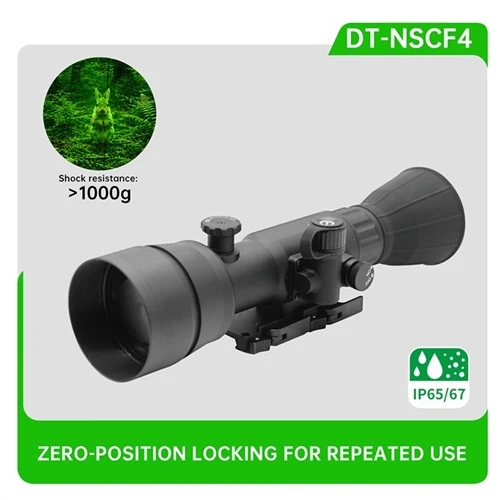
Image intensifier technology works by taking whatever faint light already exists in the environment - moonlight, starlight, even skyglow - and amplifying it thousands of times over until it's bright enough to see. The light passes through the objective lens and hits a photocathode, which converts the photons into electrons. Those electrons are multiplied inside the intensifier tube, then strike a phosphor screen that converts them back into a visible image. That's the source of the classic green (or monochrome) glow most people associate with traditional night vision - and it happens essentially in real time, with no meaningful lag between what's happening in front of you and what you see through the eyepiece.
This is why image intensifiers perform so well in genuinely dark conditions: they don't need much light to work with, because they're built specifically to stretch a small amount of ambient light into a usable image, rather than depending on long exposure times the way a camera sensor does.
Tube generation matters a lot here. Gen 1 tubes are entry-level with lower resolution and gain. Gen 2 and Gen 2+ improve sensitivity, resolution, and tube lifespan considerably. Gen 3 sits at the top, with the best low-light sensitivity and the longest service life, which is why it's the standard in most professional and military-grade gear. When comparing tubes, the numbers worth paying attention to are FOM (Figure of Merit), resolution in lp/mm, signal-to-noise ratio, gain, and photocathode sensitivity - these tell you far more about real performance than the generation label alone.
Digital night vision: capturing light electronically
Digital night vision takes a different path. Instead of amplifying light optically, it captures the scene with a CMOS or CCD sensor, converts that into a digital signal, processes it, and displays the result on a small internal screen. It's conceptually closer to a low-light camera than to a traditional scope.
The catch is that digital sensors need a certain amount of light to produce a clean image, and in very dark conditions they often can't gather enough on their own.
That's why many digital night vision devices pair an IR illuminator with the sensor - the illuminator projects infrared light onto the scene, invisible to the naked eye, and the sensor picks up the reflection to build an image even in total darkness. It's worth being clear about what this means, though: having IR illumination isn't the same as having strong natural low-light performance. In most cases it's compensating for what the sensor can't do on its own, not amplifying ambient light the way an intensifier tube does.

Where the two technologies actually differ
The comparisons that matter most to buyers come down to a handful of practical questions.
Image intensifiers tend to hold up more consistently across a range of natural light - moonlight, starlight, overcast nights, deep shadow - without needing active illumination. Digital devices can do well in moderate low light, but as ambient light drops toward zero, they increasingly rely on IR to keep producing a usable image.
Because an intensifier tube works optically and electronically in real time, there's essentially no delay between the scene and what you see. Digital devices go through a capture-process-display pipeline, which can introduce a small but noticeable lag - something worth considering if you're tracking fast-moving targets.
This one isn't a clean win for either side. Intensifiers tend to render motion more naturally and handle detail well in true low light, while digital processing can offer more consistent output and additional features like on-screen data. Clarity, contrast, and dynamic range vary a lot by device quality on both sides
This is one of the more practical differences in the field. A digital unit typically needs an image sensor, a processing chip, a display, circuitry, a battery, and often an IR module - all of which add bulk. A well-engineered image intensifier, by comparison, can be built around a much simpler optical/electronic core, which is a big part of why they remain popular for helmet-mounted and other weight-sensitive applications
Simpler electronics generally mean longer runtime. Digital devices draw more power overall, and an active IR illuminator adds meaningfully to that draw, so battery life tends to favor intensifiers, especially over long shifts or missions.
Intensifiers use automatic gain control and bright-light protection to avoid damage or washout when they suddenly encounter a light source like headlights or a flare. Digital sensors manage the same problem through exposure control. Both approaches have matured a lot, but they behave differently in practice.
There's a common assumption that digital is always cheaper and intensifiers are always more expensive - that's not really true. Price depends heavily on tube grade and FOM on the intensifier side, and on sensor quality, optics, and display on the digital side. You can find budget and premium options in both categories.
Strengths and trade-offs of each

Image intensifiers Night vision
Image intensifiers are hard to beat for natural low-light imaging, real-time observation, and smooth tracking of moving targets, and they can be built genuinely light and compact - which is exactly why they dominate helmet-mounted and other head-worn use cases. The trade-offs are that higher-generation tubes are expensive, they need protection circuitry for sudden bright light, and the image itself has that recognizable night-vision look rather than natural color.
Digital night vision
Digital night vision earns its place through processing flexibility: multiple viewing modes, built-in recording and photo capture, digital zoom, and on-screen data - plus more flexible pricing depending on configuration. The trade-offs are that performance leans heavily on sensor quality, extremely low light often means falling back on IR, there can be a touch of processing lag, and all that extra circuitry tends to add size, weight, and power draw.

Why digital devices tend to run bigger
This comes up constantly, so it's worth addressing directly: more digital components don't automatically mean a smaller device. A digital unit is carrying a sensor, a processing chip, a display, a battery compartment, often an IR module, a mainboard, and the structural housing needed to manage heat from all of it. An intensifier tube, by contrast, does most of its work with a much simpler optical-electronic path. That said, as sensors, chips, and displays keep shrinking, newer digital devices are trending toward lighter, more compact designs - the gap is closing, just not gone yet.
Why Defense and law enforcement still lean on intensifiers

It's not that digital night vision is behind the times - it's that intensifiers are still hard to beat for the specific demands of professional use: real-time observation with zero processing lag, reliable tracking of moving targets, natural imaging in genuinely dark conditions, low weight for long periods of helmet wear, strong battery life for extended missions, and near-instant readiness when you need to use the device right away. Those priorities line up almost perfectly with what intensifier technology does best.
Matching the technology to the task
As a general guide: image intensifiers are the clear choice for military and law enforcement night observation and for helmet-mounted use, where weight and real-time performance matter most. Either technology works reasonably well for hiking, outdoor observation, and wildlife watching. Nighttime security can go either way depending on whether recording matters.
If you need video recording, digital night vision is the better fit. For truly complete darkness, you're generally looking at digital with IR support or thermal imaging. And for extended head-worn use, a lightweight intensifier setup tends to be the more comfortable long-term choice.
Is one technology just "better"?
Not really - and this is probably the most useful thing to take away from this whole comparison. The right question isn't which technology is more advanced, it's which one actually fits your task. That means thinking through your operating environment, observation distance, available ambient light, whether you need to record footage, whether you need data connectivity, whether IR is acceptable for your use case, how much weight you can carry, and what your budget actually allows. Choosing the "more advanced" option on paper doesn't help much if it's the wrong tool for what you're actually doing at night.

Where thermal imaging fits in
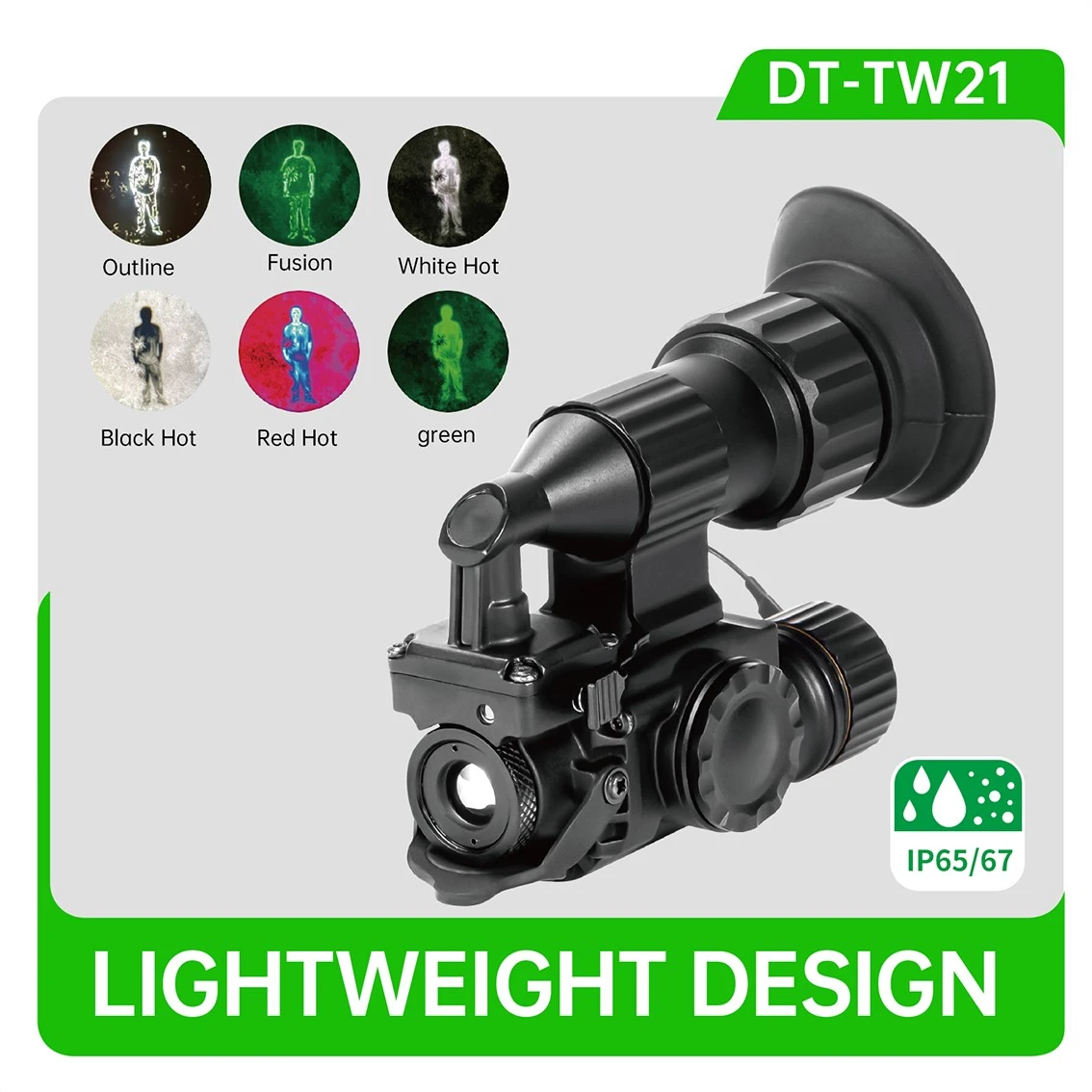
It's worth mentioning a third technology that often comes up in the same conversation: thermal imaging. Where image intensifiers amplify existing light and digital night vision captures and processes it, thermal imaging works completely differently - it detects infrared heat signatures and temperature differences, independent of visible light entirely.
That's why it's increasingly paired with the other two in fusion devices: digital night vision plus thermal, or image intensifier plus thermal, giving users the strengths of both in a single unit.
For helmet-mounted use, a lightweight intensifier wins. For complete darkness, look at digital with IR or a thermal device
If natural low-light observation is your priority, go with an image intensifier.
If you need to record or take photos, or you need data connectivity, digital night vision is the better fit.
And if you're trying to identify targets across varied and unpredictable conditions, a fusion device combining intensifier or digital tech with thermal is often the strongest all-around option.
Bottom line
Image intensifier night vision is built for real-time observation in natural low light. Digital night vision is built for processing power, recording, and expanded functionality. Thermal imaging is built for detecting heat where there's no visible light to work with at all. None of them is a strict upgrade over the others - the right pick comes down to what you're actually trying to see, and under what conditions.
Looking for the right night vision solution for your application? Explore our image intensifier, digital night vision, and thermal fusion lineup - monocular, binocular, and quad-tube configurations available - or get in touch with our team for detailed specs and a recommendation tailored to your use case.
FAQ

01.What is the difference between image intensifier and digital night vision?
02.Is image intensifier night vision better than digital night vision?
03.Can digital night vision work without IR illumination?
04.Why are traditional digital night vision devices larger?
05.Which technology is better for helmet-mounted use?
06.Can digital night vision see in complete darkness?