Introduction
Choosing a night vision scope used to be simple: you picked a generation, paid accordingly, and accepted the trade-offs. Today the market splits three ways - analogue image intensifier tubes, digital sensors, and thermal imaging - and each wins in a different situation. Buyers who choose on magnification and price alone routinely end up with a device that performs beautifully in a showroom and disappoints in the field.
At Shenzhen Detyl Optoelectronics, we build night vision and thermal imaging devices for hunting, wildlife observation, security, and marine use. This guide covers the six specifications that determine real-world performance, so you can match the technology to how you actually intend to use it.
How Night Vision Actually Works
There are three distinct approaches, and confusing them is the most common buying error.
Image intensifier (I2) tubes amplify existing light - starlight, moonlight, or an IR illuminator - and output a green phosphor image. They deliver the most natural, low-latency image and remain the standard for professional and military use. Digital night vision uses a sensitive CMOS sensor, displays the result on a screen, and can record video, but depends heavily on an IR illuminator in deep darkness. Thermal imaging detects heat rather than light and works in total darkness, fog, and smoke, but shows no colour or fine detail.
Many field users ultimately prefer a hybrid: a thermal device for detection and a night vision scope for identification.
Criterion 1: Image Intensifier Generation and Sensitivity
If you are buying an analogue night vision scope, generation is the first question. Generation determines sensitivity and gain, which together decide how dark an environment the device can still resolve.
- Gen 1: affordable, needs active IR, limited tube life, noticeable distortion near edges.
- Gen 2 / Gen 2+: a microchannel plate raises gain substantially; usable in true darkness with modest IR.
- Gen 3 / Gen 3+: highest sensitivity, longest tube life, best contrast in extreme low light.
Generations cannot be upgraded. Buying one level higher than you think you need is usually the right call, because a night vision scope is a long-term purchase and tube performance does not improve with firmware.
Criterion 2: Resolution, SNR, and Low-Light Performance
Two devices from the same generation can differ dramatically. Three figures matter:
- Resolution (line pairs per millimetre) governs how much detail you can resolve - essential for identifying rather than merely detecting.
- Signal-to-noise ratio (SNR) determines how clean the image looks. A high-SNR tube produces a crisp image with little scintillation; a low-SNR tube sparkles, which makes judging distance and shape harder.
- Gain and photocathode sensitivity decide how little light is enough.
Ask for these figures in writing. A night vision scope sold only on "high definition" gives you nothing to compare.
Criterion 3: Magnification and Field of View
Magnification is a trade-off, not a feature. Higher magnification narrows the field of view, which makes target acquisition in woodland or at close range genuinely difficult. A 3× to 5× device is the sweet spot for most hunting and observation, while 1× is preferred for navigation, driving, and situations where situational awareness matters more than detail.
For digital models, optical magnification is fixed by the lens, while digital zoom merely crops the sensor. Digital zoom helps you see pixels, not information. Treat optical magnification as the specification and digital zoom as a convenience.
Criterion 4: IR Illumination
Infrared illumination is the hidden variable in digital night vision. A device with a strong onboard IR illuminator can work in absolute darkness; one with a weak illuminator needs ambient light to be useful. Check the illuminator's output power, its beam adjustability, and its wavelength.
Longer wavelengths, around 940 nm, are far less visible to animals and to other observers than 850 nm, at the cost of some brightness. If stealth matters - hunting predators, observing shy wildlife, or covert security - specify the 940 nm illuminator.
Criterion 5: Thermal Fusion and Detection
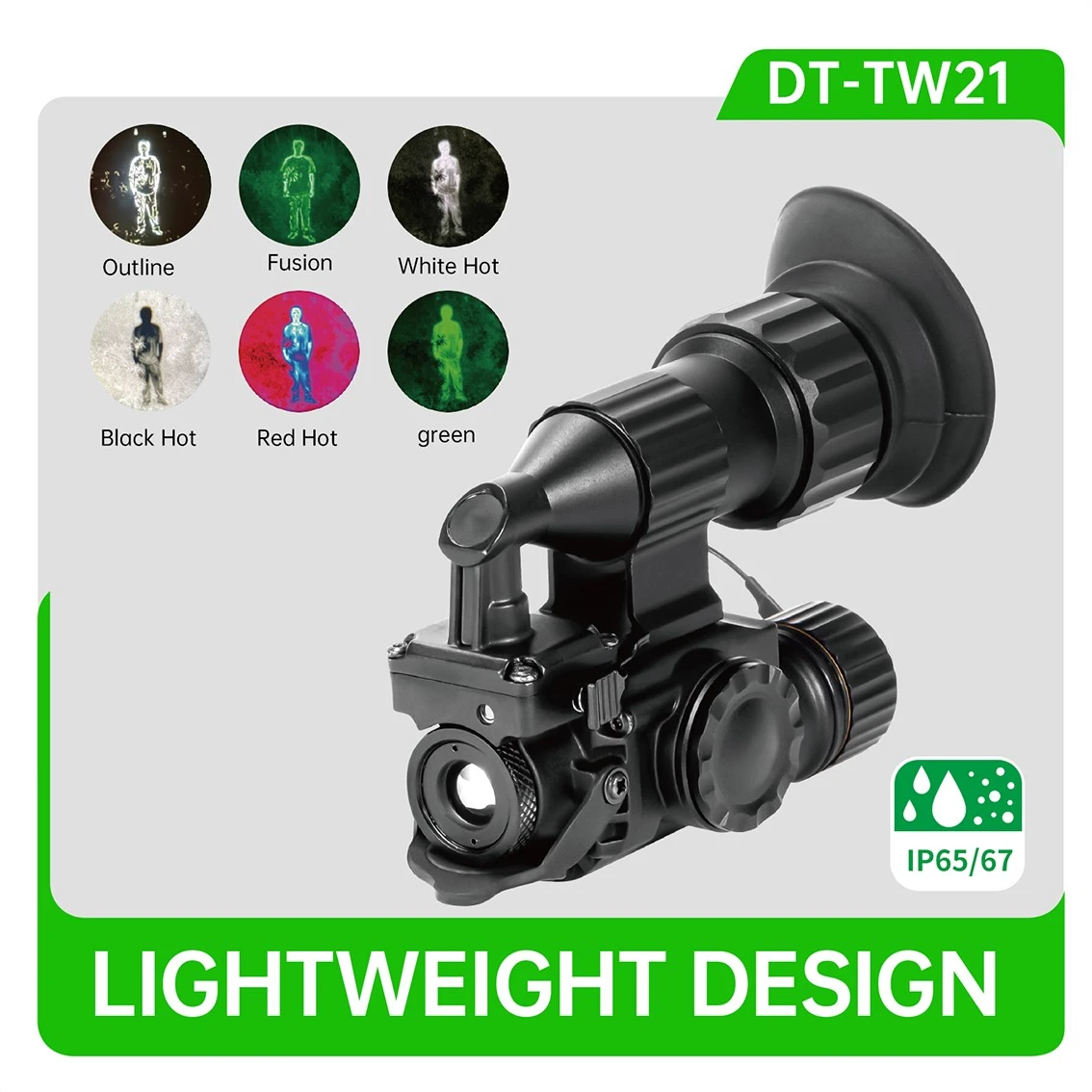
Thermal fusion overlays a thermal image on the intensified or digital image, giving you both heat detection and visible detail in one view. It is the single most useful feature for anyone who must find warm targets in dense cover, because heat signature cuts through camouflage that defeats image intensification.
Standalone thermal devices see further in poor weather and complete darkness, but a fused night vision scope is better for identification at moderate range. If your work involves both detection and recognition, specify fusion rather than choosing between the two technologies.
Criterion 6: Build, Mounting, and Environmental Sealing
Field devices live in rain, dust, cold, and recoil. Look for a sealed, nitrogen-purged housing that resists internal fogging, and honest IP or waterproof ratings rather than vague claims. Mounting matters as much as optics: a night vision scope fitted to a rifle must survive recoil, so confirm the stated recoil rating rather than assuming it.
Weight and balance also determine whether you will actually carry the device. A heavier night vision scope with better optics is worthless if it stays in the vehicle. Check eye relief too, since short eye relief on a high-recoil platform is a safety issue, not a comfort one.
Power, Recording, and Accessories
Field reliability often comes down to boring details. Digital and thermal units drain batteries quickly when the IR illuminator or display is running, so check whether the device uses standard cells or a proprietary pack, and whether it can run from an external power bank. Carrying spare batteries is normal; needing a specific charger in a remote location is not.
Recording changes how you use a night vision scope. Digital and thermal models record to internal memory or a card, which is essential for security work, wildlife documentation, and evidence. Analogue intensifier tubes generally cannot record without an external camera adapter, so if video matters, plan the accessory from the start.
Also budget for the small items that make a device usable: a quality mount, a lens cloth, a protective daylight cover, and a carry pouch. A night vision scope without a secure mount or a safe storage method gets damaged long before its tube wears out.
Common Mistakes Buyers Make
- Comparing magnification instead of generation. A 10× Gen 1 device is not better than a 4× Gen 2+.
- Expecting digital night vision to work without IR. In true darkness, the illuminator is the device.
- Ignoring SNR and resolution. These decide whether you can identify a target or only spot a blob.
- Choosing thermal when you need identification. Thermal finds targets; it does not read detail.
- Overlooking mounting and recoil ratings. Optics that shift after a few shots are useless.
FAQ
Q1: Which is better, night vision or thermal imaging?
They answer different questions. A night vision scope shows detail and colour-like context but needs some light; thermal detects heat in complete darkness and through light cover. Fusion combines both.
Q2: Can a digital night vision scope see in total darkness?
Only with an IR illuminator. In complete darkness an analogue Gen 2+ or Gen 3 tube with a modest IR source is usually more effective than an entry-level digital unit.
Q3: What magnification do I need for hunting?
For most hunting at 100–200 metres, 3× to 5× optical magnification gives a workable balance of detail and field of view. Higher magnification suits long-range observation from a fixed position.
Q4: What does SNR mean on a night vision scope?
Signal-to-noise ratio describes image cleanliness. Higher SNR means less sparkle and better contrast, which makes identification faster and less tiring over long sessions.
Q5: Is 940 nm IR better than 850 nm?
940 nm is nearly invisible to game and observers, so it is preferred for hunting and covert work. 850 nm is brighter for the same power and cheaper, so it suits general observation.
Q6: How long does a night vision tube last?
Gen 2 and Gen 3 tubes are typically rated for 10,000 hours or more of operation. Leaving a device running unused shortens tube life for no benefit.
Q7: Can I use a night vision scope in daylight?
Never point an intensifier tube at bright light without a daylight cover or protective filter. Digital and thermal devices tolerate daylight far better, which is a practical argument for fusion devices.
Conclusion
Choosing a night vision scope comes down to matching technology, generation, and features to the job. Decide first whether you need amplified light, sensor-based imaging, or heat detection; then fix the generation and SNR, and only then compare magnification and price.
Shenzhen Detyl Optoelectronics manufactures night vision scopes, monoculars, binoculars, and thermal fusion devices with adjustable magnification, sealed housings, and 940 nm IR options for hunting, security, and marine applications. Send us your operating conditions and target range, and our team will recommend the right configuration.