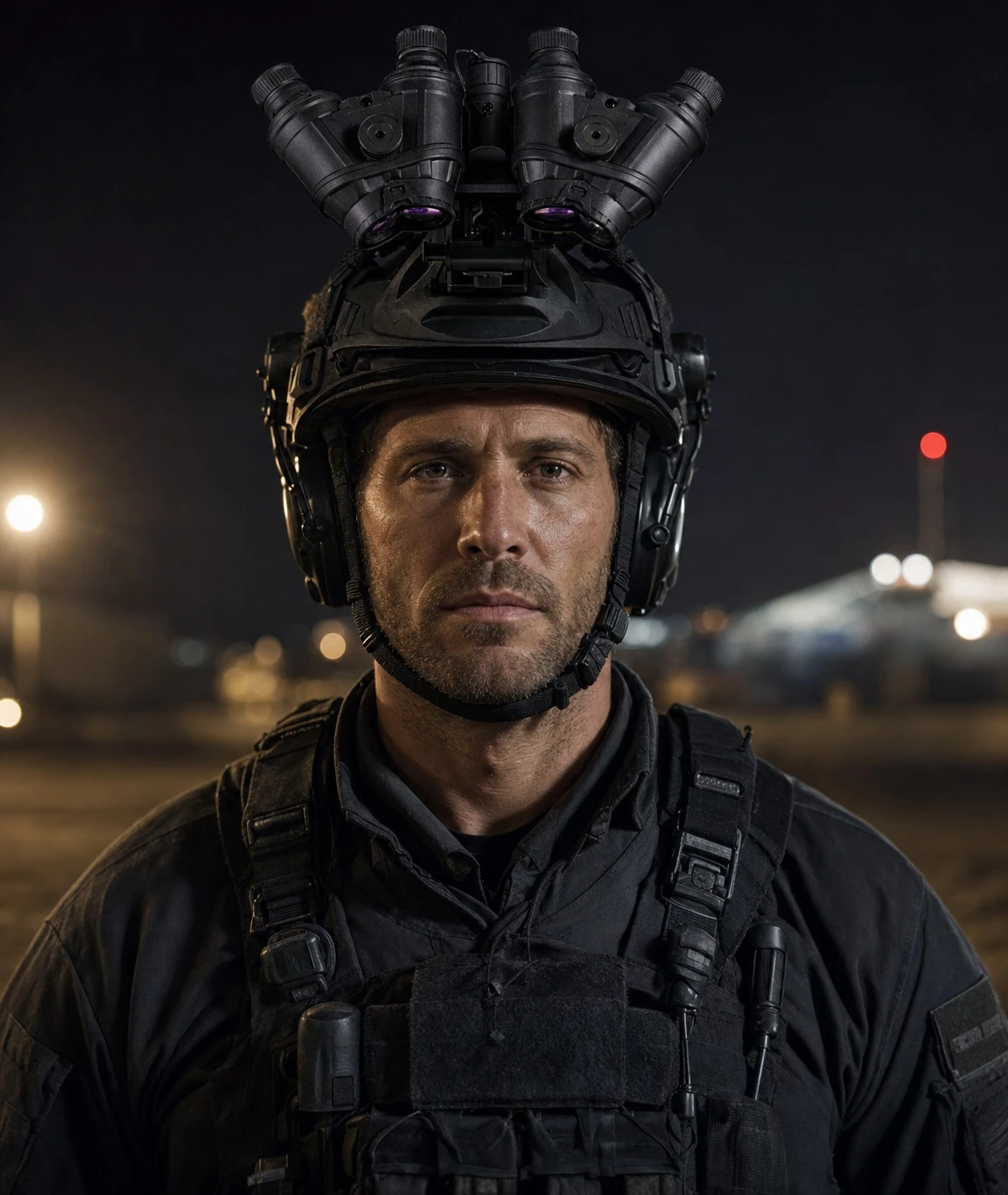
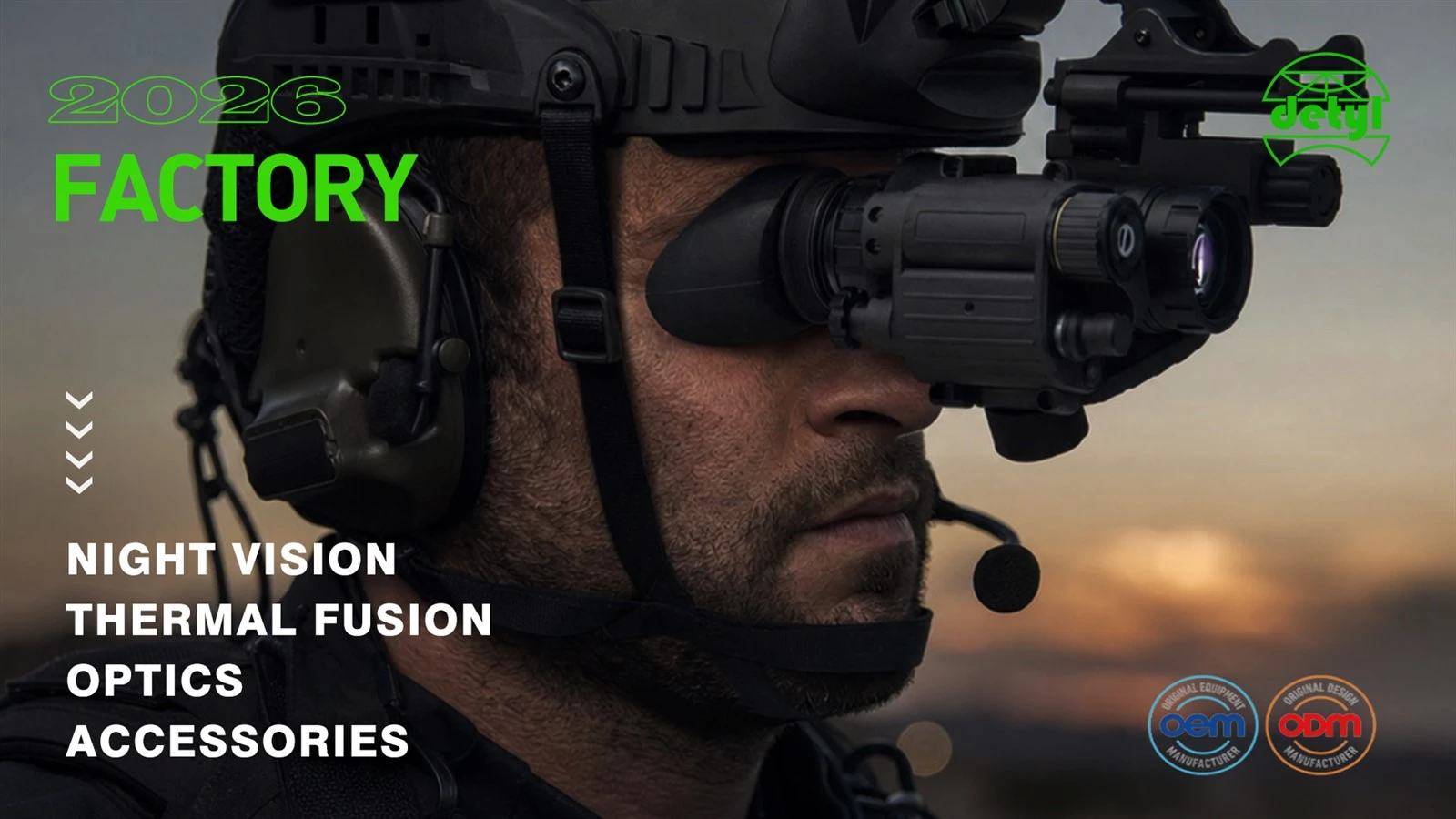
How to Choose a Night Vision Helmet Mount: CNC-Machined NVG Mounts for PVS-7, PVS-14 and PVS-31
A night vision device is only as good as the mount holding it in place. You can spend thousands of dollars on a PVS-14 or PVS-31, but if the mount wobbles, drifts out of position mid-mission, or takes two hands and a curse word to flip up, the device underperforms no matter how good the tube inside it is.
That's the question most buyers are actually asking when they search for a "night vision helmet mount" - not "which one looks coolest," but:
- Is this mount compatible with my night vision device?
- Will it fit on a standard tactical or ballistic helmet?
- Can I actually adjust it to sit comfortably in front of my eyes?
- How stable is it once it's locked down?
- Does it flip up out of the way when I don't need it?
- What's actually different between one NVG helmet mount and another?
- And does CNC machining matter, or is that just a phrase companies slap on a product page?
Detyl builds CNC-machined night vision helmet mounts for a range of platforms, including configurations designed around PVS-7, PVS-14, and PVS-31 devices. Before getting into the specific models, it's worth walking through what a helmet mount actually does and why the way it's manufactured has a direct effect on how it performs.
What Is a Night Vision Helmet Mount?
What Does an NVG Helmet Mount Do?
Strip it down to its simplest description, and a night vision helmet mount is the mechanical link in a three-part chain: helmet → mount → night vision device. That's it. But that one connection is doing a lot of work.
A well-designed mount needs to:
Hold the night vision device securely to the helmet
Set the correct eye-to-eyepiece distance
Allow vertical adjustment, so the device lines up with your eyes rather than your forehead or your chin
Allow front-to-back adjustment for comfort and balance
Support flip-up operation, so the device can be swung out of your field of view without removing it entirely
In some models, provide automatic detection of the flip-up/flip-down state
That last point isn't universal across every mount on the market, but it shows up on some of Detyl's models - the HC8, for example, uses magnetic state detection to sense whether the device is in the down (viewing) or up (stowed) position, along with adjustment across vertical, horizontal, radial, and rotational axes.
Why Does CNC Machining Matter for an NVG Helmet Mount?
It's tempting to reduce this to a marketing shorthand: "CNC machining equals high quality." That's not a very useful sentence, though, because it doesn't tell you anything about why. So let's actually unpack it.
Precision Manufacturing
CNC machining is a subtractive process - a machine cuts a component out of solid material according to a digital design, rather than casting or molding it. What that buys you, in practical terms, is tighter control over:
The mounting interface where the mount meets the helmet rail
01
The adjustment mechanism (the sliders, knobs, and pivots you'll actually be touching)
02
Locking components that keep everything from shifting under movement
03
Connection points between the mount and the night vision device
04
Dimensional consistency from one unit to the next
05
If those tolerances are loose, you feel it immediately - play in the adjustment knobs, a mount that shifts slightly when you run, a locking mechanism that needs to be over-tightened to hold.

Aviation Aluminum Construction
Detyl's mounts are built from aviation aluminum alloy, a material choice that shows up consistently across the lineup - including the HC21 and HC31S. It's a practical trade-off: strong enough to hold a device securely under movement and impact, light enough that it doesn't add unnecessary weight to a helmet system that already has a night vision device, a counterweight, and possibly a communications headset sitting on it.
Why CNC Machining Is Different From a Generic Mount
It's easy to fall into a "we're better than everyone else" tone here, but that's not a particularly convincing argument without evidence, and it's not really the point. The more accurate way to put it is this: not all helmet mounts are manufactured the same way. For applications where dimensional consistency, adjustment accuracy, and mechanical fit actually matter - and with a device sitting inches from your eyes, they do - CNC machining provides a controlled manufacturing process for producing the components that go into the mount.

Key Features to Consider When Choosing an NVG Helmet Mount
Before comparing specific models, it helps to know what you're actually evaluating. Here's the short list.
. Does the mount's interface match your specific night vision device? This is the single most common point of failure in a purchase decision, and it's worth confirming before you buy, not after.
Most tactical and ballistic helmets use a common rail or shroud interface, and a mount needs to match it cleanly - no gaps, no forced fit.
This usually breaks down into vertical, horizontal, front/rear, radial, and flip adjustment. More range generally means the mount can accommodate a wider variety of head shapes, helmet setups, and personal preference.
Once you've dialed in your position, the mount needs to hold it - through movement, through impact, through a long shift. A locking mechanism that loosens on its own defeats the purpose of adjustability in the first place.
When the device isn't needed, it should be able to swing up and out of your line of sight without you having to remove it from the helmet entirely.
Some mounts can sense whether the device is in the up or down position - useful for power management and situational awareness, depending on how your specific device is set up.
Every gram on a helmet mount is a gram added to the total NVG setup, which usually already includes a counterweight to balance the device itself. Lighter mounts reduce fatigue over long use.
Detyl CNC-Machined Night Vision Helmet Mount Series
Rather than four separate long product write-ups, here's a quick reference to start with:
|
Mount |
Designed For |
Main Application |
Key Features |
|
DT-HC8 |
PVS-7 |
Traditional helmet setup |
Multi-axis adjustment, magnetic state detection, flip-up |
|
DT-HC9 |
PVS-14 |
Traditional helmet setup |
Front/rear adjustment, flip fine adjustment, flip-up |
|
DT-HC21 |
PVS-31 |
Traditional helmet setup |
2-axis adjustment, magnetic detection, flip-up |
|
DT-HC31S |
PVS-31 |
Traditional helmet setup |
Multi-axis adjustment, magnetic detection, flip-up |
A note on compatibility: always confirm the interface match between your specific night vision device and the mount before purchase, since device generations and manufacturers can vary in their mounting hardware even within the same PVS family.

DT-HC8: Helmet Mount for PVS-7
The HC8 is built around traditional PVS-7 setups. It's machined from aviation aluminum alloy with high-precision CNC processing, and the adjustment range is genuinely broad for a compact mount:
- Vertical adjustment: ±10 mm
- Horizontal adjustment: ±25 mm
- Radial adjustment: ±12 mm
- Rotation: 2 × 80°
- Magnetic state detection
- Weight: 120 g
That combination of vertical, horizontal, and radial adjustment matters most when you're dialing in eye relief - the distance between your eye and the eyepiece - along with height and lateral positioning. Once it's set, the flip-up function lets you swing the device up and out of the way without breaking down the whole mount, which is the difference between a two-second adjustment and a two-minute one.
DT-HC9: Helmet Mount for PVS-14
The HC9 is designed around PVS-14 devices, and its standout feature is front/rear adjustment paired with what Detyl calls flip fine adjustment.
- Vertical adjustment: ±12 mm
- Front/rear adjustment
- Flip fine adjustment
- Flip-up operation
- Weight: 170 g
Front/rear adjustment solves a specific problem: eye relief isn't the same for every user, and a device sitting too close or too far from your eye is uncomfortable at best and unusable at worst. The flip fine adjustment feature is worth calling out separately - it lets you make small upward or downward angle adjustments to the device via a dedicated knob, which is a level of precision most flip-up mounts don't offer.


DT-HC21: Helmet Mount for PVS-31
The HC21 is built for PVS-31 configurations and leans toward a compact structure with a genuinely wide rotation range.
- Vertical adjustment: ±11 mm
- Radial adjustment: ±15 mm
- Rotation: up to 270°
- Two-point magnetic detection
- Weight: 197 g
- Dimensions: 81 × 68 × 58 mm
That 270° figure refers to rotation adjustment range, not field of view - worth being precise about, since the two get conflated sometimes. In practice, that wide rotation range gives you more flexibility in how the device sits relative to your helmet and head angle.
DT-HC31S: Helmet Mount for PVS-31
The HC31S also targets PVS-31 setups but takes a different approach to adjustment than the HC21, favoring multi-axis control over maximum rotation range.
- Vertical adjustment: ±10 mm
- Horizontal adjustment: ±12 mm
- Radial adjustment: ±12 mm
- Rotation: 2 × 90°
- Magnetic state detection
- Aviation aluminum alloy, CNC machined
- Weight: 150 g
The multi-axis adjustment on the HC31S, combined with automatic position locking and a flip-up design, makes it a good fit if you want fine control across more axes rather than one dominant range of motion.

PVS-7 vs PVS-14 vs PVS-31 Helmet Mounts: Which Should You Choose?
This isn't a "which one is better" question - it's a "which one matches your device" question.
If you use a PVS-7 → the DT-HC8 is built for that platform.
If you use a PVS-14 → the DT-HC9 is the match.
If you use a PVS-31 → both the DT-HC21 and DT-HC31S are designed for it, with the choice coming down to whether you prioritize wide rotation range (HC21) or multi-axis adjustment (HC31S).
The right mount ultimately comes down to three things: the interface of your night vision device, the interface of your helmet, and the adjustment range you actually need for your use case.
Products Description
How to Install a Night Vision Helmet Mount
Installation follows a fairly consistent sequence across models, though you should always check the specific instructions that ship with your mount.
Step 1: Prepare the Helmet and NVG.
Confirm your helmet's rail or shroud interface and make sure your night vision device is compatible with the mount before you start.
Step 2: Install the Mount Interface.
Attach the base interface to the helmet's shroud or rail system, making sure it's seated flush and secure.
Step 3: Attach the Night Vision Device.
Connect the device to the mount's front interface, following the specific locking procedure for that model.
Step 4: Adjust Vertical Position.
Set the height so the device lines up with your eyes when the helmet is worn normally.
Step 5: Adjust Front and Rear Position
Dial in eye relief so the eyepiece sits at a comfortable distance.
Step 6: Lock the Mount.
Tighten the locking mechanism fully. A mount that isn't locked down properly will drift during movement, which undoes all the adjustment work from the previous steps.
Step 7: Test Flip-Up Function.
Before you actually need it in the field, flip the device up and back down a few times to confirm smooth operation and that it returns to the same locked position each time.
Common Problems With Night Vision Helmet Mounts
Most complaints about helmet mounts trace back to a handful of root causes.
This is almost always a front/rear adjustment issue - re-check your eye relief setting.
Usually a vertical adjustment problem. Re-center the height before assuming anything's wrong with the device itself.
This points to the locking mechanism or the mounting interface - check that both are fully tightened and seated correctly.
Often a sign the mount wasn't installed or adjusted correctly in the first place, rather than a defect in the flip mechanism itself.
Compatibility has to be confirmed before purchase - an interface mismatch isn't something you can adjust your way around after the fact.
Why the Helmet Mount Is Part of the Complete Night Vision System
It's easy to think of a helmet mount as an accessory - something you buy almost as an afterthought once you've already picked out the device that matters. In practice, it's closer to the opposite. A night vision device isn't used in isolation. The mount determines how it connects to your helmet, how it's positioned in front of your eyes, and how quickly it can be moved out of your viewing position when you need it gone.
Put together, the system looks less like "device plus accessory" and more like night vision device + helmet + mount + user interface - four parts that all have to work together for the whole setup to function the way it's supposed to. That's part of why Detyl builds mounting solutions alongside its night vision devices rather than treating them as a separate product category.
Frequently Asked Questions
What's the difference between a PVS-7 and PVS-14 helmet mount?
+
-
They're built around different device platforms with different mounting interfaces and adjustment needs - a PVS-7 mount like the HC8 isn't interchangeable with a PVS-14 mount like the HC9.
Why are CNC-machined NVG mounts used for night vision systems?
+
-
CNC machining allows tighter control over dimensional consistency and mechanical fit across the mounting interface, adjustment mechanism, and locking components - all of which affect how stable and precise the mount is in use.
Are Detyl helmet mounts made from aluminum?
+
-
Yes, Detyl's mounts use aviation aluminum alloy, chosen for its balance of strength and low weight.
Do Detyl helmet mounts support flip-up operation?
+
-
Yes, all four models in the current lineup - HC8, HC9, HC21, and HC31S - support flip-up operation.
How do I choose the right helmet mount for my night vision device?
+
-
Match the mount to your device platform first (PVS-7, PVS-14, or PVS-31), then narrow it down by the adjustment range and features you need.
Choosing the Right Detyl Night Vision Helmet Mount
If you're trying to boil this down to a quick decision:
PVS-7 → DT-HC8
PVS-14 → DT-HC9
PVS-31 → DT-HC21 or DT-HC31S, depending on whether you want wider rotation range or more adjustment axes
Looking for a CNC-machined helmet mount for your night vision system? Contact Detyl to confirm compatibility, mounting interface, and configuration requirements before you order.