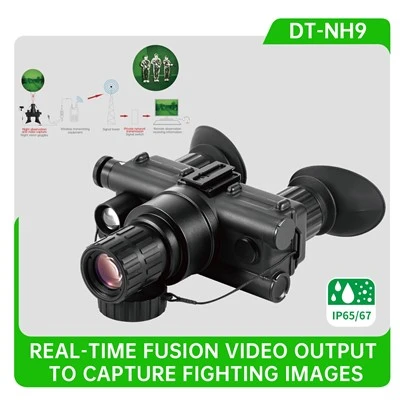
Alright, let’s cut to the chase—if you’ve ever stared at the night, wishing you could make out a hiker off-trail, a search-and-rescue candidate, or even just a cool nocturnal critter in the woods, you’ve probably wondered how those multi purpose night vision binoculars actually work. As someone who’s been supplying these bad boys for years (let’s keep it real, I’ve tested so many models I’ve lost count), I’m here to break this down like I’m chatting with a buddy who’s curious, not a physics textbook. No stuffy jargon, no skipped steps—just the straight dope on how these things turn dark into useful sight.
First off, let’s get one thing clear: these aren’t your grandpa’s old night vision goggles that only worked if there was a moon out. The multi purpose label is totally earned—they do way more than just “see in the dark,” which is why folks from search teams to law enforcement swear by ’em. But to get how they work, we need to start with the basics of light, because the human eye is garbage in low light. Our eyes need way more light to pick up details than we get after sunset or in a dense forest, right? Like, think about trying to read a book with a single candle 50 feet away—you can’t make out the words, but night vision gear can.
Let’s start with the two main types of night vision tech out there, because that’s where the magic happens. Wait, but hold up—this is for multi purpose models, so they’re usually the newer, more flexible ones, not the cheap Gen 1 stuff that dies fast. The core of every night vision binocular, regardless of use, is the image intensifier tube. That’s the heart of the whole operation. Here’s the deets: when it’s dark, there’s always some light bouncing around—even if you can’t see it. We’re talking about ambient light: starlight, moonlight, even tiny bits of infrared (IR) light that our eyes can’t pick up. The image intensifier tube grabs that super weak light, amplifies it millions of times, and turns it into a bright, clear image we can see.
Wait, but multi purpose binoculars aren’t just one tube, right? A lot of them are dual-tubes, which makes sense because your eyes work together to give you depth perception. If you ever used a single night vision monocular, you know how flat everything looks—like a 2D video game. That’s where dual-tubes come in. Each tube is tuned slightly different, like how our two eyes are spaced apart, so when your brain combines the two images, you get actual depth. That’s a game-changer for stuff like search missions or law enforcement, where you need to tell how far away a door is or if a suspect is around a corner. If you want to check out exactly how that dual-tube setup works, head over to our Dual-Tubes Night Vision Binocualrs page—we’ve got side-by-side pics that show the difference between dual and single tube models.
Now, let’s talk about that IR thing I mentioned earlier. Sometimes, if there’s almost zero ambient light—like in a deep cave or a pitch-black alley—those regular starlight photons aren’t enough. That’s where the built-in IR illuminator comes in. It’s basically a tiny flashlight that emits infrared light, which is invisible to humans but acts like a spotlight for the night vision tube. The tube picks up the reflected IR, so you can see even in total darkness. But here’s the pro move with multi purpose models: the IR is adjustable. You don’t want it blasting if there’s a moon around, because that can wash out the image. It’s all about balancing light, which is why these binoculars work for everything from camping to tactical ops.
Another big one for multi use is the field of view (FOV). FOV is how much area you can see at once, right? If you’ve got a super narrow FOV, you’re missing half the scene, which is bad for search teams scanning a woods or a cop looking for a suspect in a crowd. That’s why our FOV 50 Deg Night Vision Binoculars are such a popular pick—50 degrees is the sweet spot. It’s wide enough to take in a big area but not so wide that things get distorted or hard to focus. We get so many messages from search mission teams saying that wider FOV let them spot a hiker in under two minutes instead of sweeping a narrow view for 10 minutes. That’s the real difference these specs make.
Wait, what about magnification? Some people think more magnification is better, but that’s not always true. For a lot of multi use cases—like if you’re hiking and want to spot a bear a mile away, or a cop needing to zoom in on a license plate without getting too close—adjustable magnification is key. You don’t want a fixed 10x zoom if half the time you just need to scan the area quickly. Our Night Vision with Adjustable Magnification line lets you crank it up to 8x or dial it down to 2x in seconds, which is perfect for switching between scanning and zooming in on a target. I’ve seen search teams use this all the time—they’ll scan a 100-yard radius at low mag, then zoom in on a rustle in the bushes to see if it’s a lost person or a deer.


Let’s not forget about the tough stuff. Multi purpose binoculars aren’t just for nice nights—they get dropped, they get rained on, they get used in dust, mud, or freezing cold. The good ones are waterproof, shockproof, and can handle extreme temps, which is why our High Performance Night Vision For Law Enforcement models are built like tanks. Cops can throw them in a patrol car, search and rescue teams can strap them to a harness, and hikers can toss them in a backpack without worrying about them breaking. That durability is part of the multi purpose label—they’ve got to work no matter what environment you’re in.
Let’s walk through how this all works in real life, instead of just specs. Say a search mission team is out in the middle of the woods at 2 a.m. There’s a little starlight, but not enough to make out anything more than shapes. They flip on their dual-tube binoculars. Each tube grabs the faint starlight photons, bounces them off a photocathode (that’s the part that turns light into electrons), amplifies those electrons thousands and thousands of times, then shoots them at a phosphor screen. The phosphor screen glows green (wait, why green? Our eyes are more sensitive to green light, so it’s easier on your eyes after hours of use) and turns those amplified electrons back into a visible image.
If it gets too dark—like they’re in a ravine where no starlight reaches—they turn on the adjustable IR illuminator. The IR light bounces off trees, rocks, or the person they’re looking for, and the tubes pick up that reflected IR, so now they can see sharp details even in total blackness. They switch their FOV to 50 degrees so they can scan a big area fast, and if they spot a possible signal, they crank up the magnification to get a closer look. No more guessing—they can tell for sure if it’s the lost hiker they’re looking for or just a fallen log.
Wait, let’s clear up a common myth: these don’t “see” heat. That’s thermal imaging, which is a whole different thing (and way more expensive, for the record). Night vision is about amplifying existing light, not detecting heat. That’s a big one—people mix them up all the time, but our multi purpose models don’t do thermal, which keeps the cost down so it’s accessible for search teams, small law enforcement units, and even casual users. The tradeoff is worth it for what these can do in low light, especially since they work great with whatever ambient light is available.
Another thing that makes them multi purpose: battery life. The good ones have long-lasting batteries, even when the IR is on. You don’t want your binoculars dying mid-search mission or mid-backpacking trip. Most of our models run on AA batteries (super easy to find, no need for fancy proprietary ones) and can go 10+ hours on a single set, even with the IR on. That’s a huge win for anyone who’s out for a full night of work or fun.
Let’s be real, though—no night vision binocular is perfect in pitch black without IR, right? But the multi purpose ones are designed to adapt. If there’s a little light, they’ll use that to get a clear image; if there’s none, the IR kicks in. They also have auto-gain control, which means they adjust the amplification automatically if a bright light hits them—like a car’s headlights passing by. You don’t get that washed-out, blinding glare that would make you put the binoculars down. That’s a small feature but makes a huge difference when you’re in the field and something unexpected happens.
So why does this matter for you? Whether you’re on a search and rescue team protecting your community, a law enforcement officer needing reliable gear for patrol, a hiker who doesn’t want to get lost after sunset, or just someone who loves stargazing and spotting nocturnal wildlife, multi purpose night vision binoculars are built to handle whatever you throw at them. They’re not a one-trick pony—they do the basic night vision thing, but add all the adjustability and durability to work across different situations.
If you’re in the market for these, don’t waste time on cheap models that die after a month or only work when there’s a full moon. Our line is built for real use, by people who use this gear every day. We’ve got models for every need: dual-tube for depth, 50-degree FOV for scanning, adjustable magnification for close and far, and high-performance options for law enforcement. If you want to check out any of these, just click the links we mentioned earlier—we’ve got all the specs, user reviews, and even video demos so you can see them in action.
If you’re a team lead, a procurement officer, or just someone looking to buy for a group, we’re here to help. We work with search missions, law enforcement agencies, outdoor outfitters, and individual users to find the right multi purpose night vision binoculars for their budget and needs. No confusing sales talk, no hidden fees—just solid gear and honest advice. Hit us up to talk about your requirements, whether you need 5 units for a local search team or a bulk order for a department. We can get you set up with the right tools to make your night work way easier.
References
- U.S. Department of Energy. (2012). Light and Vision: How the Human Eye Performs in Low Light Conditions.
- Night Vision Manufacturers Association. (2021). Guide to Image Intensifier Tube Technology for Commercial and Public Safety Use.
- International Search and Rescue Advisory Group (INSARAG). (2020). Equipment Guidelines for Night Operations in Search and Rescue Missions.
- American National Standards Institute (ANSI). (2019). Performance Specifications for Night Vision Binoculars for Law Enforcement and Public Safety.
- Outdoor Industry Association. (2022). Low-Light Navigation and Observation Gear for Recreational Outdoor Users.