If you’ve ever spent time around long-range shooting communities, you’ve probably heard a lot of debate about optic choice for sniper rifles. Traditional sniper setups have long relied on high-magnification scopes, often 8x to 25x, for precision at distances exceeding 500 yards. But as holographic sights grow in popularity and technology improves, a common question keeps popping up: Can I use a holographic sight on a sniper rifle? As someone who works as a supplier of holographic and reflex optics, I get this question all the time—from competitive shooters upgrading their kits to law enforcement units exploring new gear. The short answer is yes, but with some important caveats that depend on your use case, rifle platform, and the type of holographic sight you choose. Let’s break this down to help you make an informed decision.
First, it’s critical to understand what a holographic sight actually is, and how it differs from the optics that are typically paired with sniper rifles. A holographic sight projects a holographic reticle onto a piece of glass, which you align with your target to aim. Unlike red dot sights, which use a simple LED dot reflected off a lens, holographics create the reticle using a laser etched into a holographic plate—this means the reticle appears to be at the same distance as your target, which many shooters find more intuitive for rapid or long-range shots. For sniper rifles, the key here is that a holographic sight doesn’t rely on magnification, though some models do offer limited zoom. This changes the dynamic compared to a standard sniper scope, which magnifies the target to make small details visible.
Let’s start with when a holographic sight makes sense for a sniper rifle. If you’re a competitive 3-gun shooter or a law enforcement sniper who often engages targets at mid-range—say 100 to 500 yards—without needing extreme magnification, a holographic sight can be a game-changer. For one, holographics have a wider field of view than high-magnification sniper scopes, which is a huge benefit if you need to react quickly to moving targets or close-in threats after a long-range engagement. Many of our customers who use holographics on sniper rifles run them paired with a magnifier, a setup that gives them both the wide field of view for quick target acquisition and the option to zoom in for precision shots. That combination is far lighter than a dedicated high-powered sniper scope with a magnifier, which makes it ideal for mobile sniper roles or operations where gear weight impacts maneuverability.
If you’re looking for a more advanced option, our Advanced Combat Optical Fusion Gunsight is designed specifically to bridge the gap between holographic and traditional sniper optics. This model pairs a low-power variable optic (LPVO) with a holographic reticle, so you get the best of both worlds: the wide, unobscured field of view of a holographic sight at close range, and the ability to crank up magnification out to 8x for targets at 800 yards or more. That’s a perfect fit for snipers who deploy in environments where they might need to shift between rapid mid-range engagements and long-range precision shots without swapping optics. We’ve heard from military units that use this model that it cuts down on the time it takes to adjust between close and long shots, which can be the difference between a hit and a miss in dynamic situations.
Of course, there are limits to what a holographic sight can do on a sniper rifle. If your primary role is long-range precision shooting at distances over 800 yards, a standard high-magnification sniper scope will outperform a holographic sight every time. Holographic sights don’t offer the same level of detail magnification, so you might struggle to identify small targets or make fine adjustments for wind and bullet drop at extreme ranges. That said, even in those cases, some snipers will use a holographic sight as a backup optic or for quick target acquisition while scanning—this is especially true if they’re operating in areas where unexpected close-contact threats can pop up during a long-range mission. It’s not a replacement for a dedicated sniper scope, but it’s a valuable addition that many snipers are now incorporating into their setups.


Another consideration is how the optic mounts to your sniper rifle. Sniper rifles are typically built for stability, so the mount for your holographic sight needs to be rugged enough to handle the recoil of a large-caliber round, like .308 Win or .300 Win Mag. A poorly mounted optic can shift with recoil, throwing off your aim, which is a non-starter for long-range precision. All of our holographic sights are engineered with recoil tolerance in mind, and we recommend pairing them with a high-quality scope mount designed for your specific rifle platform. For example, our Holographic Weapon Sight is rated for up to .338 Lapua Magnum recoil, so it’s durable enough for even the largest sniper rifles. We’ve tested these sights with hundreds of sniper platforms, and they consistently maintain zero even after hundreds of rounds, which is a critical feature for any optic on a sniper rifle.
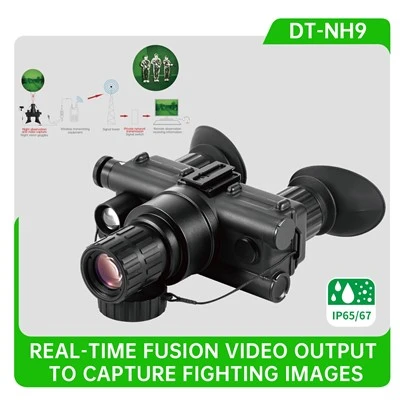
Low-light performance is another factor that comes into play. Many sniper missions take place at dawn, dusk, or even at night, so your optic needs to work well in low light. Holographic sights have come a long way in this area, with models that include night vision compatibility. Our Three Optical Channels Night Vision Sight is designed for exactly this scenario—it integrates a holographic reticle with infrared night vision, so a sniper can use it for both day and night engagements. For snipers who operate in low-light environments, this eliminates the need to swap out optics between day and night missions, which saves time and reduces the risk of missing a zero when you need it most. Unlike traditional sniper scopes that can be hard to use with night vision devices without adapters, this model is built to work seamlessly, making it a solid choice for low-light sniper roles.
I often get asked how holographic sights compare to red dot sights when used on sniper rifles. Red dots are simpler and often more affordable, but they have their limitations for longer-range shooting. Red dot reticles are typically smaller, which can make it harder to place accurately at distances over 300 yards, and they’re more prone to parallax errors at longer ranges. Holographic sights, on the other hand, have a parallax-free reticle at their designated distance (usually 10 yards, but some models have adjustable parallax), which makes them much more consistent for precision shots. If you’re looking for a optic for a sniper rifle that will be used at mid-range, a holographic sight will give you better accuracy than a red dot. For example, our Red Dot Handgun Reflex Sight is a great option for handguns, but it’s not designed for the recoil or precision needs of a sniper rifle, which is why our dedicated holographic models are built to handle that level of use.
Another common misconception is that holographic sights are too fragile for sniper rifles. In the past, that might have been true—early holographic models were bulky and sensitive to rough handling. But modern manufacturing has changed that. Today’s holographic sights are made with impact-resistant materials, sealed against water and dust, and designed to withstand the rigors of military and tactical use. We test every one of our holographic sights to military standards, including drop tests from 5 feet, submersion in 3 feet of water for 30 minutes, and exposure to extreme temperatures. That means they can handle being jostled around in a rifle case, dropped during a mission, or exposed to rain or snow—all of which are common conditions for sniper operations.
When it comes down to it, whether a holographic sight works for your sniper rifle depends on your specific needs. If you need a lightweight, versatile optic that works well for mid-range engagements, offers fast target acquisition, and can pair with a magnifier for longer shots, absolutely. If you’re a long-range precision sniper focused on distances over 800 yards, a holographic sight can still be a valuable secondary optic, but you’ll want to pair it with a dedicated high-magnification scope. The key is to choose a model that’s designed for rifle use, not just handguns or close-quarters combat. All of our holographic sights are engineered for rifles, with the recoil tolerance, durability, and precision needed for sniper platforms, and we’ve worked with shooters across use cases to refine them for different roles.
If you’re in the market for a holographic sight for your sniper rifle, or if you’re curious about how our models can fit into your current setup, our team is here to help. We work with competitive shooters, law enforcement units, and military teams to tailor solutions that meet their specific needs, and we can walk you through everything from mount options to compatibility with your rifle platform.
To connect for procurement and tactical consultation, reach out to our sales and support team to discuss your requirements and find the right holographic sight for your sniper rifle.
References
- U.S. Army Soldier Systems Center. (2021). Optic Performance Standards for Tactical Long-Range Weapons. Natick, MA: U.S. Army Research, Development, and Engineering Command.
- Holographic Weapon Sight Technical Manual. (2022). Advanced Optics Manufacturing, Inc.
- International Association of Shooting Coaches. (2023). Optic Selection for Dynamic Long-Range Shooting. Annual Training Symposium Proceedings.
- Night Vision and Electronic Sensors Directorate. (2020). Compatibility of Day Optics with Infrared Night Vision Systems. Fort Belvoir, VA: U.S. Department of Defense.
- Precision Shooting Magazine. (2022). LPVO vs. Holographic: Mid-Range Optic Performance Comparison. Vol. 18, No. 3.