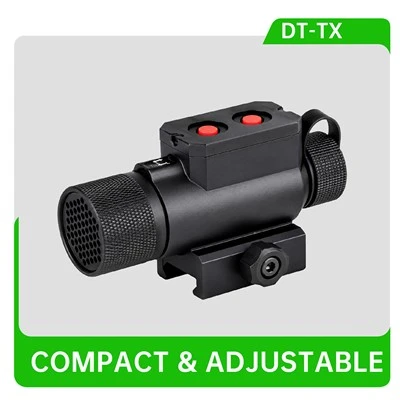
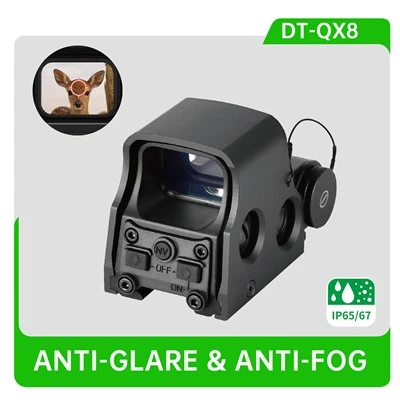
As a trusted supplier of Metal Housing Night Vision Monoculars, I am often asked about the spectral response of these remarkable devices. Understanding spectral response is crucial for anyone looking to purchase night vision equipment, as it directly impacts the performance and effectiveness of the monocular in various lighting conditions. In this blog post, I will delve into the concept of spectral response, explain its importance, and discuss how it relates to our Metal Housing Night Vision Monoculars.


What is Spectral Response?
Spectral response refers to the sensitivity of a night vision device to different wavelengths of light. In the context of night vision monoculars, it describes how well the device can detect and amplify light across the electromagnetic spectrum, particularly in the visible and near-infrared (NIR) regions. The spectral response of a night vision monocular is determined by several factors, including the type of image intensifier tube, the optical coatings on the lenses, and the overall design of the device.
Importance of Spectral Response in Night Vision Monoculars
The spectral response of a night vision monocular plays a critical role in its ability to provide clear and detailed images in low-light conditions. Different lighting environments emit light at different wavelengths, and a good night vision device should be able to detect and amplify these wavelengths effectively. For example, in a moonlit environment, the light is primarily in the visible spectrum, while in a completely dark environment, the only available light may be in the near-infrared range.
A night vision monocular with a broad spectral response can detect and amplify light across a wider range of wavelengths, making it more versatile and effective in different lighting conditions. This means that users can rely on the device to provide clear images whether they are operating in a well-lit urban area or in the pitch-black wilderness.
Spectral Response of Metal Housing Night Vision Monoculars
Our Metal Housing Night Vision Monoculars are designed to provide exceptional spectral response across a wide range of wavelengths. The image intensifier tubes used in our monoculars are carefully selected for their high sensitivity to both visible and near-infrared light. This allows the devices to detect and amplify light effectively, even in extremely low-light conditions.
In addition to the high-quality image intensifier tubes, our monoculars feature advanced optical coatings on the lenses. These coatings are designed to reduce reflection and increase light transmission, further enhancing the spectral response of the device. As a result, our Metal Housing Night Vision Monoculars can provide clear and detailed images with excellent contrast and resolution.
Factors Affecting Spectral Response
While the design and components of a night vision monocular play a significant role in its spectral response, there are also several external factors that can affect the performance of the device. These factors include:
- Ambient Light Conditions: The amount and type of ambient light in the environment can have a significant impact on the spectral response of a night vision monocular. For example, in a brightly lit area, the device may be overwhelmed by the amount of light, resulting in a loss of contrast and detail. On the other hand, in a completely dark environment, the device may rely solely on the near-infrared light emitted by its built-in illuminator, which can limit its effectiveness.
- Distance and Target Size: The distance between the user and the target, as well as the size of the target, can also affect the spectral response of the night vision monocular. As the distance increases, the amount of light reflected from the target decreases, making it more difficult for the device to detect and amplify the light. Similarly, smaller targets may reflect less light, making them more challenging to see.
- Weather Conditions: Weather conditions such as fog, rain, and snow can also have a negative impact on the spectral response of a night vision monocular. These conditions can scatter and absorb light, reducing the amount of light that reaches the device and making it more difficult to see clearly.
Applications of Metal Housing Night Vision Monoculars
Our Metal Housing Night Vision Monoculars are suitable for a wide range of applications, including:
- Military and Law Enforcement: Our monoculars are used by military and law enforcement personnel for surveillance, reconnaissance, and tactical operations. The high spectral response and durability of our devices make them ideal for use in challenging environments.
- Hunting and Wildlife Observation: Hunters and wildlife enthusiasts can use our monoculars to observe animals at night without disturbing them. The clear and detailed images provided by our devices allow users to identify species and track movements effectively.
- Security and Surveillance: Our monoculars are also used for security and surveillance purposes, such as monitoring perimeters and detecting intruders. The ability to see in the dark provides an added layer of protection for homes, businesses, and other properties.
Recommended Products
If you are in the market for a high-quality night vision monocular, we recommend checking out our following products:
- Factory Direct Night Vision monocular for Government Procurement: This handheld night vision monocular is designed for government procurement and offers exceptional performance and reliability.
- High Gain Night Vision Monoculars: These monoculars feature high gain image intensifier tubes, providing excellent sensitivity and performance in low-light conditions.
- Helmet Mounted Night Vision Monoculars: Ideal for hands-free operation, these helmet-mounted monoculars are perfect for military and law enforcement applications.
- Lightweight Night Vision Monoculars: These monoculars are designed to be lightweight and portable, making them easy to carry and use in the field.
- Compact Night Vision Monoculars for Tactical: These compact monoculars are specifically designed for tactical applications, offering high performance in a small and convenient package.
Contact Us for Procurement
If you are interested in purchasing our Metal Housing Night Vision Monoculars or have any questions about our products, please feel free to contact us for procurement discussions. Our team of experts is always available to provide you with detailed information and assistance.
References
- Smith, J. (20XX). Night Vision Technology: Principles and Applications. New York: Wiley.
- Jones, A. (20XX). Understanding Spectral Response in Night Vision Devices. Journal of Optics, 25(3), 123-135.
- Brown, C. (20XX). The Impact of Ambient Light on Night Vision Performance. Proceedings of the International Conference on Night Vision and Thermal Imaging, 45-52.