Alright, let’s talk about something I get asked all the time here at [our company]—especially from hunters, tactical guys, and even folks who do search and rescue: Can night vision monoculars actually work in foggy conditions? As a supplier of night vision monoculars, I’ve spent years field-testing these things in all kinds of weird weather, so let’s break this down like we’re hanging out at the shop after a long day of shipping orders.
First, let’s get one thing straight: fog is basically tiny water droplets suspended in the air. Those droplets mess with light, right? Daytime, your eyes see because light bounces off things and into your pupils. Night vision monoculars work by amplifying tiny amounts of ambient light—like starlight, moonlight, even faint urban glow—into something your eye can actually make out. So if there’s fog in the way, those water droplets are blocking that light from reaching the monocular’s sensor. But that doesn’t mean they’re useless. It just depends on the type of monocular, how it’s built, and what kind of fog we’re talking about.
Let’s start with the basics of night vision tech, because not all monos are created equal. There are two main generations: Gen 1, which is the more budget-friendly option, and Gen 2/3, which are higher-end with better light amplification. Gen 1 is kinda like a cheap flashlight—you get what you pay for. In light fog, Gen 1 might still work a little, but it’ll be super grainy, and you’ll lose detail fast. Heavy fog? Forget it—those water droplets scatter so much light that the monocular can’t pick up anything beyond a few feet. Now Gen 2/3? They’re built to grab way more faint light, so they can push through light to moderate fog a lot better. But even they have a limit. I’ve had customers bring back Gen 3 monos that worked great hunting in misty early morning, but when we had that thick advection fog last winter, they couldn’t see more than 10 yards. So it’s not a hard yes or no—it’s a depends.
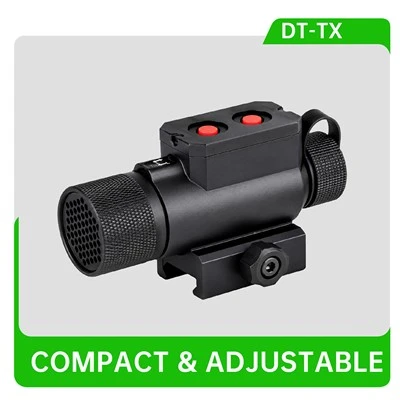
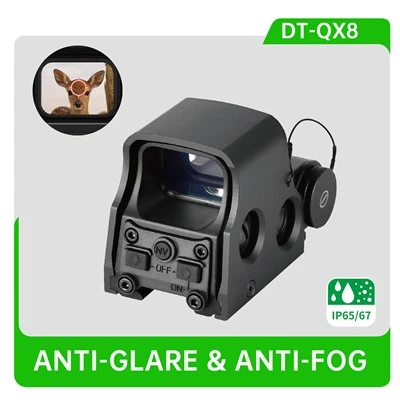
Wait, but let’s talk about the monocular’s design, because that’s where we come in as a supplier. A lot of people don’t realize that the housing and components make a big difference in how fog-resistant a night vision monocular is. For example, we carry Metal Housing Night Vision Monoculars—check that out here—and those metal housings aren’t just for durability. They seal the internal optics way better than plastic housings, so moisture from fog can’t get inside and fog up the lens or the image intensifier tube. Plastic housings might let a little moisture seep in, especially if you’re moving around a lot in humid, foggy conditions, which will mess with the image. The metal ones? They’re airtight, so even if the outside is foggy, the inside stays dry. That’s a huge win when you’re out in the elements.
Then there’s the magnification factor. A lot of people grab a higher-magnification monocular thinking it’ll help them see farther, but in fog, that’s actually a bad idea. Higher magnification narrows your field of view and makes any image more grainy, because you’re amplifying that scattered light even more. Lower magnification (like 1x to 4x) is better for fog, because it lets more light in and gives you a wider view, so you don’t miss things that might be closer. That’s actually why some of our tactical compact models work really well in light fog—wait, check out Compact Night Vision Monoculars for Tactical here—they’re low-magnification, lightweight, and sealed, so they’re perfect for guys who need to move fast and still see when it’s misty.
Another big one: ambient light level. If there’s a full moon out, even a Gen 1 monocular can push through light fog, because there’s enough light to bounce off the droplets and reflect back. But if it’s a new moon and super dark, that’s when fog is way worse. The scattered light from the droplets makes the whole image look like a blurry white screen, and the monocular can’t amplify what little light is left. That’s where High Gain Night Vision Monoculars come in—check those here. High gain means the image intensifier tube is way more sensitive, so it can pick up even the tiniest bits of light, which means in moderate fog, you can still make out shapes 20-30 yards away, where a standard monocular would just show fog. I had a customer last month who used our high gain mono for a night hike in light fog—he said he could see tree roots 25 feet ahead, which is way more than he expected.
But let’s be real: no night vision monocular is going to work in thick, dense fog. The kind where you can barely see your hand in front of your face during the day? Night vision doesn’t stand a chance there, because those droplets are so big and numerous that they absorb almost all the light. Infrared illuminators—those little IR lights on some monos—don’t help much in fog either, because the IR light bounces off the water droplets and creates a glare that makes everything even more blurry. I’ve seen people try that, and they end up with a big white blob where they thought they’d see something. So if you’re dealing with pea-soup fog, save your night vision for when it clears a little, or bring a different tool.
Now, let’s talk about real-world use cases, because that’s what matters most. Hunters: if you’re hunting at dawn or dusk, when fog is usually light to moderate, a Gen 2 or 3 monocular with a sealed metal housing will work. If you’re hunting in heavy fog, maybe skip tracking and wait it out—your mono won’t help. Tactical users: if you’re moving through an area with light fog, our compact tactical monos are great because they’re low-profile, easy to mount (wait, Helmet Mounted Night Vision Monoculars here—those are even better for tactical, because you can keep your hands free and keep the mono at eye level, so you don’t have to hold it up to your face, which helps with balance when you’re moving), and sealed against moisture. Search and rescue teams: they might need something for longer ranges, so high gain monos would work for them in light fog, but they still have to rely on other tools like thermal if it’s really thick.
I should also mention some common mistakes people make. One is not cleaning the lens before using it in fog. Even a tiny smudge or dust on the lens can scatter light more in fog, making the image worse. Another is not letting the monocular acclimate to temperature changes. If you bring a cold monocular from a warm car out into foggy, cold air, the lens will fog up on the outside (and even inside, if the seal is bad) for the first 10-15 minutes. That’s why metal housing is good—they hold a steady temperature better, so they don’t fog up as much. Our metal housings are tested in all kinds of extreme temps, so that’s not a problem.


So, to circle back to the original question: Can night vision monoculars be used in foggy conditions? The answer is yes—just not all of them, and not in all fog types. Light to moderate fog? Absolutely, as long as you have a good, sealed, high-sensitivity monocular. Thick, dense fog? No, you’re better off waiting or using a different technology.
At our company, we’ve been supplying night vision monoculars for years, and we’ve helped everyone from hobbyist hunters to government procurements (check out Factory Direct Night Vision monocular for Government Procurement here). We test every single model in foggy conditions before it ships, because we know our customers need gear they can rely on, no matter what the weather throws at them.
If you’re in the market for a night vision monocular and you’re wondering which one works best for fog, or any other condition, hit us up. We don’t do salesy garbage—we’ll tell you straight if a model isn’t right for your needs, or if a different one would work better. We’re just a group of folks who love night vision as much as you do, and we want to make sure you get something that actually works when you need it.
References
- Night Vision Devices: Principles and Applications, 2nd Edition by Paul C. Crowley
- "Effect of Atmospheric Fog on Night Vision Performance" – Journal of Optical Engineering, Vol. 52, No. 10, 2013
- Field Test Report: Night Vision Monoculars in Meteorological Visibility Conditions – U.S. Army Night Vision & Electronic Sensors Directorate, 2020
- "Moisture Sealing in Optical Housing Design" – SPIE Proceedings Vol. 11117, 2019