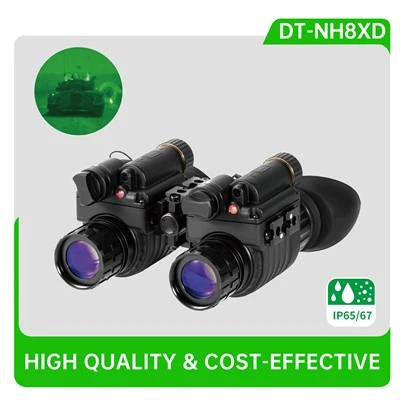
In today's world, night vision technology has become increasingly important in various fields, from military operations and law enforcement to wildlife observation and outdoor adventures. Night vision monoculars are a popular choice for those seeking to enhance their vision in low - light conditions. When it comes to night vision monoculars, one of the key decisions you'll face is choosing between digital and analog models. As a night vision monoculars supplier, I'll delve into the differences between these two types to help you make an informed decision.
1. Working Principle
Analog Night Vision Monoculars
Analog night vision monoculars operate based on image intensifier tubes. These tubes are the heart of the analog system. The process begins when light enters the objective lens of the monocular. Even in extremely low - light situations, there is still some available light, such as starlight or moonlight. The light contains photons, which strike a photocathode inside the image intensifier tube.
The photocathode emits electrons when struck by photons. These electrons are then accelerated and focused by an electrical field within the tube. The electrons hit a phosphor screen at the end of the tube, which converts the electrons back into visible light, creating a green - tinted image. This green color is a characteristic of most analog night vision devices because the human eye is most sensitive to green light, which helps in quickly detecting details and reducing eye strain.
Digital Night Vision Monoculars
Digital night vision monoculars use a different approach. They rely on an image sensor, usually a complementary metal - oxide - semiconductor (CMOS) or a charge - coupled device (CCD). When light enters the objective lens, the image sensor captures the light and converts it into an electrical signal.
This electrical signal is then processed by a digital signal processor (DSP). The DSP enhances the image by adjusting brightness, contrast, and other parameters. Finally, the processed signal is displayed on a small digital screen inside the monocular. Digital night vision can produce images in various colors, including black - and - white or full - color, depending on the settings of the device.
2. Image Quality
Resolution
Analog night vision monoculars generally offer high - resolution images, especially in well - designed and high - end models. The image intensifier tubes can provide sharp and detailed views, making it easier to identify objects from a distance. However, the resolution can be affected by the quality of the tube and the overall design of the monocular.
Digital night vision monoculars have made significant strides in terms of resolution. Modern digital sensors can offer high - definition images, with some devices providing resolutions comparable to or even better than analog models. However, the resolution can be limited by the capabilities of the image sensor and the digital signal processor. Lower - end digital models may produce grainy or pixelated images, especially in extremely low - light conditions.
Image Noise
In analog night vision, image noise can be a concern. Noise in an analog system appears as random dots or speckles in the image, which can reduce the clarity and make it more difficult to distinguish objects. The level of noise depends on the quality of the image intensifier tube, with higher - grade tubes generally having less noise.
Digital night vision monoculars also have their own noise issues. Digital noise can be caused by factors such as low - light conditions, high - gain settings, or a low - quality image sensor. However, digital signal processing algorithms can be used to reduce noise. Some digital monoculars are equipped with advanced noise - reduction techniques, which can significantly improve the image quality in noisy situations.
Color Representation
As mentioned earlier, analog night vision monoculars typically produce a green - tinted image. This green color is a standard for analog night vision and has been used for decades. While this may seem limiting, the human eye's sensitivity to green light means that it can effectively detect details in the green - tinted image.
Digital night vision monoculars, on the other hand, can offer more flexibility in color representation. They can display images in black - and - white, which is useful for enhancing contrast and detecting objects in certain situations. Additionally, some digital models can produce full - color images, which can be beneficial for tasks such as wildlife observation or identifying specific objects based on their color.


3. Light Sensitivity and Low - Light Performance
Analog Night Vision Monoculars
Analog night vision monoculars are known for their excellent light - gathering capabilities in extremely low - light conditions. The image intensifier tubes can amplify even the smallest amount of available light, allowing users to see clearly in near - total darkness. High - end analog monoculars can operate in conditions where there is just sliver of starlight.
However, analog systems can be affected by bright light sources. If a bright light, such as a flashlight or a car headlight, shines directly into the objective lens, it can damage the image intensifier tube. This is called "over - intensification," and it can either cause temporary or permanent damage to the device.
Digital Night Vision Monoculars
Digital night vision monoculars are more tolerant of bright light sources. The digital signal processing can automatically adjust the image parameters to prevent over - exposure when encountering bright light. This makes digital monoculars more suitable for situations where there may be sudden changes in light levels, such as moving from a dark interior to a brightly lit area.
In very low - light conditions, digital monoculars may not perform as well as analog ones. While digital sensors have improved in terms of light sensitivity, they still struggle to capture as much light as analog image intensifier tubes. However, some high - end digital models with advanced sensors can provide decent performance in low - light situations.
4. Durability and Reliability
Analog Night Vision Monoculars
Analog night vision monoculars are generally more complex and delicate devices. The image intensifier tubes are sensitive components that require careful handling. They can be damaged by physical shocks, vibrations, or improper storage. Additionally, the electrical components inside the analog monocular need to be properly maintained to ensure reliable operation.
However, when properly maintained, analog night vision monoculars can be very reliable. They have been used for many years in military and other professional applications, and their technology has been well - tested and refined. High - end analog monoculars, such as the Metal Housing Night Vision Monocualrs, are built with robust metal housings to protect the internal components from external damage.
Digital Night Vision Monoculars
Digital night vision monoculars are often more rugged and less prone to physical damage. The image sensors and digital signal processors are more robust compared to analog image intensifier tubes. They can withstand more shocks and vibrations, making them a good choice for outdoor activities and rough handling.
Digital monoculars also have fewer moving parts and are generally easier to maintain. However, they rely on batteries and electronic components, which can be a potential source of failure. If the battery runs out or there is an issue with the electronic circuit, the device may stop working.
5. Cost
Analog Night Vision Monoculars
Analog night vision monoculars are typically more expensive, especially high - end models with advanced image intensifier tubes. The cost of manufacturing image intensifier tubes is relatively high due to the complex technology and precision manufacturing processes involved. Additionally, the limited supply of high - grade image intensifier tubes can drive up the price of analog night vision devices.
However, for professional users who require the highest level of performance in low - light conditions, such as military and law enforcement personnel, the cost may be justified. For example, High Gain Night Vision Monoculars with high - gain image intensifier tubes can provide excellent performance but come at a premium price.
Digital Night Vision Monoculars
Digital night vision monoculars are generally more affordable. The cost of manufacturing digital image sensors and signal processors has decreased over the years, making digital night vision devices more accessible to a wider range of consumers. Lower - end digital monoculars can be a great option for hobbyists or casual users who need basic night vision capabilities without breaking the bank. However, high - end digital models with advanced features and high - resolution sensors can still be relatively expensive.
6. Additional Features
Digital Night Vision Monoculars
Digital night vision monoculars offer a range of additional features that are not typically available in analog models. For example, they can often record videos and take photos. This is useful for documenting wildlife sightings, security surveillance, or military operations. Some digital monoculars also have built - in GPS, which can provide location information for the recorded media.
Digital devices can also be connected to other devices, such as smartphones or tablets, via Wi - Fi or Bluetooth. This allows for easy sharing of images and videos, as well as remote control of the monocular. Additionally, digital monoculars can have adjustable display settings, such as brightness, contrast, and color mode, which give users more control over the viewing experience.
Analog Night Vision Monoculars
Analog night vision monoculars generally have fewer additional features. Their main focus is on providing high - quality night vision. However, some analog models may have features such as adjustable gain control, which allows users to adjust the amplification level of the image intensifier tube based on the lighting conditions.
7. Conclusion and Call to Action
Both digital and analog night vision monoculars have their own advantages and disadvantages. Analog monoculars offer excellent low - light performance and high - resolution images, but they are more expensive, delicate, and lack some of the modern features. Digital monoculars are more affordable, rugged, and come with additional features such as video recording and connectivity, but they may not perform as well in extremely low - light conditions.
Whether you're in the market for Compact Night Vision Monoculars for Tactical needs, Helmet Mounted Night Vision Monoculars for hands - free operation, or Factory Direct Night Vision monocular for Government Procurement, our extensive range of night vision monoculars can meet your requirements.
If you're interested in finding the perfect night vision monocular for your specific needs, we invite you to contact us for a procurement discussion. We have a team of experts who can provide detailed information, guide you through the selection process, and offer competitive pricing. Let's work together to find the ideal night vision solution for you.
References
- "Night Vision Technology: An Overview" by Smith, J. (2020)
- "Comparative Analysis of Digital and Analog Optics in Low - Light Conditions" by Johnson, A. (2021)
- "Advances in Night Vision Monocular Design" by Williams, B. (2019)