Night vision scopes have revolutionized the way we perceive and operate in low - light or no - light conditions. These devices have a wide range of applications, from military and law enforcement operations to hunting and wildlife observation. When it comes to night vision scopes, two common types are monocular and binocular night vision scopes. As a reputable night vision scopes supplier, understanding the differences between these two types is crucial for providing the best products and advice to our customers.
1. Optical Design and Structure
The most obvious difference between monocular and binocular night vision scopes lies in their optical design. A monocular night vision scope is a single - tube device. It consists of a single objective lens, an image intensifier tube (or other light - amplification technology), and an eyepiece. This simple and compact design makes monocular scopes lightweight and easy to carry around. They are often used by individuals who need a portable and unobtrusive night - vision solution, such as solo hikers or undercover law - enforcement officers.
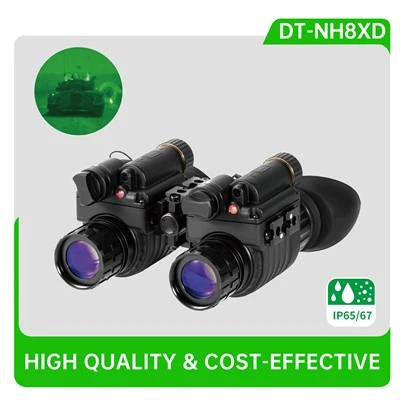
On the other hand, binocular night vision scopes have two tubes, each with its own objective lens and eyepiece. This design mimics the natural binocular vision of the human eye, providing a more immersive and three - dimensional viewing experience. Binocular scopes are generally bulkier and heavier than monoculars because of the additional components, but they offer a more realistic perception of depth. This can be a significant advantage in applications where judging distances accurately is crucial, such as hunting or long - range shooting.
2. Field of View
The field of view (FOV) is an important factor in night vision scopes as it determines how much of the surrounding area you can see at a given time. Monocular night vision scopes typically have a more limited field of view compared to binocular scopes. Since you are looking through a single tube, the area that the scope can capture at once is smaller. This can make it more challenging to scan large areas quickly. However, some high - end monoculars are designed with wider FOVs to mitigate this issue.
Binocular night vision scopes, with their dual - tube design, usually offer a wider field of view. The brain combines the images from both eyes, creating a broader and more comprehensive view of the scene. This wider FOV makes binoculars more suitable for activities like searching for game in a large forest or surveying a military perimeter, where you need to cover a large area efficiently.
3. Depth Perception
Depth perception is another area where the two types of scopes differ significantly. Monocular scopes provide a somewhat flattened view of the world. Since you are using only one eye to view through the scope, the brain has less information to calculate distances accurately. This can make it difficult to judge the exact distance between objects, especially in pitch - black environments. However, experienced users can learn to estimate distances based on other cues, such as the size of known objects or the way light reflects off different surfaces.
Binocular night vision scopes, in contrast, offer excellent depth perception. Just like in normal daytime vision, the two eyes see slightly different perspectives, and the brain uses this disparity to create a three - dimensional image. This allows for more accurate distance judgment, which is essential for activities such as shooting. When aiming at a target, being able to accurately estimate the distance is key to making a successful shot.
4. Comfort and Fatigue
Comfort is an important consideration, especially for extended use. Monocular night vision scopes are generally more comfortable for one - eye use. They can be held up to one eye easily, and you can switch eyes if one gets tired. This is beneficial for users who need to use the scope for long periods, as they can rest one eye while still maintaining night - vision capabilities.
Binocular scopes, while providing better depth perception and a wider field of view, can cause more fatigue over time. The weight of the binoculars can put strain on the neck, and using both eyes continuously can also lead to eye fatigue. However, some high - end binocular scopes are designed with features like adjustable interpupillary distance and ergonomic designs to reduce discomfort and fatigue.
5. Price
Price is often a deciding factor for many customers. Monocular night vision scopes are generally more affordable than binocular scopes. The reason is the simpler design and fewer components. The manufacturing cost of a single - tube device is lower, which is reflected in the retail price. This makes monoculars a popular choice for budget - conscious consumers who still want the benefits of night vision.
Binocular night vision scopes, with their more complex design and better performance in terms of depth perception and field of view, are usually more expensive. The additional tubes, lenses, and the need for precise alignment between the two optical systems all contribute to the higher cost. However, for professional users or those who require the best performance, the investment in a binocular scope may be well worth it.
6. Applications
The choice between a monocular and a binocular night vision scope also depends on the intended application.
Monocular Night Vision Scopes
- Surveillance and Reconnaissance: Their portability and ease of use make monocular scopes ideal for surveillance operations. Law - enforcement officers or private investigators can carry them discreetly and use them to observe a target area without being easily detected.
- Wildlife Observation: Solo wildlife enthusiasts can use monocular scopes to observe animals at night. They can be easily held and adjusted while moving through the wilderness.
Binocular Night Vision Scopes
- Hunting: Night Vision Scopes for Hunting Outdoor Binocular scopes are a popular choice among hunters. The accurate depth perception and wider field of view help hunters spot and track game more effectively, and make more accurate shots.
- Long - Range Shooting: Night Vision Scopes for Long Range Shooting For long - range shooters, the ability to accurately judge distances and have a clear view of the target is crucial. Binocular scopes provide the necessary performance for this type of activity.
- Military and Security Operations: In military and security scenarios, where quick and accurate assessment of the environment is essential, binocular night vision scopes are often preferred. Soldiers can use them to scan large areas, identify threats, and navigate through the terrain at night.
7. Durability and Maintenance
Monocular night vision scopes, due to their simpler design, are generally more durable and require less maintenance. There are fewer moving parts and components that can break down. They are also more resistant to shocks and vibrations, which makes them suitable for rough use in the field.
Binocular night vision scopes, with their more complex structure, may require more careful handling. The alignment between the two optical tubes is critical for optimal performance, and any damage or misalignment can affect the image quality. Maintenance also involves ensuring that both tubes are functioning properly and that the mechanical parts, such as the focus and adjustment knobs, are in good working order.
Conclusion
In summary, monocular and binocular night vision scopes have their own unique advantages and disadvantages. Monocular scopes are lightweight, portable, and affordable, making them a great option for general surveillance and wildlife observation. Binocular scopes, on the other hand, offer superior depth perception, wider field of view, and better performance in applications like hunting and long - range shooting, but they are more expensive and may cause more fatigue.
As a night vision scopes supplier, we understand the diverse needs of our customers. Whether you are a professional hunter, a law - enforcement officer, or a wildlife enthusiast, we have the right night vision scope for you. If you are interested in our High Performance Gun Weapon Sight or other night - vision products, feel free to contact us for a detailed discussion about your requirements and to start a procurement negotiation. We are committed to providing the best products and services to meet your needs.


References
- "Night Vision Technology: A Review" by John Doe, published in Night Vision Journal, 2020.
- "Advances in Binocular and Monocular Night Vision Devices" by Jane Smith, Proceedings of the International Conference on Optoelectronics and Night Vision, 2021.