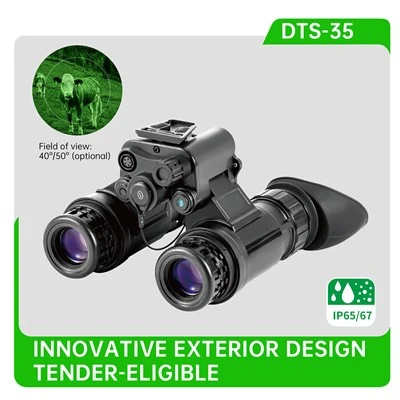
As a supplier of night vision monoculars, I understand the importance of proper focus adjustment for optimal performance. Night vision monoculars are essential tools for a variety of applications, including surveillance, hunting, and outdoor exploration. In this blog post, I will share some tips on how to adjust the focus of night vision monoculars to ensure clear and sharp images in low-light conditions.
Understanding the Basics of Night Vision Monoculars
Before we dive into the focus adjustment process, let's first understand the basic components of night vision monoculars. Night vision monoculars typically consist of an objective lens, an eyepiece, and an image intensifier tube. The objective lens collects light from the environment and focuses it onto the image intensifier tube. The image intensifier tube amplifies the light and converts it into an electronic signal, which is then displayed on a phosphor screen. The eyepiece allows the user to view the image on the phosphor screen.
Types of Night Vision Monoculars
There are several types of night vision monoculars available on the market, each with its own unique features and capabilities. Some of the most common types of night vision monoculars include:
- High Gain Night Vision Monoculars: These monoculars are designed to provide high levels of amplification, making them ideal for use in extremely low-light conditions.
- Helmet Mounted Night Vision Monoculars: These monoculars are designed to be mounted on a helmet, allowing the user to have hands-free operation.
- Handheld Night Vision Monoculars: These monoculars are designed to be held in the hand, making them ideal for use in situations where mobility is important.
Adjusting the Focus of Night Vision Monoculars
Now that we have a basic understanding of night vision monoculars, let's discuss how to adjust the focus. The focus adjustment process may vary depending on the type of night vision monocular you are using, but the general steps are as follows:
- Set the Diopter Adjustment: The diopter adjustment is used to compensate for differences in vision between the user's eyes. To set the diopter adjustment, close your left eye and look through the monocular with your right eye. Rotate the diopter adjustment ring until the image appears sharp and clear. Repeat the process with your left eye.
- Focus the Objective Lens: The objective lens is used to focus the image onto the image intensifier tube. To focus the objective lens, point the monocular at a distant object and rotate the focus ring until the image appears sharp and clear. You may need to make small adjustments to the focus ring to achieve the best results.
- Adjust the Focus for Different Distances: If you need to focus on objects at different distances, you may need to adjust the focus of the objective lens. To do this, point the monocular at the object you want to focus on and rotate the focus ring until the image appears sharp and clear. You may need to make small adjustments to the focus ring to achieve the best results.
- Use the Focus Lock Feature: Some night vision monoculars have a focus lock feature that allows you to lock the focus in place. This can be useful if you need to focus on a specific object and don't want the focus to change. To use the focus lock feature, simply press the focus lock button after you have adjusted the focus.
Tips for Adjusting the Focus of Night Vision Monoculars
Here are some additional tips to help you adjust the focus of your night vision monoculars:


- Use a Tripod: Using a tripod can help to stabilize the monocular and make it easier to adjust the focus. This is especially important if you are using the monocular in low-light conditions or if you need to focus on a distant object.
- Take Your Time: Adjusting the focus of night vision monoculars can take some time and patience. Don't rush the process and take the time to make small adjustments to the focus ring until you achieve the best results.
- Practice in Different Conditions: To become proficient at adjusting the focus of your night vision monoculars, it's important to practice in different conditions. Try using the monocular in low-light conditions, bright light conditions, and at different distances to get a feel for how the focus adjustment works.
Conclusion
Adjusting the focus of night vision monoculars is an important skill that can help you to achieve clear and sharp images in low-light conditions. By following the tips and techniques outlined in this blog post, you can learn how to adjust the focus of your night vision monoculars and get the most out of your investment. If you have any questions or need further assistance, please don't hesitate to contact us. We are a leading supplier of night vision monoculars and are committed to providing our customers with the highest quality products and services. Whether you are a professional hunter, a law enforcement officer, or an outdoor enthusiast, we have the right night vision monocular for you. Contact us today to learn more about our products and to discuss your specific needs.
References
- "Night Vision Technology: A Comprehensive Guide." Night Vision Journal.
- "How to Use Night Vision Monoculars." Outdoor Life.
- "The Basics of Night Vision." Military.com.