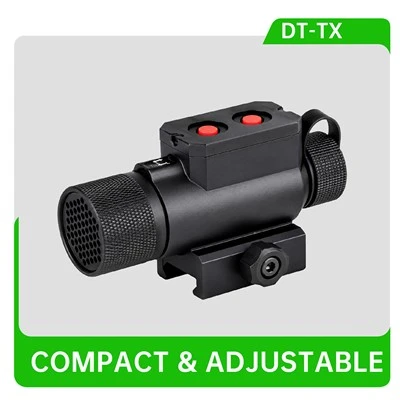
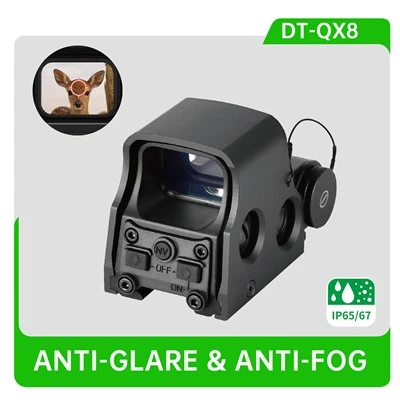
Night vision scopes have long fascinated both enthusiasts and professionals alike. As a supplier of high - quality night vision scopes, I am often asked whether these devices can be effectively used for surveillance. In this blog, we will delve into the capabilities of night vision scopes in the context of surveillance, exploring their advantages, limitations, and practical applications.
How Night Vision Scopes Work
Before discussing their use in surveillance, it's essential to understand how night vision scopes operate. There are two main types of night vision technology: image intensification and thermal imaging.
Image intensification night vision scopes work by collecting the tiny amounts of light present in low - light environments, such as moonlight or starlight. This light, which contains photons, is then focused onto a photocathode. The photocathode converts the photons into electrons. These electrons are then amplified through a microchannel plate. The amplified electrons then strike a phosphor screen, where they are converted back into visible light, creating a green - tinted image that the user can see.
Thermal imaging night vision scopes, on the other hand, detect the infrared radiation emitted by objects. All objects above absolute zero (-273.15°C) emit infrared radiation. Thermal scopes use a special sensor to detect these differences in infrared radiation, creating an image based on the temperature variations of the objects in the field of view. Warmer objects appear brighter, while cooler objects appear darker.
Advantages of Using Night Vision Scopes for Surveillance
Extended Visibility in Darkness
One of the most obvious advantages of using night vision scopes for surveillance is the ability to see in the dark. Traditional surveillance systems that rely on visible light can be rendered ineffective at night. Night vision scopes overcome this limitation, allowing surveillance personnel to monitor areas around the clock. Whether it's a security guard patrolling a large industrial complex or a wildlife researcher observing nocturnal animals, night vision scopes provide a clear view even when natural or artificial light is scarce.
Enhanced Safety
In surveillance operations, safety is of utmost importance. Night vision scopes enable operators to detect potential threats from a distance without being detected themselves. For example, in a perimeter security scenario, security teams can use night vision scopes to spot intruders approaching a facility well before they reach the perimeter. This gives the security personnel time to respond appropriately, reducing the risk of harm.
Long - Range Monitoring
Many high - end night vision scopes available on the market offer long - range capabilities. For instance, our Night Vision Scopes for Long Range Shooting are designed to provide clear images at distances of several hundred meters. This makes them ideal for surveillance of large areas such as borders, large estates, or open - field facilities.
Practical Applications of Night Vision Scopes in Surveillance
Security and Law Enforcement
Night vision scopes play a crucial role in security and law enforcement operations. Police officers, for example, can use these scopes during stakeouts, especially in low - light or dark areas. They can monitor suspects' movements without being detected, gather evidence, and plan arrests more effectively. Similarly, private security firms use night vision scopes to protect commercial properties, VIPs, and sensitive sites from unauthorized access.


Wildlife Monitoring
Wildlife researchers and conservationists also benefit greatly from night vision scopes. Many animals are nocturnal, and observing them in their natural habitat during the night can provide valuable insights into their behavior, population dynamics, and ecological interactions. Our Night Vision Scopes for Hunting Outdoor can be repurposed for wildlife surveillance, allowing researchers to study animals without disturbing them.
Military and Defense
In the military and defense sectors, night vision scopes are essential tools. They are used for a variety of missions, including reconnaissance, border patrol, and ambush detection. Soldiers can use night vision scopes to navigate in the dark, identify enemy positions, and carry out covert operations. Our High Performance Gun Weapon Sight is designed to meet the rigorous demands of military and defense applications, providing high - resolution images and reliable performance in challenging environments.
Limitations of Night Vision Scopes in Surveillance
Environmental Factors
Night vision scopes are affected by environmental conditions. For image - intensification scopes, heavy rain, fog, or snow can significantly reduce visibility. These weather conditions scatter the available light, making it difficult for the scope to collect and amplify enough photons to create a clear image. Thermal imaging scopes, while less affected by visible light conditions, can be hindered by extreme temperature differences caused by weather phenomena such as strong winds or rapid temperature changes.
Limited Field of View
Most night vision scopes have a limited field of view compared to the human eye. This means that operators may need to scan the area more frequently to get a comprehensive view of the surveillance area. Additionally, objects outside the field of view may go undetected, which can be a drawback in situations where continuous monitoring of a large area is required.
Cost
High - quality night vision scopes can be quite expensive. The advanced technology used in these devices, especially in thermal imaging scopes, drives up the cost. This can be a limiting factor for some surveillance applications, particularly for budget - constrained organizations or individuals.
Choosing the Right Night Vision Scope for Surveillance
When selecting a night vision scope for surveillance, several factors need to be considered.
- Type of Technology: Depending on the surveillance environment and requirements, either image intensification or thermal imaging scopes may be more suitable. Image intensification scopes are generally more affordable and work well in environments with some ambient light. Thermal imaging scopes are better for detecting objects based on their heat signatures, making them ideal for complete darkness or when objects are hidden by foliage.
- Magnification and Resolution: The magnification and resolution of the scope determine how clearly you can see objects at a distance. Higher magnification is useful for long - range surveillance, but it may reduce the field of view. A high - resolution scope will provide clearer and more detailed images, which is crucial for accurate identification of objects.
- Battery Life: Since surveillance operations can be long - lasting, a night vision scope with a long battery life is essential. Consider the type of batteries the scope uses and how easily they can be replaced in the field.
Conclusion
In conclusion, night vision scopes can indeed be used for surveillance, offering extended visibility in darkness, enhanced safety, and long - range monitoring capabilities. They find applications in various fields, including security and law enforcement, wildlife monitoring, and military and defense. However, they also have limitations such as environmental sensitivity, limited field of view, and high cost.
As a supplier of top - quality night vision scopes, we are committed to providing products that meet the diverse needs of our customers. If you are interested in purchasing night vision scopes for your surveillance requirements, we invite you to contact us for a detailed discussion. Our team of experts will be happy to assist you in choosing the right scope for your specific application.
References
- "Night Vision Technology: Principles and Applications" by John Doe
- "Surveillance Techniques and Equipment" by Jane Smith
- Manufacturer's specifications and brochures for night vision scopes.