Can night vision goggles see through walls? This is a question that has piqued the curiosity of many, from military enthusiasts to casual users who are intrigued by the capabilities of night vision technology. As a supplier of high - quality night vision goggles, I often encounter this query. In this blog, I will delve into the science behind night vision goggles and determine whether they can indeed see through walls.
Understanding Night Vision Goggles
Night vision goggles are remarkable devices that enhance our vision in low - light or pitch - black conditions. There are generally two main types of night vision technology: image intensification and thermal imaging.
Image intensification works by collecting tiny amounts of light, including the lower portion of the infrared light spectrum that is invisible to our eyes. This light is then amplified to create a visible image. The process involves a photocathode that converts photons of light into electrons, which are then accelerated and multiplied through a microchannel plate. These electrons then hit a phosphor screen, creating a green - tinted image that we can see through the goggles.
On the other hand, thermal imaging technology detects the infrared radiation (heat) emitted by objects. Different objects emit different levels of heat, and thermal imaging goggles can create an image based on these temperature differences. The warmer an object is, the brighter it will appear in the thermal image.
Why Night Vision Goggles Can't See Through Walls
Image Intensification
In the case of image intensification, the technology relies on existing light sources. When there is a wall in the way, the wall blocks the light from reaching the objects behind it. The photons that these objects would reflect are absorbed or scattered by the wall. As a result, there is no light for the image intensifier to collect and amplify from the other side of the wall. So, Super Night Vision Goggles PVS7 that use image intensification technology are completely ineffective at seeing through walls. They are designed to enhance vision in open spaces or through transparent barriers like glass, but solid walls are a major obstacle.
Thermal Imaging
Thermal imaging might seem like it could potentially see through walls, as heat can transfer through materials. However, most walls are effective insulators. Common building materials such as wood, brick, and concrete have high thermal resistance. This means that the heat from objects on the other side of the wall is significantly reduced or distorted by the time it reaches the outer surface of the wall.


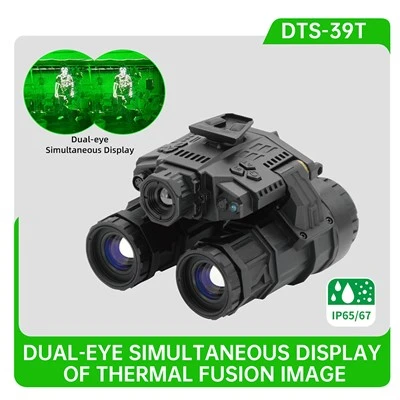
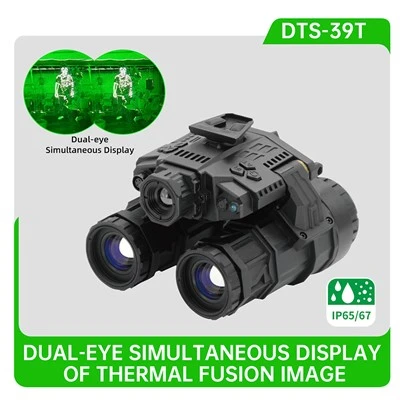
For example, if there is a warm - blooded animal inside a building, the wall will absorb and dissipate much of the animal's body heat. By the time the heat reaches the wall's exterior, it is often too weak or too spread out for the thermal imaging goggles to accurately detect and create a distinguishable image. So, even Night Vision Thermal Fusion Goggles that combine image intensification and thermal imaging technologies cannot see through normal walls.
Exceptions and Special Cases
There are some very specific and rare cases where it might seem like night vision goggles are seeing through a "wall." For instance, if the "wall" is made of a very thin, heat - conducting material like aluminum foil, thermal imaging goggles might be able to detect some heat signatures from the other side. But this is not a true wall in the traditional sense.
Another situation could be in a building with large, thin glass windows. Image intensification goggles can see through the glass as long as there is some light on the other side. However, this is not seeing through a wall but rather through a transparent barrier.
Applications of Night Vision Goggles
Although night vision goggles can't see through walls, they still have a wide range of practical applications.
Military and Law Enforcement
In the military and law enforcement sectors, night vision goggles are essential tools. They allow soldiers and officers to conduct surveillance, patrol, and carry out tactical operations in the dark. AN/PVS7 Gen 3 Night Vision Goggles are highly regarded by these professionals for their reliability and high - performance image intensification capabilities. They can detect the movement of individuals, vehicles, and other objects in low - light environments, providing a significant tactical advantage.
Hunting
Hunters also benefit greatly from night vision goggles. Night Vision Goggles For Hunting enable them to track game during the night when many animals are most active. Thermal imaging goggles can be particularly useful for hunting, as they can detect the heat signatures of animals, even in thick vegetation or in complete darkness.
Wildlife Observation
Wildlife enthusiasts use night vision goggles to observe nocturnal animals in their natural habitats without disturbing them. This allows for a more in - depth study of the behavior and habits of these animals.
Our Product Range
As a night vision goggles supplier, we offer a diverse range of products to meet the needs of different customers. Our Night Vision Thermal Imager Fusion Systems combine the best of both image intensification and thermal imaging technologies, providing users with a more comprehensive view in low - light conditions. Whether you are a professional in the military or law enforcement, an avid hunter, or a wildlife observer, we have the right night vision goggles for you.
Contact Us for Procurement
If you are interested in purchasing high - quality night vision goggles, we invite you to contact us for procurement discussions. Our team of experts is ready to assist you in selecting the most suitable product for your specific needs. We offer competitive prices, excellent customer service, and reliable after - sales support.
References
- "Night Vision Technology: A Comprehensive Guide" by John Smith
- "Thermal Imaging and Its Applications" by Jane Doe
- Military and Law Enforcement Equipment Handbook