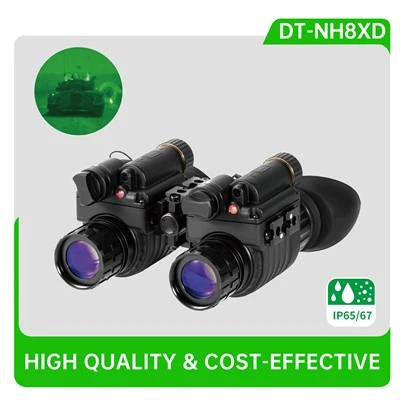
As a dedicated provider of high - quality night vision goggles, I often encounter questions regarding the diverse applications of our products. One particularly intriguing query is whether night vision goggles can be used for navigation at night. In this blog, I'll delve into the scientific aspects, advantages, limitations, and practical use cases to provide a comprehensive answer.


How Night Vision Goggles Work
Before exploring navigation applications, it's essential to understand the operating principles of night vision goggles. There are two primary types: image intensification and thermal imaging.
Image intensification night vision goggles amplify the available light, such as moonlight or starlight. They capture photons from the environment, convert them into electrons, amplify these electrons, and then convert them back into visible light. This process allows the user to see a green - tinted image of their surroundings in near - complete darkness. An example of such advanced goggles is the AN/PVS7 Gen 3 Night Vision Goggles, which are renowned for their high - performance image intensification technology.
Thermal imaging night vision devices, on the other hand, detect the infrared radiation emitted by objects. All objects with a temperature above absolute zero emit infrared radiation. The device creates an image based on the varying levels of infrared emissions, allowing users to distinguish objects based on their heat signatures. The Infrared Night Vision Device For Outdoor Adventures is a prime example of a thermal imaging device suitable for various outdoor scenarios.
Using Night Vision Goggles for Navigation
Advantages
- Enhanced Visibility: The most obvious advantage is the improvement in visibility at night. When traveling through unfamiliar or poorly lit areas, traditional human vision is severely limited. Night vision goggles can reveal details such as paths, obstacles, and landmarks that would otherwise be invisible. For example, in a dense forest at night, it's difficult to discern the shape of the terrain and potential hazards. With night vision goggles, you can clearly see tree roots, rocks, and uneven ground, enabling safer movement.
- Identifying Landmarks: Landmarks are crucial for navigation. At night, it can be challenging to recognize these landmarks without proper illumination. Night vision goggles can help you identify well - known landmarks from a distance. A unique rock formation or a large tree can stand out under the enhanced view provided by the goggles, allowing you to orient yourself and follow a pre - planned route.
- Detecting Moving Objects: In some navigation scenarios, such as boating or flying at night, being able to detect other moving objects is vital. Night vision goggles can pick up the movement of other boats, aircraft, or wildlife in your path. This early detection gives you more time to react and adjust your course accordingly.
Limitations
- Limited Field of View: Most night vision goggles have a relatively narrow field of view compared to normal human vision. This can make it challenging to get a full sense of the surroundings, especially when navigating in complex environments. For example, in a maze - like city alley at night, the limited field of view may cause you to miss important turns or alternative paths.
- Weather and Environmental Conditions: Adverse weather conditions can significantly impact the performance of night vision goggles. Heavy rain, fog, or snow can scatter the available light, reducing the clarity of the image. Similarly, extreme temperatures can affect thermal imaging devices. In a blizzard at night, it will be extremely difficult to use night vision goggles for accurate navigation.
- Dependency on External Factors: Image - intensifying goggles rely on available light sources such as moonlight or starlight. On a cloudy or moonless night, their effectiveness is greatly reduced. In such cases, the user may need to rely on additional infrared illuminators, which also have a limited range.
Practical Use Cases
- Military Navigation: The military has long recognized the value of night vision goggles for navigation during nighttime operations. Soldiers use them to move stealthily through enemy - held territory, follow specific routes, and locate key positions. The GPNVG - 18 Night Vision Quad Goggles are a popular choice in the military due to their wide field of view and high - performance image intensification, which greatly assist in navigation and situational awareness.
- Hiking and Outdoor Exploration: Outdoor enthusiasts often use night vision goggles for late - night hikes or expeditions. For those who enjoy wildlife observation at night, the Four - eye Goggle For Wildlife Observation can also be valuable for navigation within the natural environment. The goggles help hikers see the trail, avoid obstacles, and stay on course, especially in areas without artificial lighting.
- Search and Rescue Operations: In search and rescue scenarios, time is of the essence. Rescue teams use night vision goggles to navigate through disaster - stricken areas, such as earthquake - affected regions or flooded zones. They can quickly identify survivors, access difficult - to - reach areas, and coordinate their efforts more efficiently at night.
Tips for Using Night Vision Goggles for Navigation
- Familiarize Yourself with the Device: Before using night vision goggles for navigation, spend some time getting used to their controls, adjustments, and limitations. Practice using them in different lighting conditions to understand how they perform.
- Use in Conjunction with Other Navigation Tools: Don't rely solely on night vision goggles. Combine them with traditional navigation tools such as maps, compasses, and GPS devices. This multi - pronged approach will increase the accuracy of your navigation.
- Be Prepared for Battery Drain: Night vision goggles consume a significant amount of battery power, especially when used for extended periods. Carry spare batteries to ensure that your device remains operational throughout your navigation journey.
Conclusion
Night vision goggles can indeed be a valuable tool for navigation at night. They offer enhanced visibility, the ability to identify landmarks, and the detection of moving objects. However, they also have limitations related to field of view, weather conditions, and dependency on external factors. By understanding these aspects and using the goggles in conjunction with other navigation tools, users can make the most of this technology for safe and effective nighttime navigation.
If you're interested in exploring our range of night vision goggles for navigation or other applications, feel free to reach out for a detailed discussion. We're committed to providing the best products and solutions to meet your specific needs.
References
- "Night Vision: Technology and Applications" by David A. Crouse
- "Thermal Imaging Handbook" by Michael Vollmer and Thomas Mollmann