Thermal Fusion vs Traditional Night Vision: Why Is Fusion Technology Growing?
Introduction: Why Is Thermal Fusion Becoming More Popular?
Ask anyone who has spent a full night behind a traditional night vision scope, and they'll tell you the same thing: the device is only as good as the light it's given. On a clear night with a bright moon, an image intensifier tube can produce a startlingly crisp picture. Drop that same device into a cloudy, moonless sky - or send it into smoke, heavy shadow, or a cluttered urban environment - and its performance starts to slip.
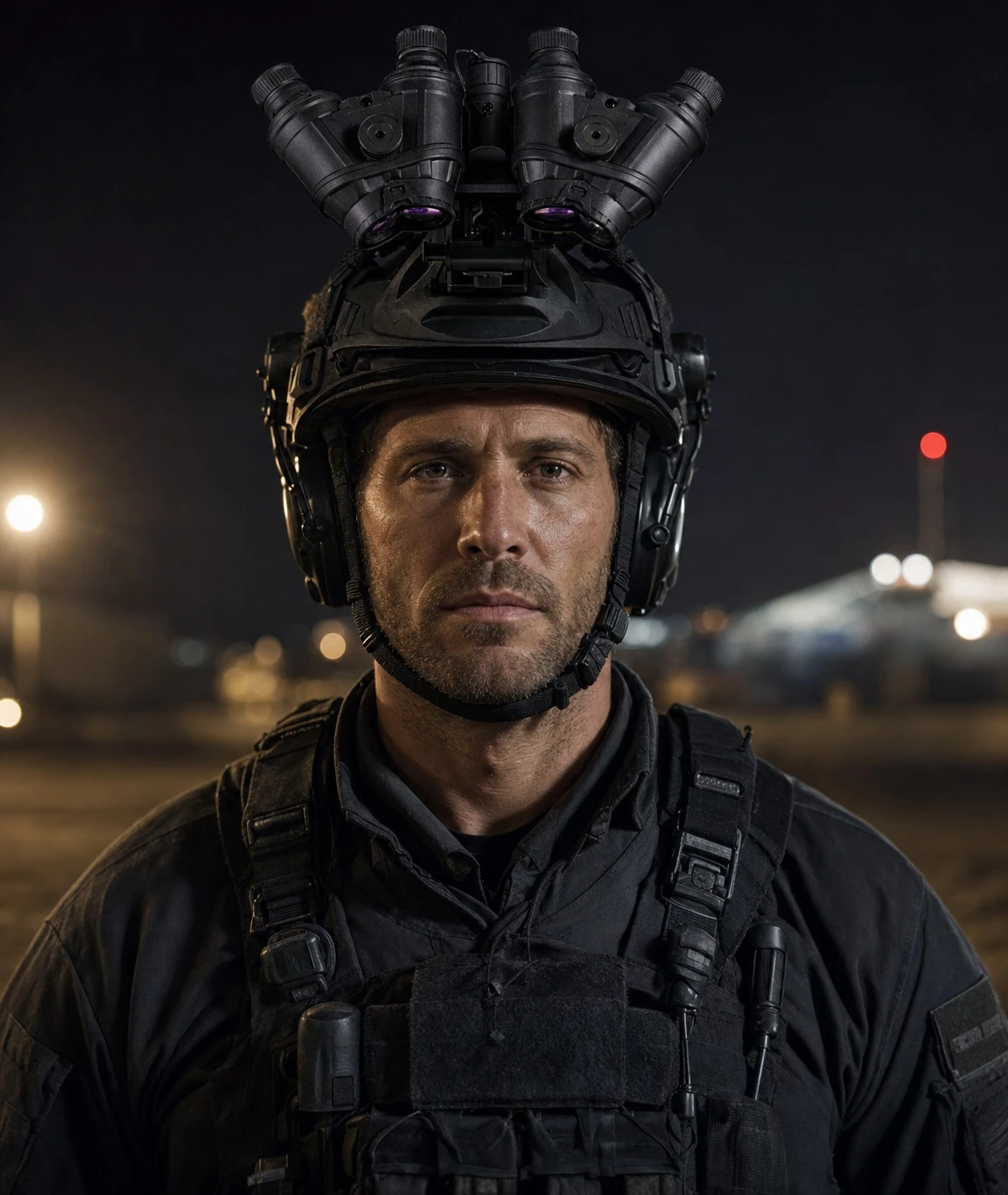
That gap is exactly where thermal fusion night vision has found its footing. By combining low-light night vision with thermal imaging, fusion systems don't just amplify available light - they add a second channel of information that doesn't depend on light at all. Over the past several years, this approach has moved out of niche military applications and into monocular, binocular, and helmet-mounted systems used across security, outdoor operations, and professional inspection work.
That raises a fair question, and one that buyers are asking more often: is thermal fusion simply a more advanced version of traditional night vision, or is it solving a fundamentally different problem? The honest answer is a bit of both - and understanding the difference is the key to choosing the right system for the job.
What Is Traditional Night Vision?

How Traditional Night Vision Works
Traditional night vision follows a fairly simple chain: Ambient Light → Objective Lens → Image Intensifier Tube → Enhanced Image → User.
The objective lens gathers whatever ambient light is available - moonlight, starlight, or artificial light sources - and focuses it onto a photocathode. The photocathode converts photons into electrons, which are then accelerated and multiplied inside the image intensifier tube. That amplified stream of electrons strikes a phosphor screen, which converts it back into a visible image, typically the familiar green or white glow that most people associate with night vision.
You don't need to understand the physics of a photocathode to use the device well - what matters is the practical result: the tube takes a small amount of available light and turns it into something the human eye can actually work with.
For a lot of applications, traditional night vision remains the right tool, and for good reason:
- Clear image quality in suitable low-light conditions
- Natural-looking image, which many users find easier to interpret at a glance
- Good depth perception, useful for navigation and situational judgment
- Relatively lightweight compared to multi-sensor systems
- Mature technology, refined over decades of field use
- Wide range of product options, from entry-level to high-performance tubes
- Easier maintenance and configuration, with fewer components to manage
This is also where a manufacturer's traditional low-light product line tends to shine - Detyl included. For users who need a dependable, natural-image system without the added weight and complexity of a fusion setup, conventional image intensifier devices still do the job well.

What Is Thermal Fusion Night Vision?

How Thermal Fusion Combines Two Imaging Technologies
The core idea behind fusion is straightforward: Low-Light Image + Thermal Image → Fusion Image.
Traditional night vision is built to help a user see more clearly using whatever light is available. Thermal imaging works on an entirely different principle - it detects heat differences, regardless of how dark the environment is. A thermal fusion system takes both of these image streams and overlays them, giving the user a combined picture that carries more information than either channel alone.
Fusion doesn't just make the picture brighter - it changes what kind of information is available in the first place:
- Heat signatures that wouldn't be visible under low-light imaging alone
- Better target and background separation
- Detection capability that holds up in true darkness
- Additional context in low-visibility conditions such as haze or smoke
- Improved awareness of objects that are hard to distinguish using visible or low-light information by itself

It's worth being precise here, because this is where marketing language often overreaches: thermal fusion is not a system that performs better in every environment. It's a system designed to provide additional information, rather than simply replace traditional night vision. That distinction matters more than it might seem, and it shapes almost every buying decision that follows.
Thermal Fusion vs Traditional Night Vision: Key Differences
|
Feature |
Traditional Night Vision |
Thermal Fusion |
|
Main imaging source |
Ambient light |
Low-light + thermal |
|
Performance in complete darkness |
Limited without IR or other illumination |
Thermal channel can provide additional information |
|
Image appearance |
Natural-looking |
Combined/fused image |
|
Heat detection |
No |
Yes |
|
Depth perception |
Strong |
Depends on fusion implementation |
|
Target/background separation |
Depends on lighting |
Can benefit from thermal contrast |
|
Weight |
Generally lighter |
Usually more complex |
|
Battery demand |
Generally lower |
Usually higher |
|
System complexity |
Lower |
Higher |
|
Cost |
Generally lower |
Generally higher |
|
Application |
General nighttime observation |
More demanding low-visibility scenarios |
Even reading through this table, one thing should stand out: fusion doesn't win across the board. It trades weight, battery life, and simplicity for additional information and capability in harder conditions. Whether that trade is worth it depends entirely on what you're using the device for.
Why Is Thermal Fusion Technology Growing?
This is really the question behind the question - and it breaks down into five drivers.
The bar for what buyers expect has moved. A decade ago, the primary question was simply, "Can I see in the dark?" Today, especially among security teams, military users, and professional operators, the question has shifted to something more demanding: "Can I identify what's actually happening in a complex environment?" That's a harder problem, and it's one that light amplification alone doesn't fully solve.
No image intensifier tube can amplify light that isn't there. Very low ambient light, dark backgrounds, deep shadow, poor target-background separation, and environments filled with smoke or haze all push traditional night vision toward the edge of what it can do. That's not a flaw in the technology - it's a physical constraint. But it's a real one, and it's the gap fusion was built to address.
Traditional night vision shows reflected or available light. Thermal imaging shows something else entirely - infrared radiation tied to temperature differences. These aren't competing measurements of the same thing; they're two different kinds of information about the same scene. Combine them, and you get a picture that neither sensor could produce on its own.
This is a trend worth watching closely, and it's one that's been especially visible at recent industry trade shows including CIOE. Smaller electronics, more compact optical assemblies, improved image processing, and better battery integration have all pushed fusion hardware toward form factors that would have been impractical even a few years ago. Helmet-mounted fusion configurations, in particular, have become noticeably more compact and wearable - a shift that's made fusion genuinely practical for handheld and helmet-mounted use rather than a bulky, specialist-only tool.
The modern buyer's checklist has expanded well beyond "low-light imaging." Recording, digital overlays, GPS and compass integration, and wireless or data transmission are all showing up in procurement conversations now. As a result, thermal fusion has stopped being thought of as a simple "thermal attachment" bolted onto a night vision device - it's increasingly treated as the core of a more complete night observation system.
Where Does Thermal Fusion Offer the Most Value?
Rather than making broad industry claims, it's more useful to look at specific scenarios where the trade-offs of fusion tend to pay off.

Security and Nighttime Surveillance
Perimeter observation, night patrol, and low-light monitoring all benefit from stronger target/background separation - a scenario where a warm intruder against a cool background is exactly the kind of contrast thermal imaging is good at picking out.
Search and Observation in Difficult Visibility
Dark environments, haze, shadow, and visually complex backgrounds are precisely the conditions where a purely light-based system starts to struggle, and where an additional thermal channel earns its keep.


Outdoor and Remote Operations
Remote-area work, long-duration observation, nighttime navigation, and general situational awareness all tend to benefit from having more than one type of information available, particularly when conditions can shift over the course of a mission.
Professional Inspection Applications
Thermal information can offer additional clues when inspecting equipment or structures at night - heat patterns that hint at a fault or anomaly, for instance - while low-light imaging keeps the overall visual scene natural enough to interpret easily. This is the same logic that underpins nighttime oilfield and industrial inspection work, where identifying a problem quickly matters as much as simply being able to see.

Is Thermal Fusion Always Better Than Traditional Night Vision?
No - and this is worth stating plainly, because it's the most important section in this article.
It's tempting to frame fusion as a strict upgrade. It isn't. The right answer depends entirely on the application.

Traditional Night Vision May Be More Suitable When:
- Natural image appearance is important
- Weight is a priority
- Budget is limited
- Long battery life matters
- The environment already provides sufficient ambient light
- The user needs a simple, mature, well-understood system
Thermal Fusion May Be Worth Considering When:
- Additional thermal information adds real value to the mission
- Target/background separation is a priority
- The environment can become extremely dark
- Users need multiple imaging modes in one device
- Situational awareness is a major operational requirement

There's no universally "better" answer here - only a better fit for a specific set of conditions.
What Should Buyers Look for When Choosing a Thermal Fusion Device?
Once a buyer has decided fusion is the right direction, the next challenge is evaluating the specifics. Seven factors matter most.
Look at FOM (Figure of Merit), resolution, signal-to-noise ratio, gain, and tube type. These fundamentals still drive the low-light half of the fused image.
Common resolutions include 256×192, 384×288, and 640×512. Higher resolution sounds like an obvious win, but it doesn't automatically translate into a better system for every application - sensor size, lens quality, and processing all factor into real-world performance.
A detection range listed by a manufacturer - "detection: XXX meters" - is only part of the picture. Target size, environmental conditions, lens characteristics, sensor resolution, and atmospheric conditions all affect what that number actually means in the field.
This matters especially for helmet-mounted systems. A wider field of view generally supports better situational awareness, while a narrower field of view can offer better observation at distance. The right balance depends on the mission - some fusion binocular systems are designed specifically around a wide-FOV configuration, but it's worth evaluating actual product specifications rather than assuming wider is always better
After a few hours of wear, weight, center of gravity, eye relief, helmet compatibility, and overall balance often matter more to the user than any single spec on a data sheet.
Fusion systems typically run an image intensifier, a thermal sensor, a display, and image processing simultaneously - which draws considerably more power than a single-channel device. The number that matters is runtime under actual operating modes, not a theoretical standby figure.
IP rating, operating temperature range, shock resistance, and waterproofing all determine how a device holds up outside controlled conditions. IP65 and IP67-rated systems are generally worth prioritizing for field and outdoor use.
Traditional Night Vision or Thermal Fusion: Which Should You Choose?
|
Your Priority |
Technology to Consider |
|
Natural night image |
Traditional Night Vision |
|
Lightweight setup |
Traditional Night Vision |
|
Lower budget |
Traditional Night Vision |
|
Thermal information |
Thermal Fusion |
|
Better target/background separation |
Thermal Fusion |
|
Multi-mode observation |
Thermal Fusion |
|
Complex low-light environments |
Thermal Fusion |
|
Long-duration helmet use |
Compare weight and balance carefully |
The right choice ultimately depends on the environment, mission requirements, budget, weight tolerance, and the type of information the user actually needs - not on which technology sounds more advanced.
How Detyl Approaches Thermal Fusion Night Vision
At Detyl, we've seen growing interest in thermal fusion systems from international buyers who are looking for more than conventional low-light imaging - customers who need a device that holds up in genuinely difficult visibility, not just moderate darkness.
Our thermal fusion product line reflects that shift, spanning multiple form factors - monocular and binocular configurations, several imaging modes, and helmet-mounted setups designed for extended wear. Beyond standard products, we also support OEM and ODM development for buyers with custom requirements around form factor, sensor configuration, or feature integration.
Among our current fusion systems, the DTS-22T has drawn particular interest for combining a compact form factor with the kind of low-light-plus-thermal performance described throughout this article - a practical example of what a well-executed fusion system looks like in the field, rather than just on a spec sheet.
Frequently Asked Questions
Is thermal fusion better than traditional night vision?
+
-
Not universally. Thermal fusion adds capability in difficult, low-visibility conditions, but traditional night vision remains lighter, simpler, and often more cost-effective for applications where ambient light is sufficient.
Is thermal fusion heavier than traditional night vision?
+
-
Typically, yes. The additional thermal sensor, processing hardware, and battery capacity usually add weight compared to a standalone image intensifier system.
What is the difference between thermal imaging and thermal fusion?
+
-
Thermal imaging on its own shows only heat information, without natural low-light detail. Thermal fusion combines that heat data with a low-light image, producing a picture that carries both types of information at once.
How do I choose between thermal fusion and traditional night vision?
+
-
Start with the environment and mission requirements. If ambient light is generally sufficient and weight or budget is a priority, traditional night vision is often the better fit. If the environment is frequently very dark, visually complex, or requires strong target/background separation, thermal fusion is worth serious consideration.
What specifications should I check before buying a thermal fusion device?
+
-
Look closely at image intensifier performance (FOM, resolution, SNR), thermal sensor resolution, real-world detection and recognition performance, field of view, weight and ergonomics, battery runtime under actual use, and environmental protection ratings such as IP65/IP67.
Conclusion
Traditional night vision and thermal fusion are built around different imaging principles, and neither one makes the other obsolete. Traditional night vision remains a practical, proven solution when natural image quality, lightweight design, and simplicity are the priority. Thermal fusion adds a layer of thermal information on top of low-light imaging, which makes it particularly valuable for users who need stronger situational awareness in challenging, low-visibility nighttime environments.
The growth of thermal fusion isn't really about one technology replacing another - it's about buyers increasingly needing more than a single type of information to operate confidently at night.
Looking for the right night vision solution for your application? Contact Detyl to discuss your technical requirements, preferred configuration, and sample testing options.