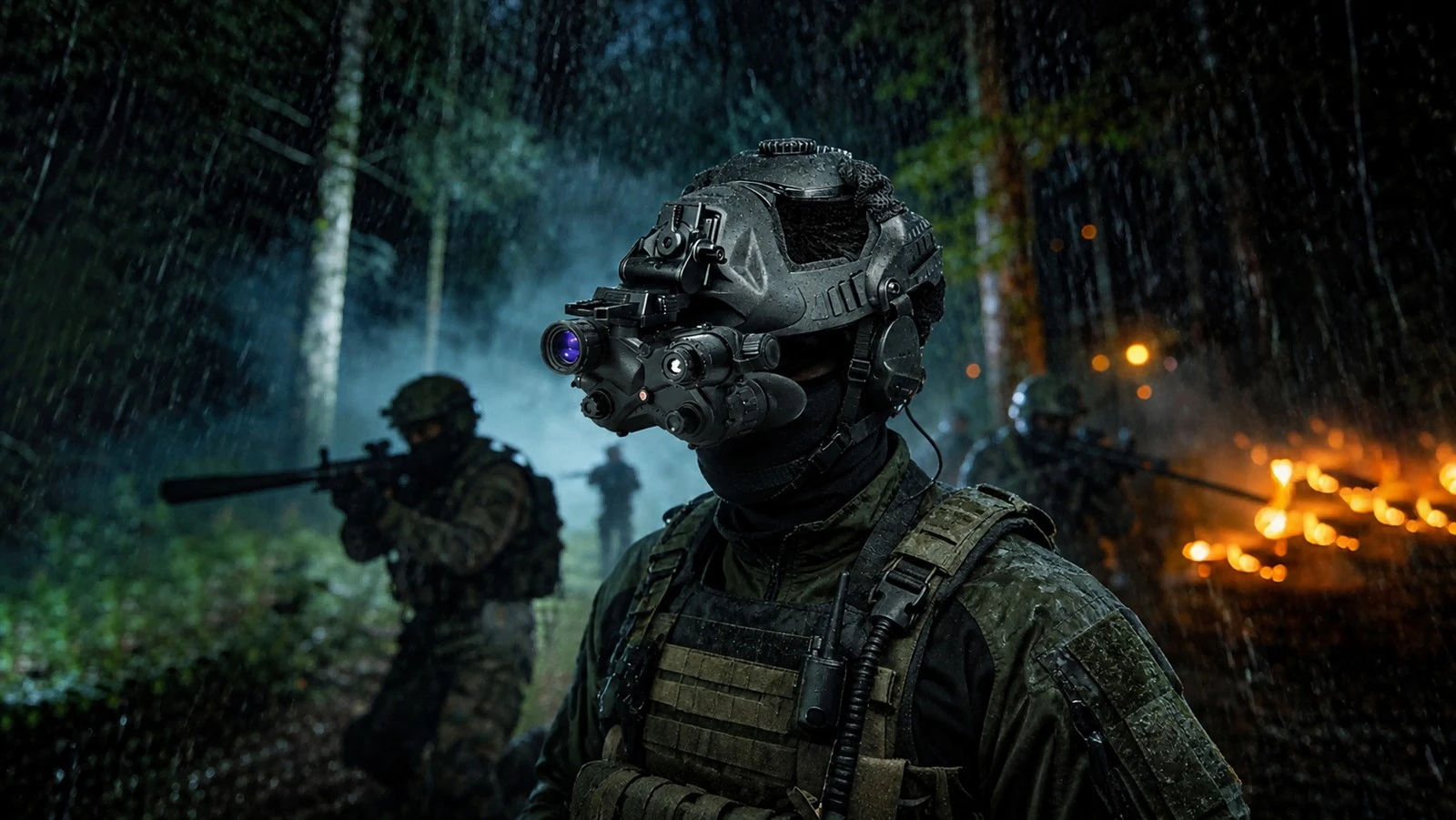
Global Night Vision Device Market Outlook 2026: Growth Opportunities for National Defense and Security Applications
The night vision device market is entering a period of sustained expansion, shaped by rising defense budgets, evolving border security priorities, and a growing appetite for advanced optics among outdoor consumers.
As governments across North America, Europe, and Asia-Pacific reassess their security posture, procurement of night vision equipment has moved from a niche capability to a core part of modern defense planning. At the same time, civilian interest in hunting and wildlife observation is pulling the night vision device market into new consumer segments it rarely touched a decade ago.
This outlook walks through the forces shaping the global night vision device market heading into 2026 - where the demand is coming from, which technologies are gaining traction, and what buyers and suppliers should watch for over the next few years.
一,Night Vision Device Market Overview in 2026

Market Size and Growth Projections
Industry estimates place the night vision device market on a steady upward trajectory, with analysts pointing to a compound annual growth rate in the high single digits through the latter half of this decade. Several market research firms, including those tracking defense procurement spending and optics manufacturing output, attribute this growth to two parallel trends: national defense modernization programs replacing aging equipment, and a broader security apparatus - from border patrol to critical infrastructure protection - adopting night vision as standard-issue gear.
It's worth noting that these figures vary depending on how "night vision device" is defined. Reports that fold in thermal imaging systems alongside traditional image-intensification devices tend to show a larger total addressable market than those that isolate the two categories.

Key Technology Segments
Three broad technology types make up most of today's night vision device market:
Image intensification (I²)
the traditional green-tinted night vision most people picture, still widely used across defense and law enforcement for its reliability and lower cost.
Thermal imaging
detects heat signatures rather than amplifying ambient light, and has become increasingly popular for its ability to function in complete darkness or through smoke and light fog.
Digital night vision
sensor-based systems that convert low-light input into a digital image, often paired with recording and connectivity features.

The line between thermal imaging and traditional night vision is blurring somewhat, as hybrid devices combining both technologies start reaching both defense buyers and civilian markets. Manufacturers positioning around this convergence are likely to capture a disproportionate share of new contracts over the next few years.
二,North America: Rising Defense Budgets Driving Night Vision Demand
U.S. Defense Spending and Modernization Programs
The United States remains the single largest buyer in the national defense night vision market, and that position isn't changing anytime soon. Annual defense appropriations have continued to climb, with a meaningful share earmarked for soldier modernization initiatives that include next-generation optics. Programs aimed at replacing legacy night vision goggles with lighter, longer-range, and network-connected systems have been a recurring line item in recent defense budget cycles.
What's changed in the past couple of years is the emphasis on interoperability - devices that can feed data into broader situational awareness systems rather than functioning as standalone tools. That shift is pushing procurement toward digitally-enabled night vision goggles designed for national defense use, rather than older analog equipment.
Beyond large-scale federal contracts, state and local security agencies are also expanding their own night vision budgets, particularly for border monitoring and critical infrastructure surveillance. This secondary layer of demand - smaller in dollar terms than federal defense spending but broader in the number of buyers - adds a steady baseline to overall market growth in the region.
三,Europe's Defense Modernization Boosts Night Vision Adoption
Defense Upgrades and Border Security Needs
European nations have accelerated defense spending increases in recent years, and night vision equipment has been one of the more visible beneficiaries. NATO member states are working through coordinated modernization efforts that touch everything from vehicle-mounted thermal sights to handheld goggles for ground forces. Several governments have also flagged night vision and thermal imaging as priority procurement categories in their multi-year defense investment plans.
Border security adds another layer of demand. With heightened attention on external border monitoring across parts of the continent, agencies responsible for perimeter surveillance have been procuring night vision and thermal cameras at a pace that outstrips historical norms.
Cross-Border Security Applications
What distinguishes the European market is the overlap between defense procurement and civil security spending - many devices originally developed for defense applications are now finding their way into customs enforcement, coast guard operations, and critical infrastructure protection. This dual-use dynamic is a recurring theme in current night vision industry trend discussions, as manufacturers design products flexible enough to serve both markets without separate production lin
四,Asia-Pacific: Expanding Security and Surveillance Applications

Homeland Security and Border Surveillance Growth
Asia-Pacific has quietly become one of the fastest-growing regions for night vision adoption, driven less by large-scale defense conflicts and more by homeland security and surveillance needs. Countries across the region have expanded border monitoring, maritime surveillance, and urban security programs, all of which lean on night vision and thermal imaging technology.
Population density in many Asia-Pacific urban centers has also pushed security agencies toward night-capable surveillance systems for public safety applications - a use case that barely registered in the region a decade ago but now represents a meaningful chunk of new procurement.
Regional Manufacturing and Supply Chain Advantages
A second factor supporting the region's growth is manufacturing capacity. Several Asia-Pacific countries have built up domestic optics and sensor production capabilities, which lowers costs and shortens lead times compared to importing equipment from Western suppliers. This local manufacturing base is starting to make the region not just a demand center but a meaningful supply hub for the broader night vision device market.
五,Civilian Market Growth: Hunting and Outdoor Applications

Rising Popularity of Night Vision in Hunting and Wildlife Observation
While defense and security procurement still account for the bulk of global spending, the civilian side of the night vision device market has been growing at a notable clip. Hunters, particularly those pursuing nocturnal or crepuscular game, have driven much of this demand - hog hunting in the southern United States is a frequently cited example of a niche that has meaningfully boosted consumer-grade night vision sales.
Wildlife observation and outdoor photography have added a smaller but growing slice of demand, as more affordable digital night vision devices make it easier for hobbyists to experiment without the price tag historically associated with the technology.

Consumer-Grade vs Professional-Grade Devices
The gap between consumer-grade and professional-grade night vision has narrowed in terms of usability, though performance and durability still separate the two categories. Entry-level digital devices aimed at hunters and outdoor enthusiasts now start at a fraction of the cost of defense-grade equipment, which has widened the buyer base considerably. That said, image clarity, detection range, and ruggedness still tend to track closely with price - a pattern unlikely to change soon given the underlying sensor and optics costs.
六,Night Vision Industry Trends to Watch in 2026
A handful of themes are showing up repeatedly across recent night vision industry trend reports and buyer conversations:
AI Integration and Smart Targeting Systems - Software layered on top of night vision hardware is becoming a differentiator in its own right. Object recognition, automated target flagging, and integration with broader sensor networks are increasingly expected features rather than premium add-ons.
Miniaturization and Wearable Devices - Weight and bulk have historically been a complaint among end users, particularly in defense settings where every additional pound matters. Newer devices are shrinking in size while maintaining or improving detection range, a trend that's expected to continue as sensor technology improves.
Sustainability and Supply Chain Resilience - Component shortages in recent years pushed manufacturers to diversify suppliers and, in some cases, bring more production in-house. Expect continued attention to supply chain resilience, particularly for critical components like image sensors and infrared detectors.
七,Challenges and Opportunities in the Night Vision Device Market
Growth in the night vision device market isn't without friction. Export controls on advanced optics and infrared technology remain a persistent hurdle for manufacturers looking to sell across borders, particularly into markets where governments are cautious about dual-use technology transfers. Raw material costs - especially for specialized sensor components - have also been volatile, squeezing margins for smaller manufacturers who lack the scale to absorb price swings.
On the opportunity side, emerging markets that are only now building out modern defense and security infrastructure represent a substantial untapped segment. Countries in the Middle East, parts of Africa, and Southeast Asia are gradually increasing security-related procurement budgets, and many currently rely on imported equipment - a gap that both established and newer manufacturers are positioning to fill.
Frequently Asked Questions About the Night Vision Device Market
What is driving growth in the global night vision device market?
+
-
Growth is being driven primarily by increased defense budgets in North America and Europe, expanding homeland security and surveillance programs in Asia-Pacific, and a steadily growing civilian hunting and outdoor market.
How big is the national defense night vision market expected to be by 2026?
+
-
While estimates vary by source and methodology, most industry analysts project continued high single-digit annual growth for defense-related night vision procurement through 2026, driven largely by modernization programs in the U.S. and Europe.
What are the latest night vision industry trends?
+
-
Key trends include AI-assisted target recognition, smaller and lighter wearable devices, and closer integration between thermal imaging and traditional image-intensification technology.
Which regions are leading demand for national defense night vision devices?
+
-
North America currently leads in total spending due to large federal defense budgets, while Europe and Asia-Pacific are both seeing faster percentage growth tied to defense modernization and homeland security expansion respectively.
Is the civilian night vision market growing as fast as the defense segment?
+
-
The civilian segment is growing quickly in percentage terms, particularly in hunting and outdoor applications, though it remains smaller in absolute dollar value compared to defense and security procurement.
Looking for deeper, data-backed insights into the night vision device market? Our team tracks procurement trends, regional demand shifts, and emerging technology across the defense and civilian segments - reach out for a tailored market briefing, or subscribe for regular updates on where the night vision industry is headed next.