How Clip-On Thermal Imagers Upgrade Existing Night Vision Goggles
Topic Description:Mike almost got himself and two teammates rolled up on a night patrol that should have been routine. Thick brush, no moon, PVS-14s doing their usual solid job under the starlight. He could see the trail, the low wall, even the shape of a tree stump.
What he could not see was the guy crouched behind that wall until the man started to rise. Pure night vision just does not light up heat the way thermal does. That close call sat with him for weeks. A few months later the unit started clipping small thermal modules onto the front of the same goggles.
First time Mike flipped the thermal on, the wall and the brush suddenly showed living shapes that had been invisible before. He still had the detail from the tubes. He just stopped missing the heat signatures that used to hide in plain sight.
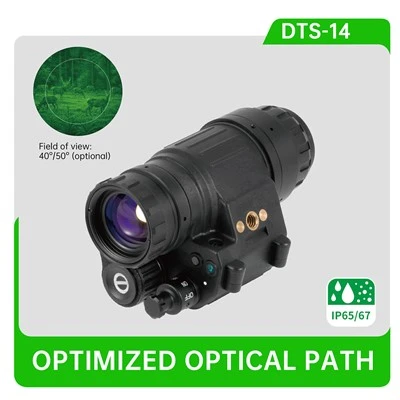
That is the practical upgrade most teams are after right now. You keep the night vision goggles you already own and trust, and you add the ability to spot heat. No full system replacement. No new zeroing habits for an entirely different optic. Just a clip-on that turns what you have into a thermal-fusion setup.
The numbers behind this shift are not small. Global defense spending has already pushed past $2.4 trillion. Soldier modernization programs keep looking for ways to improve night capability without throwing away existing Gen 3 and Gen 2+tubes.

Market reports on clip-on thermal imagers put the category somewhere between several hundred million and a couple of billion dollars in recent valuations, with growth forecasts in the 7–8 percent CAGR range through the early 2030s. Military and defense still take the biggest slice-often close to half. Law enforcement and the civilian hunting side are climbing fast. Units that already spent heavily on night vision are realizing they can stretch that investment by adding thermal detection where it actually matters.
What You Actually Gain in the Field
The biggest win is detection you did not have before. A 384×288 uncooled long-wave sensor like the one in the DT-TW21 will pick up a human-sized target out to roughly 450 meters and let you recognize it around 350 meters under typical conditions.
That is not the extreme range of a big cooled system, but it covers the distances most dismounted patrols and tactical teams actually work. You still get the resolution and spatial detail from your existing night vision tubes. The thermal just fills the gaps-foliage, total darkness, light smoke, or someone trying to stay still in the shadows.
Weight is the second thing operators notice right away. In pure clip-on mode the DT-TW21 sits around 92 grams. Handheld it stays under 150 grams. Helmet-mounted versions are still light enough that neck fatigue does not become the main complaint after a long movement.
Compare that to some dedicated thermal goggles or heavier weapon sights and the difference is obvious the first time you wear it for a full night. Battery life on a single CR123 runs 3.5 to 4.5 hours depending on mode and temperature. Enough for most patrols if you manage the settings. IP67 sealing means rain and dust are not automatic show-stoppers.
Image modes give you options that pure night vision never had.

Thermal -Fusion

Green -Hot

White- Hot

Mental

Black-Hot

Outline
Brightness and contrast adjust quickly. Focus runs from about 250 mm out to infinity with simple mechanical controls. The field of view sits around 32 degrees in clip-on configuration and a bit wider when you run it handheld or on the helmet. Circular centered image matches well with common night-vision optics.
Mike's team ran the usual side-by-side tests during a multi-day exercise. Pure night vision still won on fine detail when there was residual light. Pure thermal made heat pop but lost the contextual picture the tubes provide. The fused combination gave them both.
They spotted opposing force earlier, moved with fewer second-guesses, and spent less time staring at shadows that turned out to be nothing. That is the result that matters: earlier detection without giving up the night-vision picture you already know how to use.
How the Setup Actually Fits Different Jobs


Modular Deployment
Pull it off and use it as a handheld scanner for rooms, vehicles, or area checks. Mount it on a helmet for hands-free movement. Helmet systems usually give you height adjustment, left-right travel, and eye-relief control so different faces and helmets do not force a bad fit. Flip-up mechanisms let you stow the whole thing clear of your line of sight when you do not need thermal, then drop it back into place with one motion.
Menus stay simple on purpose. Short presses cycle modes or enter settings. Longer presses handle power and exit. Language options, basic zoom in some configurations, and icon overlays are there without deep nested screens. That matters when gloves are on and time is short. The modular approach also means one piece of hardware can move between operators or different platforms as the mission changes. You are not locked into a single dedicated role.
How It Stacks Against Other Options
Plenty of solid systems sit in this space. Teledyne FLIR and L3Harris still dominate many formal military contracts. Thermoteknix ClipIR units, the older COTI and ECOTI family, and commercial lines from AGM, ATN, Nocpix and others all have users who like them for good reasons.
precautions for product use
Some deliver higher-resolution 640 cores, longer published detection numbers, integrated laser rangefinders, or ballistic tools aimed at weapon-mounted work. Others emphasize extreme durability or specific software features.
The lighter modular designs such as the DT-TW21 usually win on a different set of trade-offs. You get true multi-role use-handheld, helmet, and clip-on-in one package. Weight stays low.
The lighter modular designs such as the DT-TW21 usually win on a different set of trade-offs. You get true multi-role use-handheld, helmet, and clip-on-in one package. Weight stays low.
Compatibility covers the common PVS-14 and PVS-31 form factors that many units already field. Cost is often more approachable, which matters when you want to put the capability on more people instead of a few high-end sets.
Higher-resolution or cooled systems can look better at extreme range, but they bring more weight, higher power draw, longer start-up, or significantly higher price.
Pure weapon-mounted thermal sights require their own zero and different muscle memory. Full fused goggles can be excellent, yet they usually mean replacing an entire inventory of existing tubes and housings.
Operators who have run both styles tend to say the same thing after a few nights: early detection still beats having the prettiest image at 800 meters for most dismounted work.
The clip-on route keeps the night-vision investment already made and adds the heat picture where it closes real gaps. There is a trade-off-you do not get the absolute longest range or the highest pixel count-but for the majority of patrol, checkpoint, and training scenarios the balance works.
Where Teams Are Actually Using It
Lorem ipsum dolor, sit amet consectetur adipisicing elit.

special-operations
Military and special-operations units run these for dismounted night patrols, vehicle checkpoints, perimeter work, and urban clearing. Thermal shows the heat sources that pure image intensifiers miss in foliage or total darkness; the tubes still give the spatial detail needed for navigation and identification. Law-enforcement tactical teams and border units get the same edge during night searches and interdictions.
Search-and-rescue
Search-and-rescue crews pick up human heat through light smoke or cover that would otherwise hide someone. Hunters and wildlife managers who already own solid day optics or night-vision setups gain thermal detection without buying a second dedicated rifle system. Training environments like them because students keep the familiar goggles while learning to read thermal cues.

Early Threat Detection
Mike's later notes from another exercise were short. The opposing force tried the same low wall and brush that had almost worked the first time. With the thermal overlay active the heat signatures registered early enough for his team to shift position and control the contact. "Saw them first. Moved with more confidence. Less time guessing at shadows." That pattern keeps showing up across units that have made the switch.
Reliability and Everyday Care
IP67 sealing covers the dust, rain, and short immersion most operators actually run into. Uncooled sensors avoid the maintenance load of cryogenic coolers. The CR123 is common and easy to carry as spares. Housings in this category are built for field abuse even when formal paperwork varies by contract. Basic care is straightforward: store it dry, pull the battery for long-term storage, keep the optics clean, and never point the sensor at the sun, open flames, or other intense heat sources up close. Unauthorized teardown risks the detector and voids support. Follow those rules and the hardware holds up through hard use.
Common Questions Teams Ask

01.How does the upgrade actually work?
02.Which goggles work with it?
03.Is the range enough?
04.Can you use it without the goggles?
05.What about battery and weight?
06.Do you lose your zero or need heavy retraining?
Products Conclusion
The practical result is straightforward. If you already own quality night vision goggles, a solid clip-on thermal imager stretches that investment, closes the detection gaps pure image intensifiers leave open, and does it without forcing a complete system overhaul.
Mike's team still runs the same PVS-14s they started with. The only real change is those goggles now catch a lot more of what used to hide in the dark. That is the upgrade that keeps showing up in after-action notes: earlier detection, fewer surprises, and better use of the gear already on the shelf.