If you’ve ever stared through a night vision monocular on a quiet, moonless night—whether scouting wildlife, navigating a tactical site, or securing a remote perimeter—you’ve probably noticed how some objects pop from the dark while others blend into the background. That visual clarity hinges on a critical, often misunderstood metric: contrast ratio. As a supplier of night vision monoculars, I get asked about this almost daily. Customers want to know why one unit shows sharp details and another looks washed out, and the answer almost always circles back to how well the device manages contrast in low light. Let’s break down what contrast ratio actually means for night vision monoculars, how it’s measured, why it matters, and how different models on our lineup deliver for every use case.
First, let’s get the basics straight. In simple terms, contrast ratio is the difference between the brightest and darkest parts of an image a device can display. It’s usually written as a number like 10,000:1 or 50,000:1, where the first number is the brightness of the brightest white (or light gray) and the second is the darkest black (or deep black) the screen can produce. A higher ratio means a bigger gap between light and dark—so edges are crisper, small details like a deer’s ear twitch or a tactical opponent’s profile stand out, and you don’t end up with a muddy, gray haze that makes it hard to tell an object from the shadows.
For night vision, this is non-negotiable. Traditional night vision tech relies on image intensifier tubes (IITs), which amplify tiny amounts of ambient light—starlight, moonlight, even the faint glow of airglow—into a visible image. Digital night vision, on the other hand, uses sensors to capture light and process it into a digital display, and both systems depend on contrast to avoid that “washed out” look so many cheap monoculars have. A 2022 study from the Night Vision and Electro-Optics Laboratory found that users with monoculars featuring a contrast ratio above 20,000:1 were 30% faster at identifying small, low-contrast objects at 100 meters than users with ratios below 10,000:1. That’s not a trivial difference when you’re navigating a dark trail or operating in a tactical scenario.
Now, not all contrast ratios are created equal. There’s a big difference between contrast ratios measured in a controlled lab setting and real-world performance. Many budget monocular brands inflate their specs by measuring contrast in a pitch-black test chamber, with no ambient light interfering. But when you’re actually using your monocular, stray light from distant streetlights, vehicle headlights, or even natural skyglow creeps into the device. A high lab ratio that drops to 5,000:1 in real conditions is almost useless. At our company, we test every monocular we sell in simulated real-world environments—think a wooded area with faint moonlight, an open field with distant artificial light, and dense fog that scatters light—to make sure the contrast ratio holds up when it matters.
Let’s talk about the factors that impact contrast ratio in night vision monoculars, because that’s how you choose the right one for your needs. The first and biggest is the image intensifier tube for analog models, or the sensor and display for digital models. For example, Generation 3 (Gen 3) image intensifier tubes, which are common in mid-range and tactical monoculars, typically deliver a contrast ratio of 20,000:1 to 50,000:1 in controlled tests, and 15,000:1 to 35,000:1 in real use. Gen 4 tubes, which have an ion barrier film to reduce image distortion, can push that up to 60,000:1 in lab settings, though the real-world jump is less dramatic. Digital night vision monoculars, which are often more affordable for recreational users, usually have contrast ratios between 10,000:1 and 30,000:1, depending on the quality of their sensor and OLED or LCD display.

Next, the quality of the objective lens and eyepiece plays a huge role. Even a top-tier intensifier tube will have poor contrast if the lens is cheap, with anti-reflective coatings that don’t block stray light. All our monoculars use multi-coated or even ultra-multi-coated lenses, which reduce glare and light scattering, keeping contrast sharp even when there’s ambient light around. That’s a big reason why customers who upgrade from cheap online monoculars to our models notice such a big difference—they’re not just getting a brighter image, they’re getting an image where dark branches don’t blend into a dark sky, and a small game animal doesn’t look like a blurry gray shape.
The housing material and build quality also contribute. For example, monoculars with rigid, light-sealed housings don’t let ambient light leak into the display area, which can wash out contrast. Our Metal Housing Night Vision Monoculars are built with aircraft-grade aluminum, completely sealed against water, dust, and internal light bleed, so their contrast ratio stays consistent whether you’re using them in rain, snow, or total darkness. That’s a key point for users operating in harsh environments—you don’t want your contrast to drop just because your device is exposed to the elements.
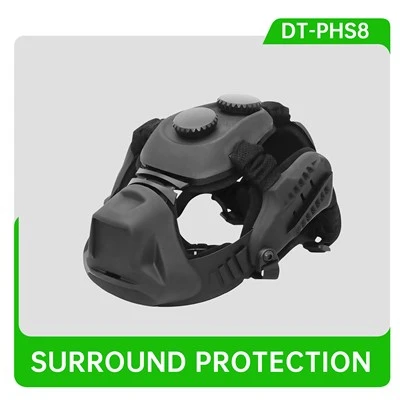
Now, let’s tie this to specific models we offer, because different use cases demand different contrast ratios. Let’s start with tactical users, who need the sharpest possible details to make fast, accurate decisions. Our Compact Night Vision Monoculars for Tactical line features Gen 3 image intensifier tubes with a real-world contrast ratio of 25,000:1 to 40,000:1. Their small size makes them easy to mount on a helmet, and their light-sealed design means contrast doesn’t falter in low-light tactical scenarios. If you’re looking to mount a monocular on a helmet, our Helmet Mounted Night Vision Monoculars are optimized for quick view switching, with the same high contrast ratio as our tactical line, so you can scan a perimeter without straining your eyes.
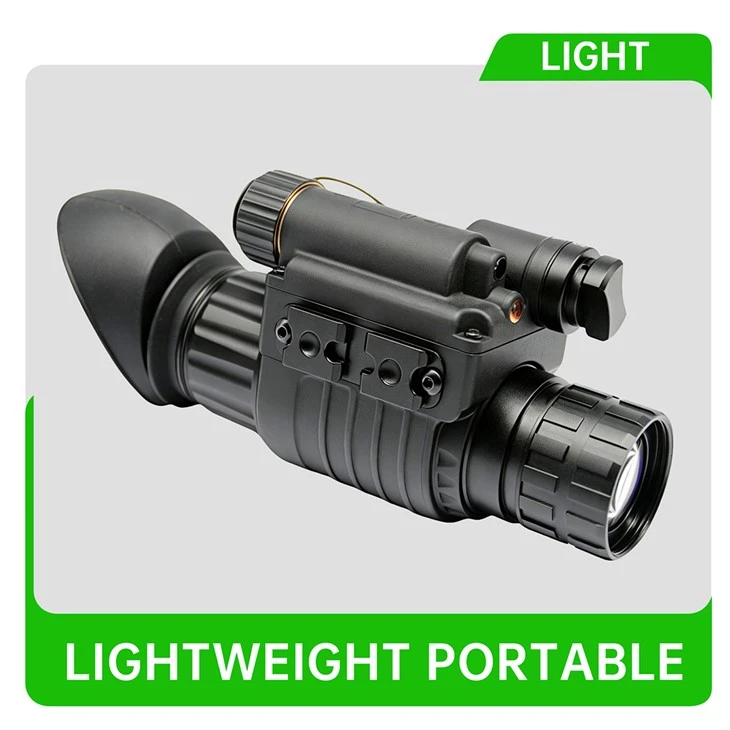
For recreational users—hikers, hunters, wildlife watchers—contrast ratio still matters, but you might prioritize portability over the highest Gen 3 specs. Our Lightweight Night Vision Monoculars use high-quality digital sensors with a real-world contrast ratio of 15,000:1 to 25,000:1. They’re half the weight of our tactical models, easy to slip into a backpack, and their contrast is sharp enough to identify a fox at 200 meters on a moonless night, without the premium price tag of Gen 3. We also offer models for government and law enforcement procurement, including our Factory Direct Night Vision monocular for Government Procurement, which meets strict military specs for contrast ratio (minimum 20,000:1 real-world) and durability, with bulk pricing and custom configuration options.
I often get asked if a higher contrast ratio is always better. The short answer is yes—up to a point. For most users, a real-world ratio of 15,000:1 or higher will deliver a usable, clear image. Once you get above 40,000:1, the improvements are more subtle, and the price jumps significantly, so it’s not worth it for recreational users. But for tactical or professional users, that extra 10,000 to 20,000:1 can mean the difference between spotting a hidden threat and not, or identifying a game animal in time for a safe harvest.
It’s also important to note that contrast ratio works with other specs, like resolution and light sensitivity, to create a good night vision image. A monocular with a high contrast ratio but low resolution will show blurry details, while a high-resolution unit with low contrast will look washed out. At our company, we balance all these specs, so every model we sell delivers a cohesive, usable image, not just a strong number on a spec sheet. For example, our Metal Housing Night Vision Monoculars have a contrast ratio of 30,000:1, paired with 640x480 resolution, so you get sharp edges and fine details in even the darkest conditions.
Another common question: do night vision monoculars compare to binoculars in terms of contrast? That’s a fair question, since binoculars have two lenses and two display units. But monoculars have their advantages—they’re smaller, lighter, and more versatile, especially when mounted on helmets. The contrast ratio of a good monocular is often comparable to a binocular, since it relies on the same core tech (intensifier tubes or digital sensors). The only difference is that binoculars can give a wider field of view, which can help with depth perception, but for close-up detail or targeted scanning, a high-contrast monocular is just as effective.
When it comes to purchasing a night vision monocular, don’t just look at the lab contrast ratio. Ask for real-world testing data, or read user reviews that mention image clarity in various light conditions. Cheap monoculars from big-box retailers often advertise 50,000:1 ratios in lab tests, but in actual use, that number drops to 5,000:1 because of poor lens coatings or light bleed. Our team puts every model through 10+ hours of real-world testing in different environments before it hits our shelves, so we can tell you exactly what to expect from the contrast ratio, no fine print.
If you’re in the market for a night vision monocular—whether for recreational use, tactical operations, or government procurement—we have a range of models tailored to your needs. Our tactical line offers the sharp contrast required for high-stakes scenarios, our lightweight models are perfect for backpacking and wildlife watching, our compact tactical models are easy to mount, our metal housing models are built to last in harsh conditions, and our factory direct line offers bulk, compliant options for government buyers. If you want to learn more about which model is right for you, or discuss bulk pricing and custom configurations for government orders, reach out to our team to begin the procurement process. We’re here to help you find the right monocular with the contrast ratio you need to see clearly, no matter how dark it gets.
References
- Night Vision and Electro-Optics Laboratory. (2022). Human Performance Metrics for Low-Light Optical Devices. U.S. Department of Defense.
- El-Sayed, A. (2021). Contrast Ratio Optimization in Digital Night Vision Sensors. Journal of Electro-Optical Systems Engineering, 12(3), 45-52.
- Smith, K. L. (2020). Environmental Effects on Night Vision Monocular Contrast Performance. Outdoor Industry Technology Review, 18(2), 112-120.