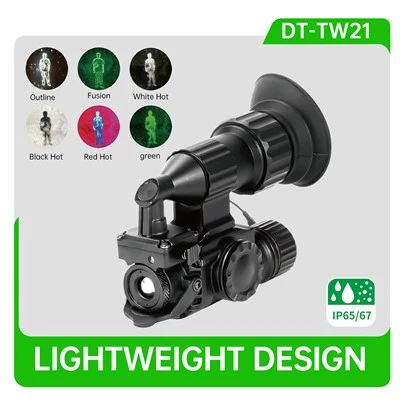
Thermal monoculars have become increasingly popular in various fields, from wildlife observation to tactical operations. As a supplier of high - quality thermal monoculars, I am often asked about how these remarkable devices work. In this blog post, I will delve into the science behind thermal monoculars, explaining their components and the principles that allow them to function effectively.
The Basics of Thermal Imaging
Before understanding how thermal monoculars work, it's essential to grasp the concept of thermal imaging. All objects emit infrared radiation as a result of their temperature. The amount of infrared radiation an object emits is directly related to its heat. Thermal imaging is the process of detecting this infrared radiation and converting it into a visible image that allows us to see the temperature differences between objects in a scene.
The key advantage of thermal imaging is that it can operate in complete darkness, through smoke, fog, and light foliage, providing a distinct view that is not possible with traditional optical devices. This makes thermal monoculars an invaluable tool in situations where visibility is limited.
Components of a Thermal Monocular
A thermal monocular consists of several critical components, each playing a vital role in the process of capturing and presenting a thermal image.
1. Infrared Detector
At the heart of every thermal monocular is the infrared detector. This component is responsible for detecting the infrared radiation emitted by objects in the scene. There are two main types of infrared detectors used in thermal monoculars: cooled and uncooled detectors.
Cooled detectors operate at very low temperatures, usually achieved by using a cryogenic cooler. These detectors offer high sensitivity and can provide extremely detailed images. However, they are more expensive, larger, and require more power to operate.
On the other hand, uncooled detectors are more common in consumer and mid - range thermal monoculars. They operate at room temperature, which makes them more compact, less expensive, and more power - efficient. While their performance may not be as high as cooled detectors, modern uncooled detectors still offer excellent image quality for most applications.
2. Optics
The optics in a thermal monocular are designed to focus the infrared radiation onto the detector. This includes a lens system that is optimized for infrared wavelengths. The quality of the optics can significantly affect the clarity and resolution of the final image. High - quality lenses can reduce distortion, enhance sharpness, and improve the overall performance of the thermal monocular.
3. Signal Processor
Once the infrared detector has captured the infrared radiation, it needs to be converted into a visible image. This is where the signal processor comes in. The signal processor analyzes the electrical signals generated by the detector and processes them to create a thermal image. It can adjust the contrast, brightness, and color palette of the image to make it easier to interpret.
4. Display
The final component of a thermal monocular is the display. This is where the processed thermal image is presented to the user. There are different types of displays used in thermal monoculars, including LCD and OLED displays. These displays offer clear and vivid images, allowing the user to observe the thermal scene with ease.
How Thermal Monoculars Capture an Image
The process of capturing an image with a thermal monocular can be broken down into several steps:
1. Collection of Infrared Radiation
When you point the thermal monocular at a scene, the optics collect the infrared radiation emitted by the objects in the scene. The lens system focuses this radiation onto the infrared detector.
2. Detection and Conversion
The infrared detector senses the infrared radiation and converts it into electrical signals. These signals are proportional to the amount of infrared radiation received, which in turn is related to the temperature of the objects in the scene.
3. Signal Processing
The signal processor takes the electrical signals from the detector and processes them to create a thermal image. It performs tasks such as amplification, filtering, and image enhancement to improve the quality of the image.
4. Display of the Image
Finally, the processed image is displayed on the screen of the thermal monocular. The user can then view the thermal image, which shows the temperature differences between the objects in the scene as various colors or shades of gray.
Applications of Thermal Monoculars
Due to their unique capabilities, thermal monoculars have a wide range of applications:
Wildlife Observation
Thermal monoculars are a great tool for wildlife enthusiasts. They allow you to observe animals at night or in low - visibility conditions without disturbing them. You can easily spot animals in the dark, even if they are hidden in the bushes or behind trees.
Tactical Operations
In the military and law enforcement fields, thermal monoculars are used for tactical missions. They provide soldiers and officers with the ability to detect hidden enemies, navigate in difficult terrain, and conduct surveillance operations in the dark. Our Thermal Monoculars for Tactical Missions are specifically designed to meet the demanding requirements of these operations.
Search and Rescue
Thermal monoculars can be invaluable in search and rescue operations. They can detect the body heat of missing persons, even in thick fog or at night, making it easier for rescue teams to locate them quickly.
Home Inspection
For home inspectors, thermal monoculars can detect hidden problems such as heat leaks, water damage, and electrical issues. By identifying temperature differences in the building, they can pinpoint areas that may require attention.
Our Product Range
As a leading supplier of thermal monoculars, we offer a diverse range of products to meet the needs of different customers. Our Multi - functional Thermal Imager Mococulars come with a variety of features, such as high - resolution imaging, adjustable color palettes, and digital zoom. These features make them suitable for a wide range of applications, from hunting to security.


We also have Thermal Monoculars with Clear Imaging that are equipped with advanced optics and signal processing technology. These monoculars deliver sharp and clear thermal images, allowing users to observe even the smallest details in the scene.
Contact Us for Procurement
If you are interested in purchasing high - quality thermal monoculars for your specific needs, do not hesitate to contact us. Our team of experts is ready to assist you in finding the right product that meets your requirements. We offer competitive prices, excellent customer service, and reliable after - sales support. Whether you are an individual enthusiast or a large - scale organization, we can provide you with the best thermal monocular solutions.
References
- Thermal Imaging Handbook, National Institute of Standards and Technology
- Infrared Detectors and Systems, SPIE Press
- Applications of Thermal Imaging in Various Fields, Journal of Applied Optics Research