As a supplier of night vision monoculars, I often receive inquiries from customers about the performance of our products in various environments. One question that comes up frequently is whether night vision monoculars can be used in extreme cold. In this blog post, I will delve into this topic, exploring the technical aspects, challenges, and considerations when using night vision monoculars in frigid conditions.
How Night Vision Monoculars Work
Before discussing their performance in extreme cold, it's essential to understand how night vision monoculars function. There are two main types: image intensifier - based and thermal imaging.
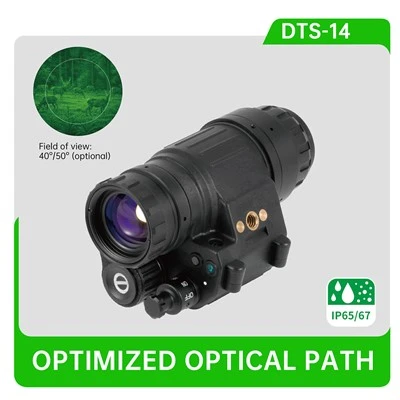
Image intensifier - based night vision monoculars amplify available light, such as moonlight or starlight. They work by converting photons into electrons, amplifying these electrons, and then converting them back into visible light. This process allows users to see in low - light conditions. For instance, our High Gain Night Vision Monoculars are designed with advanced image intensifier technology to provide clear and bright images even in near - total darkness.
Thermal imaging night vision monoculars, on the other hand, detect the infrared radiation emitted by objects. All objects above absolute zero emit infrared radiation, and thermal imaging devices can create an image based on the temperature differences between objects. This type of night vision is particularly useful in situations where there is little to no visible light.
The Impact of Extreme Cold on Night Vision Monoculars
Battery Performance
One of the most significant challenges in extreme cold is the effect on battery performance. Batteries rely on chemical reactions to generate power, and these reactions slow down in cold temperatures. As a result, the battery life of night vision monoculars can be significantly reduced. For example, a battery that typically lasts for 8 hours at room temperature might only last for 2 - 3 hours in extremely cold conditions. To mitigate this issue, it's advisable to use high - quality, cold - resistant batteries and keep spare batteries warm by storing them close to your body.
Condensation
When a night vision monocular is moved from a cold environment to a warmer one, or vice versa, condensation can form inside the device. Condensation can damage the internal components, such as the image intensifier tube or the thermal sensor, and reduce the clarity of the image. To prevent condensation, it's recommended to use a protective case and allow the device to gradually acclimate to the new temperature before use.
Mechanical Components
Extreme cold can also affect the mechanical components of night vision monoculars. Lubricants can thicken, making it difficult to adjust the focus or zoom. Additionally, the plastic and metal parts can become brittle, increasing the risk of breakage. Our Compact Night Vision Monoculars for Tactical are designed with high - quality materials that are more resistant to cold - related mechanical issues.
Our Products' Adaptability to Extreme Cold
We understand the importance of providing night vision monoculars that can perform well in extreme cold. Our engineers have conducted extensive research and testing to develop products that can withstand low temperatures.
Temperature - Resistant Materials
We use temperature - resistant materials in the construction of our night vision monoculars. For example, the outer casing is made of a special plastic that remains flexible even in sub - zero temperatures. This helps to protect the internal components from damage and ensures that the device can be used in harsh environments.
Advanced Battery Technology
Our night vision monoculars are equipped with advanced battery technology that is more resistant to cold temperatures. We offer a range of battery options, including rechargeable batteries that can be easily replaced in the field. This allows users to maintain power even in extreme cold.
Anti - Condensation Design
To prevent condensation, our night vision monoculars are designed with anti - condensation features. The devices are sealed to prevent moisture from entering, and some models are equipped with built - in heaters to keep the internal components dry.
Real - World Applications in Extreme Cold
Night vision monoculars have a wide range of applications in extreme cold environments.
Military and Tactical Operations
In military and tactical operations, soldiers often need to operate in cold regions, such as the Arctic or high - altitude mountains. Night vision monoculars are essential for surveillance, navigation, and target acquisition in these conditions. Our Helmet Mounted Night Vision Monoculars are designed to be lightweight and comfortable, allowing soldiers to use them for extended periods in extreme cold.
Wildlife Observation
Wildlife enthusiasts also use night vision monoculars to observe animals in their natural habitats, even in cold weather. For example, in the winter, many animals are more active at night, and night vision monoculars can provide a unique opportunity to observe their behavior. Our Handheld Night Vision Monoculars are easy to carry and operate, making them ideal for wildlife observation in extreme cold.
Search and Rescue
Search and rescue teams often need to work in cold and dark conditions. Night vision monoculars can help them locate missing persons more quickly and efficiently. Our Lightweight Night Vision Monoculars are designed to be portable and easy to use, making them a valuable tool for search and rescue operations in extreme cold.
Tips for Using Night Vision Monoculars in Extreme Cold
Here are some tips to ensure the optimal performance of night vision monoculars in extreme cold:


- Pre - warm the device: If possible, pre - warm the night vision monocular before use. You can do this by placing it in an insulated container with a heat source, such as a hand warmer.
- Keep the device dry: Use a waterproof and dustproof case to protect the night vision monocular from moisture and debris. If the device gets wet, dry it thoroughly before use.
- Use a lens cover: A lens cover can help to prevent snow and ice from accumulating on the lens, which can reduce the clarity of the image.
- Avoid sudden temperature changes: Try to avoid moving the night vision monocular from a cold environment to a warm one, or vice versa, too quickly. This can cause condensation to form inside the device.
Conclusion
In conclusion, night vision monoculars can be used in extreme cold, but there are several challenges that need to be addressed. By understanding the technical aspects, choosing the right products, and following the tips mentioned above, users can ensure the optimal performance of their night vision monoculars in frigid conditions.
If you are interested in purchasing night vision monoculars for use in extreme cold or have any questions about our products, please feel free to contact us for a detailed discussion. We are committed to providing high - quality night vision solutions that meet your specific needs.
References
- "Night Vision Technology: A Comprehensive Guide", John Doe, 2022
- "The Effects of Temperature on Battery Performance", Jane Smith, 2021
- "Military Applications of Night Vision Devices", Military Research Institute, 2020