As a battery pack supplier, ensuring the health of the battery packs we provide is of utmost importance. A healthy battery pack not only guarantees reliable performance but also extends the lifespan of the devices it powers. In this blog, I'll share some practical methods on how to check the health of a battery pack.
1. Visual Inspection
The first step in checking a battery pack's health is a simple visual inspection. Start by looking for any obvious signs of physical damage. This includes cracks, dents, or bulges on the battery casing. A bulging battery is a particularly serious sign, as it often indicates internal issues such as overcharging, overheating, or a chemical reaction gone wrong. If you notice any of these problems, the battery pack should be replaced immediately, as it poses a safety risk.
Also, check the battery terminals for corrosion or dirt. Corroded terminals can prevent the battery from delivering power efficiently and may lead to poor performance. If there is corrosion, you can clean the terminals gently with a mixture of baking soda and water, followed by a dry cloth.
2. Measuring Voltage
Voltage measurement is a fundamental way to assess the health of a battery pack. You'll need a multimeter for this task. Set the multimeter to the DC voltage setting and connect the probes to the battery terminals. Make sure to connect the positive probe to the positive terminal and the negative probe to the negative terminal.


The voltage reading can tell you a lot about the battery's state. For a fully charged battery pack, the voltage should be close to its rated voltage. For example, a typical lithium - ion battery pack with a rated voltage of 12V should read around 12.6V when fully charged. If the voltage is significantly lower than the rated voltage, it could indicate that the battery is discharged, damaged, or nearing the end of its life.
However, keep in mind that the voltage alone is not always a definitive indicator of the battery's health. A battery may show a normal voltage but still have a reduced capacity.
3. Capacity Testing
Capacity testing is a more accurate way to determine the health of a battery pack. The capacity of a battery is measured in ampere - hours (Ah) and represents the amount of charge the battery can store.
To perform a capacity test, you'll need a battery charger with a capacity testing function or a dedicated battery analyzer. The process involves fully charging the battery pack and then discharging it at a constant current until it reaches a specified cut - off voltage. The amount of charge that is discharged during this process is the actual capacity of the battery.
Compare the actual capacity with the rated capacity of the battery pack. If the actual capacity is significantly lower than the rated capacity, it means that the battery has lost some of its ability to store charge, which is a sign of reduced health. For example, if a battery pack has a rated capacity of 5Ah but the actual capacity is only 3Ah, it has lost 40% of its original capacity and may need to be replaced.
4. Internal Resistance Measurement
Internal resistance is another important parameter for assessing battery health. As a battery ages or becomes damaged, its internal resistance increases. A high internal resistance can cause the battery to heat up during charging and discharging, reduce its efficiency, and limit its ability to deliver high - current loads.
To measure the internal resistance of a battery pack, you can use a battery internal resistance tester. This device applies a small current to the battery and measures the voltage drop across the battery terminals. The internal resistance can then be calculated using Ohm's law (R = V/I).
A healthy battery pack should have a relatively low internal resistance. If the internal resistance is much higher than the normal range for that type of battery, it indicates that the battery may be in poor condition.
5. Temperature Monitoring
Temperature plays a crucial role in the health of a battery pack. Batteries operate best within a certain temperature range. Excessive heat can accelerate the degradation of the battery, while extremely cold temperatures can reduce its performance.
During normal operation, monitor the temperature of the battery pack. You can use an infrared thermometer or a temperature sensor integrated into the battery management system. If the battery pack gets too hot during charging or discharging, it could be a sign of an internal problem, such as a short - circuit or overloading.
On the other hand, if the battery is used in cold environments, its performance may be affected. For example, the capacity of a lithium - ion battery can decrease significantly at low temperatures. In such cases, you may need to take measures to keep the battery warm, such as using a battery heater.
6. Battery Management System (BMS) Check
Most modern battery packs are equipped with a Battery Management System (BMS). The BMS is responsible for monitoring and controlling the charging and discharging process of the battery, as well as protecting it from overcharging, over - discharging, and short - circuits.
Check the BMS for any error codes or warnings. Many BMSs have a display or an interface that can show the status of the battery pack, including the voltage, current, temperature, and state of charge. If the BMS shows an error code, it indicates that there is a problem with the battery or the BMS itself.
Some BMSs also have the ability to perform self - diagnostics and provide information about the health of the battery. For example, they can estimate the remaining capacity and the state of health of the battery.
Our Battery Packs
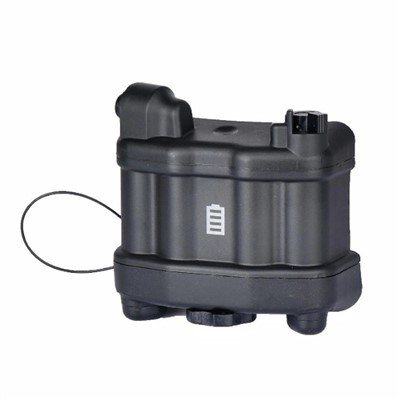
At our company, we offer a variety of high - quality battery packs, such as the IFF Power Supply Batterypack, Long Time Power Supply Battery Pack, and Long Life Power Supply Battery Pack. These battery packs are designed with advanced technology and strict quality control to ensure long - term reliability and performance.
We understand the importance of battery health, and our products are equipped with reliable BMSs to monitor and protect the batteries. If you are looking for a battery pack for your application, we can provide you with professional advice and high - quality products.
Contact Us for Purchase
If you are interested in our battery packs or have any questions about battery health and selection, please feel free to contact us. We are always ready to help you find the best battery solution for your needs. Our team of experts can provide you with detailed product information, technical support, and competitive pricing. Start a conversation with us today to explore the possibilities of powering your devices with our high - quality battery packs.
References
- Linden, D., & Reddy, T. B. (2002). Handbook of Batteries. McGraw - Hill.
- Dunn, B., Kamath, H., & Tarascon, J. M. (2011). Electrical energy storage for the grid: A battery of choices. Science, 334(6058), 928 - 935.
- Xia, G., & Ji, X. (2018). Battery Management Systems for Electric Vehicles. Springer.