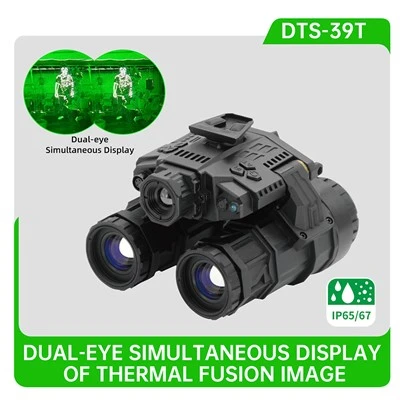
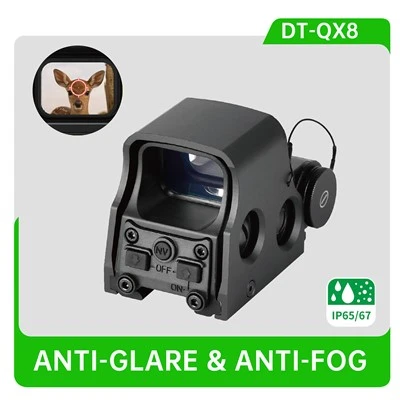
Thermal goggles and thermal cameras are both crucial tools in the field of thermal imaging, each with its own unique features and applications. As a supplier of thermal goggles, I have witnessed firsthand the diverse needs of customers and the respective advantages of these two types of devices. In this blog, I will conduct a comprehensive comparison between thermal goggles and thermal cameras to help you better understand their differences and determine which one is more suitable for your specific requirements.
Design and Portability
One of the most obvious differences between thermal goggles and thermal cameras lies in their design. Thermal goggles are typically worn on the head, similar to regular eyewear, allowing for hands - free operation. This is a significant advantage in situations where the user needs to perform other tasks simultaneously, such as navigation, climbing, or operating machinery. For example, in military or law enforcement operations, soldiers and officers can use thermal goggles to detect heat sources while keeping their hands available for weapons or communication devices.
On the other hand, thermal cameras are usually handheld devices. They offer more flexibility in terms of the angle and distance of observation. You can point the camera at different targets, adjust the zoom level, and capture images or videos from various perspectives. However, this also means that you need to hold the camera with your hands, which can be tiring during long - term use.
In terms of portability, thermal goggles are generally more convenient to carry around. They are compact and lightweight, making them ideal for outdoor activities like hunting, camping, or wildlife observation. You can easily put them on and take them off, and they won't take up much space in your backpack. Thermal cameras, although they can also be relatively small and portable models, may still require more storage space and can be a bit cumbersome to carry for extended periods, especially when combined with other equipment.
Field of View
The field of view (FOV) is an important factor to consider when choosing between thermal goggles and thermal cameras. Thermal goggles usually have a wider FOV, which allows the user to have a broader view of the surrounding environment. This is beneficial in scenarios where you need to quickly scan an area for potential threats or targets. For instance, in a search - and - rescue mission, a wider FOV can help rescuers cover more ground in a shorter time.
Thermal cameras, however, can offer variable FOV options. Some high - end thermal cameras allow you to adjust the FOV by changing the lens or using built - in zoom features. This gives you more control over the level of detail and the area of focus. If you need to closely examine a specific object or area, you can zoom in and reduce the FOV to get a more detailed image.
Image Quality
Both thermal goggles and thermal cameras can provide high - quality thermal images, but there are some differences in this aspect. The image quality of thermal goggles is often optimized for direct viewing by the human eye. They typically have a simplified display that is easy to interpret in real - time. The color palettes and contrast settings are designed to enhance the visibility of heat sources, making it easier for the user to quickly identify objects of interest.


Thermal cameras, on the other hand, are more focused on capturing and recording high - resolution thermal images and videos. They often have larger detectors and more advanced image - processing algorithms, which can result in more detailed and accurate thermal images. These images can be further analyzed later using specialized software, which is useful in applications such as industrial inspections, scientific research, and building diagnostics.
Battery Life
Battery life is a critical consideration, especially for devices that are used in outdoor or remote locations. Thermal goggles generally have better battery efficiency due to their relatively simple design and lower power consumption. They can operate for several hours on a single charge, which is sufficient for most short - to - medium - term applications.
Thermal cameras, especially those with more advanced features such as high - resolution displays, built - in storage, and continuous video recording, tend to consume more power. As a result, their battery life may be shorter, and you may need to carry spare batteries or a power source when using them for extended periods.
Cost
Cost is another significant factor that influences the purchasing decision. Generally, thermal goggles are more affordable than thermal cameras. This is because they are simpler in design and have fewer advanced features compared to thermal cameras. For those on a tight budget or who only need basic thermal imaging capabilities, thermal goggles can be a cost - effective option.
Thermal cameras, with their more sophisticated technology and functions, can be quite expensive. The price range can vary widely depending on the brand, resolution, features, and intended application. High - end thermal cameras used in industrial and professional settings can cost thousands of dollars.
Applications
The choice between thermal goggles and thermal cameras also depends on the specific application.
Thermal Goggles
- Military and Law Enforcement: As mentioned earlier, thermal goggles are widely used in military and law enforcement operations. They allow soldiers and officers to detect enemies or suspects in low - light or zero - light conditions, providing a tactical advantage.
- Outdoor Activities: Hunters can use thermal goggles to track game at night, and campers can use them to detect wild animals or potential hazards in the dark.
- Search and Rescue: Rescuers can quickly scan large areas to find missing persons, even in difficult terrain or adverse weather conditions.
If you are interested in exploring our thermal goggles products, you can check out the Multi - spectral Thermal Imaging Binocular, Thermal Fusion Night Vision Goggles for Outdoors, Multi - functional Portable Thermal Imaging Binoculars, Fusion Goggles with Real Time Image Processing, and Thermal Goggles with Long Range Detection.
Thermal Cameras
- Industrial Inspections: Thermal cameras are essential for detecting heat leaks in buildings, electrical faults in power systems, and mechanical problems in machinery.
- Scientific Research: They are used in fields such as biology, geology, and environmental science to study thermal patterns and processes.
- Firefighting: Firefighters can use thermal cameras to see through smoke and locate hotspots in a burning building.
Conclusion
In conclusion, both thermal goggles and thermal cameras have their own strengths and weaknesses. Thermal goggles are more portable, offer hands - free operation, and have a wider field of view, making them suitable for applications where mobility and quick scanning are important. Thermal cameras, on the other hand, provide higher - quality images, more advanced features, and greater flexibility in image capture and analysis, which are ideal for professional and industrial applications.
If you are considering purchasing thermal imaging devices, I recommend carefully evaluating your specific needs, budget, and usage scenarios. Whether you need thermal goggles for outdoor adventures or thermal cameras for industrial inspections, we are here to provide you with the best - suited products and professional advice. If you have any questions or are interested in procurement, please feel free to contact us for further discussions.
References
- "Thermal Imaging Technology Handbook", published by an industry - leading research institute.
- Various product manuals and technical specifications from thermal imaging device manufacturers.